
TL;DR

Turn your wind-down time into listening time
- Thousands of audiobooks, podcasts and originals
- Listen on your phone, tablet or Echo — also offline
- Cancel anytime
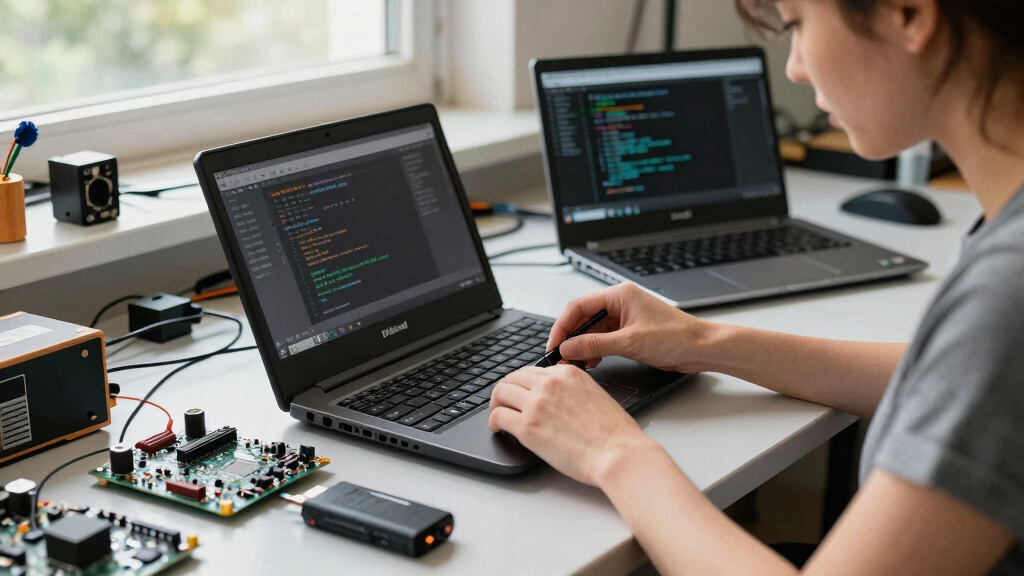
An individual has successfully ported the Lenovo ThinkPad X61 to Coreboot using AI-assisted reverse engineering techniques. This marks a significant step in extending libreboot support for older hardware. The process involved dumping firmware, using AI tools for reverse engineering, and achieving a working port, though some technical details remain under development.
A user has successfully ported the Lenovo ThinkPad X61 to Coreboot, leveraging AI-assisted reverse engineering techniques to overcome the platform’s lack of existing support. This development is significant for the open-source firmware community and users interested in libreboot on older hardware.
The project involved dumping the vendor BIOS, analyzing firmware components with AI tools like Ghidra and radare2, and reverse engineering the firmware’s initialization routines. The user utilized AI models such as Anthropic’s Claude Opus 4.6 to accelerate understanding of the firmware structure, ultimately enabling a working port of Coreboot onto the X61.
Initial efforts focused on extracting firmware modules from the Phoenix BIOS, then employing AI to interpret real-mode code and RAM initialization sequences. The process revealed multiple firmware versions, likely for recovery purposes, which were also analyzed and integrated into the port. The user reports that the system now boots with Coreboot, a milestone for the vintage device.
Advancement in Libreboot Support for Vintage Hardware
This achievement demonstrates the potential for AI-assisted reverse engineering to extend open-source firmware support to older, unsupported devices like the ThinkPad X61. It opens the door for enthusiasts and security-conscious users to run libreboot on legacy hardware, enhancing security, privacy, and user control. The project also showcases the effectiveness of modern AI tools in complex reverse engineering tasks, potentially transforming firmware hacking workflows.
Products Worth Considering

Withings Body Scan Smart Scale with Segmental Body Composition and ECG, Black

Oura Ring 4 Smart Ring – Silver – Size 8

Garmin Forerunner 70 GPS Running Smartwatch, 43 mm, Black
As an affiliate, we earn on qualifying purchases.
Background on Firmware Reverse Engineering and ThinkPad Support Gaps
The ThinkPad X61, released in the mid-2000s, uses a Phoenix BIOS with no existing Coreboot or libreboot support. Prior efforts to port coreboot to this platform failed due to the complexity of its firmware and lack of documentation. Reverse engineering older firmware traditionally required extensive manual analysis over months or years, often with limited success.
Recent developments in AI-assisted reverse engineering have shown promise in accelerating firmware analysis, with models like Ghidra and radare2 being integrated into workflows. The user in this case applied these tools to analyze the X61’s firmware, which previously was considered too obscure for porting efforts.
“Using AI tools like Ghidra and Claude, I was able to understand the firmware structure much faster than traditional methods. The port to Coreboot was completed in just a few days.”
— The project initiator
“Porting older hardware like the X61 remains challenging, but AI-assisted techniques could significantly reduce the time and effort needed for such projects.”
— Firmware expert
Remaining Technical Challenges and Support Limitations
While the user reports a successful boot with Coreboot, details about the stability, hardware compatibility (e.g., Wi-Fi, graphics), and long-term reliability are still under testing. It is not yet confirmed whether all device functions are fully supported or if additional modifications are required.
Furthermore, the process relied heavily on AI tools, and replicating this success on other devices or by other users may encounter difficulties, especially with firmware that has different protections or encryption.
Next Steps for Validation and Community Integration
The next phase involves thorough testing of the port, including device stability, hardware support, and power management. Sharing the firmware and detailed documentation with the open-source community is planned to enable broader adoption and collaborative improvements.
Further development may include automating parts of the reverse engineering process and extending support to other unsupported legacy ThinkPads, leveraging AI tools to reduce manual effort.
Key Questions
Can I replicate this port on my own ThinkPad X61?
Reproducing this process requires advanced firmware analysis skills and access to AI tools. The current port is a proof of concept; further testing and community support are needed before it is considered stable for daily use.
Does this mean I can run libreboot on my X61?
The port is based on Coreboot, which is the foundation for libreboot. With additional work, it could potentially be adapted for libreboot, but this is not yet confirmed or available publicly.
What hardware features are supported with this port?
The current status supports basic booting and core system functions. Hardware support such as Wi-Fi, graphics, and peripherals remains under testing and may require further development.
How does AI assist in reverse engineering firmware?
AI models help interpret complex firmware code, identify initialization routines, and suggest reverse engineering strategies, significantly reducing manual effort and time.
Source: Hacker News