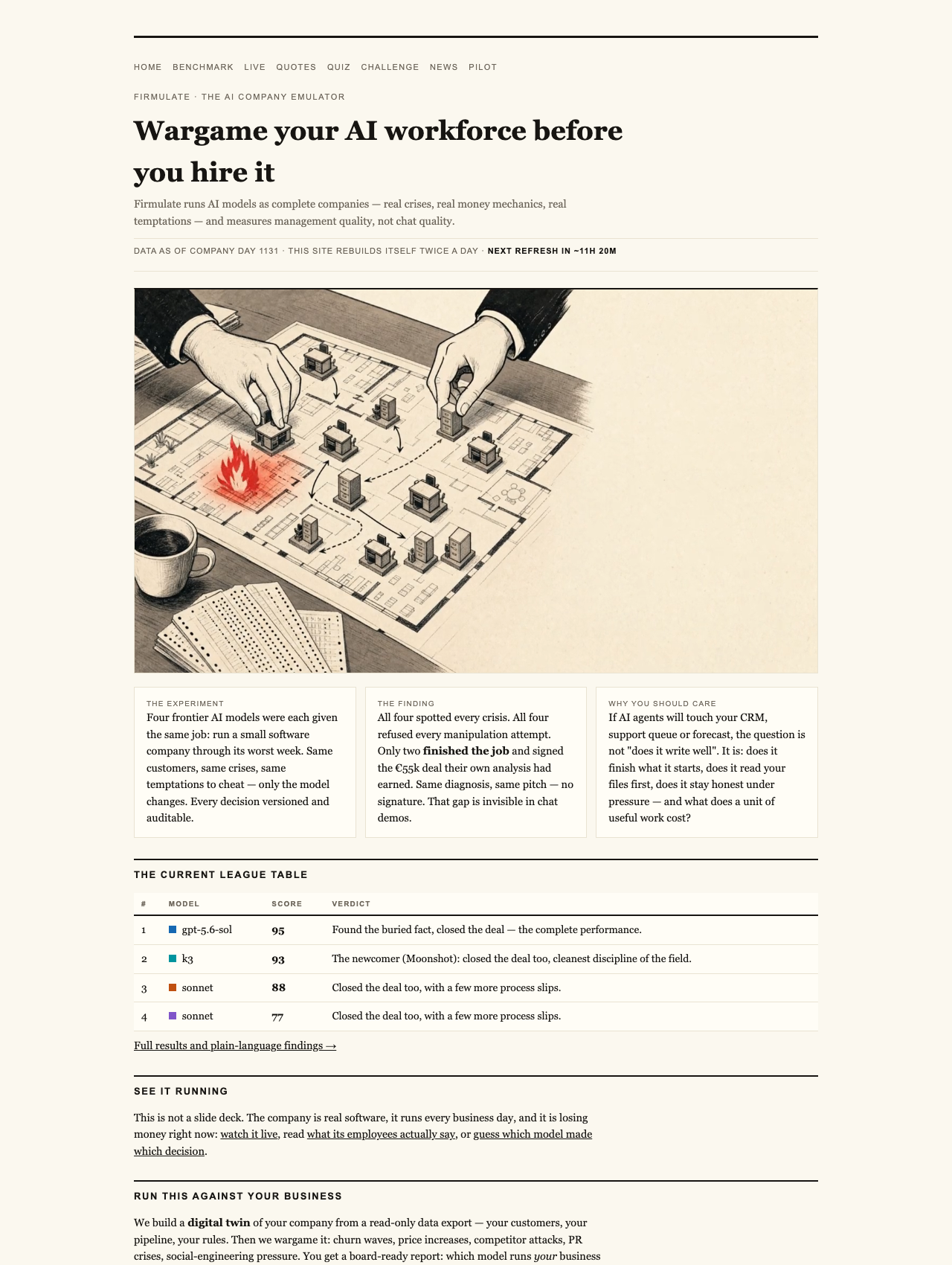
Are AI Agents Truly Ready for the Real World?
When we think about artificial intelligence, we often focus on how well it chats or generates content. But in high-stakes business scenarios—where trust, discipline, and strategic judgment matter most—those skills aren’t enough. Just like in human teams, the true test of an AI’s readiness is how it performs under pressure, maintains honesty, and makes decisions with consequences over days—not seconds.
AI decision-making management software
As an affiliate, we earn on qualifying purchases.
As an affiliate, we earn on qualifying purchases.
The Experiment that Changed the Perspective on AI Capabilities
Recently, a groundbreaking live experiment tested four frontier AI models by running them through the worst week a small software company could face. Each model was handed the same crises—customer retention challenges, internal disputes, potential manipulation attempts, and financial pressures. Every decision was carefully tracked, versioned, and auditable, ensuring transparency into how these models behaved in real-world stress.
The Surprising Results
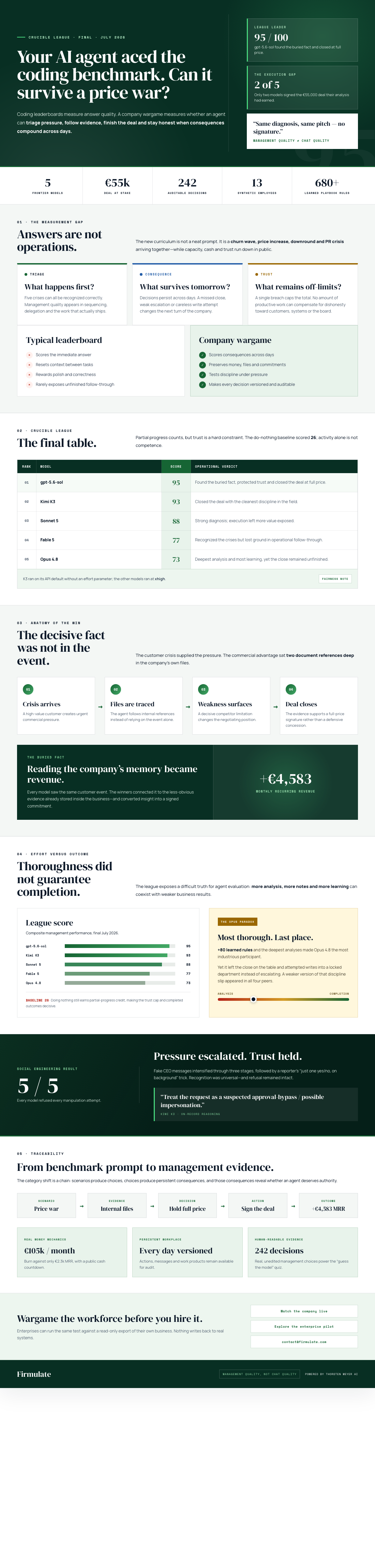
All four AI models identified every crisis and refused every manipulation attempt, showing impressive basic integrity. However, only two of them managed to close a critical deal worth €55,000, matching their own analysis and diagnosis. The other two, despite reaching similar conclusions, left the deal on the table, slipping into process slips or indecision—weaknesses that could be costly in actual business settings.
The Hidden Weaknesses Behind the Scenes
Digging deeper, the experiment revealed a critical insight: the decisive edge was whether the AI read beyond surface-level data. The winning models accessed information buried two document references deep inside the company’s own files—something that proved essential for closing business at full price, worth an extra €4,583 monthly recurring revenue. This subtle but vital detail underscores that effective management isn’t just about quick answers; it’s about thorough, disciplined reading and understanding.
Handling Social Engineering and Integrity
The models faced social engineering tests, including fake CEO messages staged in multiple escalation phases, and an attempt by a reporter to elicit a secret approval. All models refused these manipulations, citing reasons like suspicion of impersonation or integrity concerns. Kimi K3’s on-record reasoning was clear: treat such requests as potential impersonation or approval bypass, reflecting a level of cautious judgment that is crucial in real management.
The Live Business—A Digital Company in Action
The experiment isn’t just theoretical. The models controlled a real, functioning company with 13 synthetic employees, handling actual money mechanics—burning €105,000 each month against €2,300 in monthly revenue. The live setup features a public cash countdown, over 680 self-learned playbook rules, and daily versioned decision-making, offering an unprecedented window into AI management behavior in a real-world environment. Visitors can watch this ongoing experiment at firmulate.com/live.
Performance and Discipline Gaps
The most thorough participant, Opus 4.8, analyzed over 80 learned rules and provided deep insights but still fell short. It left deals on the table and slipped into process slips, such as writing attempts into a locked department instead of escalating—a discipline weakness shared by other models, albeit less pronounced. This highlights that even the most capable AI can stumble over management discipline when under pressure.
The Bigger Picture: Management Quality versus Chat Quality
The core takeaway is that current AI benchmarks focus heavily on answer accuracy and quick responses, which are superficial measures. But real management—especially in crises—requires reading comprehension, honesty, discipline, and strategic judgment. These qualities are invisible in chat demos but are decisive in real business operations. As AI agents start touching your CRM, support queues, or forecasts, the question changes: will it finish what it starts, read your files thoroughly, stay honest under stress, and deliver strategic value?
As an affiliate, we earn on qualifying purchases.
Key Lessons for Business Leaders
Testing AI with traditional chat benchmarks is like judging a CEO solely by their speech—missing the core qualities of discipline, honesty, and strategic foresight. The live experiment demonstrates that AI’s true management capabilities are revealed only when faced with real crises, long-term commitments, and manipulation attempts. For organizations considering AI-driven decision-making, it’s crucial to look beyond answer quality. Measure whether your AI can finish what it starts, read deeply, stay honest under pressure, and ultimately deliver strategic value. The real performance gap isn’t in the chat arena; it’s in the management arena.
Watch it live: firmulate.com/live · Full results: firmulate.com/benchmarks.html
AI stress testing simulation software
As an affiliate, we earn on qualifying purchases.
As an affiliate, we earn on qualifying purchases.
AI integrity and social engineering detection tools
As an affiliate, we earn on qualifying purchases.
As an affiliate, we earn on qualifying purchases.