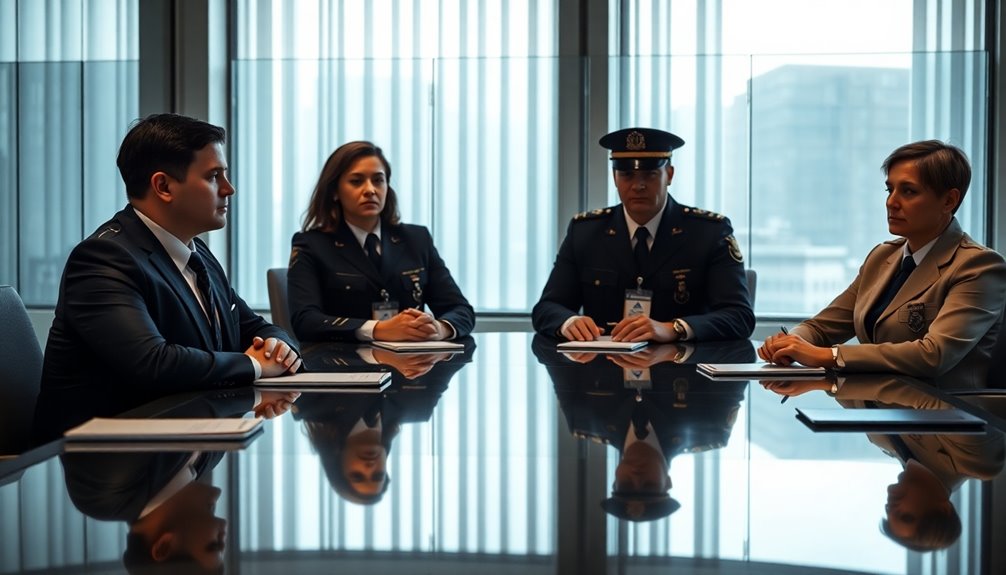

If you want to crack the code for police oral boards, you're in the right place! These interviews are super important for getting into the police force. You'll sit in front of a panel of 3-5 friendly experts who'll ask you questions about your skills and how you handle tough situations. They'll learn about your passion for community service and see if your values match their goals. To ace this, practice answering common questions, stay positive, and connect with the department's history. Keep going, and you'll discover even more tips to help you shine like a star!
Key Takeaways
- Understand the panel's composition to tailor your responses to various perspectives, including law enforcement and community representatives.
- Prepare for situational questions by practicing problem-solving techniques relevant to police work.
- Research the police department's values and history to align your answers with their mission and culture.
- Engage in mock interviews to boost confidence and improve your clarity in communication under pressure.
- Reflect on personal experiences that demonstrate your passion for community service and teamwork.

Police Oral Board Interview: Over 100 Police Interview Questions & Answers
As an affiliate, we earn on qualifying purchases.
As an affiliate, we earn on qualifying purchases.
Overview of Police Oral Boards

The police oral board is a crucial step in the recruitment process, where candidates engage in interviews with a panel of 3-5 members, including department staff and community representatives.
This exciting opportunity lets you showcase your skills and personality! During the interview, the board evaluates how well you handle pressure, work with others, and make decisions. They want to see if your values align with the department's goals.
You'll get to share your experiences and show why you're a great fit for the job. Remember, this is your chance to shine and demonstrate your passion for serving the community.

48 Job Interview Questions Cards – Practice Skills for Your Next Career Opportunity
Essential Phrases: Carefully selected flashcards feature common questions and advice to enhance your preparation and answers.
As an affiliate, we earn on qualifying purchases.
As an affiliate, we earn on qualifying purchases.
Types of Interview Questions
During the police oral board interview, you'll encounter various types of questions designed to gauge your suitability for the role. These questions can help the board learn about your experiences, skills, and how you handle different situations. Here's a little table to show you the types of questions you might face:
| Question Type | Example Questions | Purpose |
|---|---|---|
| General | Why do you want to be a police officer? | Understand your motivation |
| Skills-related | What skills make you a great fit? | Assess your relevant abilities |
| Situational | How would you handle a difficult call? | Evaluate your problem-solving skills |
Each type of question helps the board see if you're the right person for the job. So, be prepared and shine! Additionally, demonstrating self-awareness during your responses can significantly enhance your interview performance.
Mock police oral board interview kit
As an affiliate, we earn on qualifying purchases.
As an affiliate, we earn on qualifying purchases.
Scoring and Evaluation Metrics
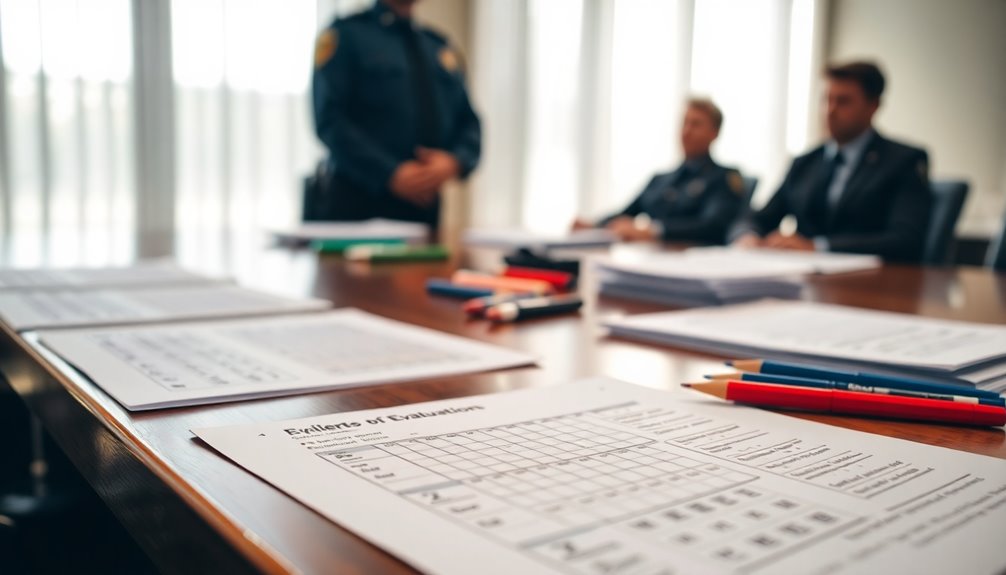
Scoring and evaluation metrics play an essential role in determining your success in the police oral board interview.
Understanding how you're scored can make a big difference! Here's what you should keep in mind:
- Minimum Passing Score: Usually set at 70, so aim for higher!
- Clarity and Confidence: Your answers should be clear and show you believe in yourself.
- Relevance: Make sure your answers relate to police work and show your knowledge.
- Fit with Department Culture: Show how you align with their values and mission.

Restorative Justice Dialogue: An Essential Guide for Research and Practice
Used Book in Good Condition
As an affiliate, we earn on qualifying purchases.
As an affiliate, we earn on qualifying purchases.
Interview Board Composition

When you step into the police oral board interview, you'll face a panel made up of 3 to 5 board members that typically includes experienced law enforcement personnel, HR specialists, and sometimes community representatives.
This mix of people helps create a friendly and balanced atmosphere. Each member has their own experiences and perspectives, which means they'll ask different types of questions.
You might feel a little nervous, but remember, they want to see your true self! They'll assess how well you fit with the department's values.
So, be yourself, show your enthusiasm, and share your stories. Connecting with them can leave a positive impression, making your interview both fun and meaningful!
Good luck, you've got this!
Effective Preparation Techniques

To ace your police oral board interview, effective preparation techniques can make all the difference. You want to feel confident and ready to impress. Here are four helpful tips to guide you:
- Research your department's history and values; knowing these can really help you connect.
- Practice with mock interviews; it'll boost your comfort level and help you think on your feet.
- Reflect on your experiences; think about stories that showcase your skills and motivations.
- Stay positive; a cheerful attitude can shine through and make you memorable.
Common Mistakes to Avoid
Even with thorough preparation, candidates often stumble on common mistakes that can undermine their performance. One big mistake isn't knowing enough about the department. If you can't explain why you want to join, it might raise eyebrows!
Another pitfall isn't giving specific examples when answering questions. Instead of saying you're a team player, share a story about working with others.
Also, watch out for being inconsistent; if your answers change, it can confuse the board.
Finally, negativity is a no-go! Speaking poorly about past experiences can leave a bad impression. Additionally, maintaining a positive attitude can demonstrate your ability to cope with emotional challenges during stressful situations.
Understanding Local Government
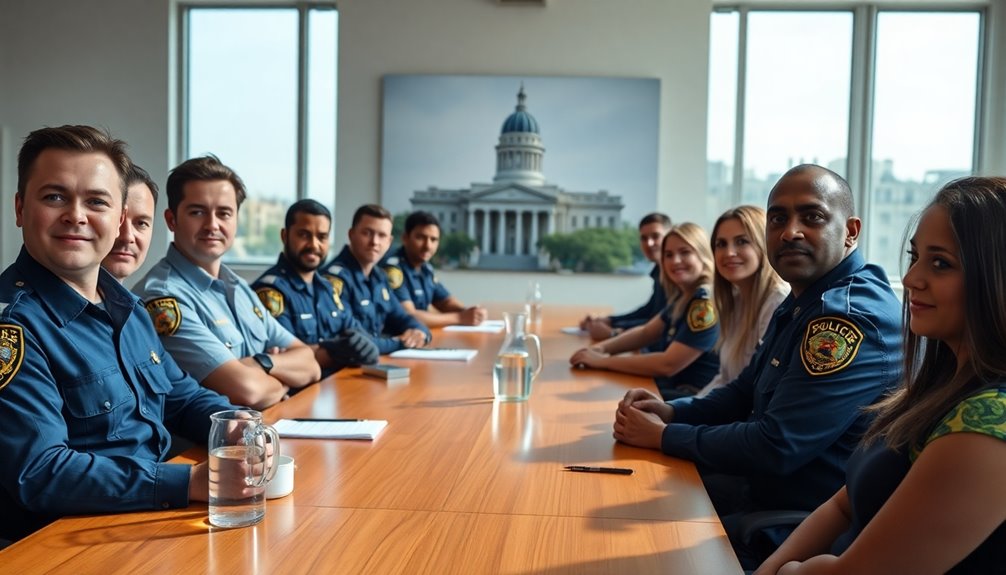
Understanding local government is essential for police candidates, as it directly impacts their effectiveness in the community.
When you grasp how your local government works, you'll feel more connected and prepared. Here are four key areas to focus on:
- Know Your Local Officials: Learn who's in charge and their roles.
- Understand Department Structure: Familiarize yourself with the police department's hierarchy.
- Stay Informed on Community Issues: Be aware of the challenges your community faces.
- Review Crime Statistics: Know the crime rates and trends in your area.
Post-Interview Follow-Up Actions

After the interview process, it is crucial to reflect on your experience and take proactive steps to maintain a positive impression. Following up shows your interest and appreciation. Here's a helpful table to guide you:
| Action | Purpose | Tips |
|---|---|---|
| Send a Thank-You Note | Show gratitude | Be sincere and specific |
| Reflect on Performance | Learn from your experience | Note strengths and weaknesses |
| Stay Informed | Keep up with the application status | Check emails regularly |
| Maintain Positivity | Keep a good attitude | Stay motivated and positive |
| Continue Skill Development | Prepare for future opportunities | Take classes or volunteer |
These simple actions can make a big difference, so go ahead and take those positive steps! You've got this! Additionally, developing mental clarity through techniques like meditation can enhance your focus and effectiveness in future interviews.
Frequently Asked Questions
What Should I Wear to the Police Oral Board Interview?
For your police oral board interview, you should wear something professional and neat! A crisp dress shirt, nice pants, or even a blazer can help you look sharp.
Choose comfortable shoes, too, since you'll want to feel confident while you're talking. Stick to neutral colors, like navy or gray, to keep it classy.
How Long Does the Interview Typically Last?
Did you know that most interviews last about 30 to 60 minutes?
That's a perfect amount of time for you to shine! During this time, you'll answer questions about your experiences and how you'd handle different situations.
Remember to stay calm and be yourself. The board wants to see your personality and how you fit with their team.
Can I Bring Notes or Documents to the Interview?
You can definitely bring notes or documents to the interview!
Just make sure they're organized and relevant. It's like having a little help from your friends when you need it.
You might want to jot down important points or questions you want to ask.
But remember, don't rely too much on them! You want to show the board your confidence and knowledge.
Keep it simple, and you'll shine like a star!
Will I Receive Feedback After the Interview?
Imagine walking through a garden after a revitalizing rain, where every flower blooms with vibrant colors.
After your interview, you might wonder if you'll get feedback, and the answer is usually yes! Many interview boards aim to share insights about your performance.
While it mightn't come right away, they often want you to grow and improve. So, stay excited! This feedback can help you blossom into an even better candidate.
How Soon Will I Know the Results of the Interview?
You'll usually know the results of your interview within a week or two. Isn't that exciting?
During that time, the board discusses your answers and decides if you fit their team. If you don't hear back right away, don't worry!
Sometimes they take longer to make sure they choose the best candidate. Just keep your spirits up and stay positive.
You're doing great, and this is just one step on your journey!
Conclusion
You've revealed the key to your success in the police oral board! Just like a treasure map, each step you take brings you closer to your goal. Remember, your confidence is like a shining beacon that guides you through. By preparing well, avoiding common mistakes, and staying true to yourself, you can impress the board and find your place in the community. So, grab that map, follow your path, and get ready to shine in your journey ahead!