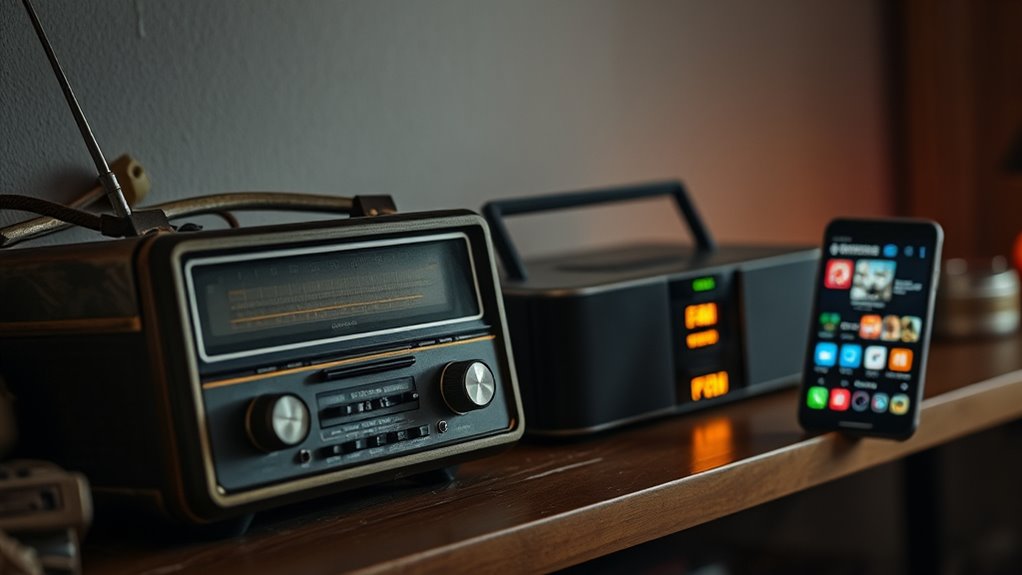

Streaming audio has overtaken traditional AM/FM radio as your favorite way to listen to music and podcasts. Platforms offer personalized, on-demand content accessible across devices, giving you more control and variety. As listeners shift toward digital, radio revenues drop and the industry changes. Algorithms create tailored experiences that keep you engaged longer. Want to discover how this shift affects you and the future of audio? Keep exploring for more insights.

Turn your wind-down time into listening time
- Thousands of audiobooks, podcasts and originals
- Listen on your phone, tablet or Echo — also offline
- Cancel anytime
Key Takeaways
- Streaming audio surpasses traditional radio as the preferred method for music and podcasts due to on-demand, personalized content.
- Podcasts and niche content attract audiences away from AM/FM radio, reducing traditional station listenership.
- Streaming platforms use algorithms for personalized recommendations, increasing user engagement over radio.
- Radio ad revenues decline as advertisers shift budgets to digital and targeted streaming platforms.
- The radio industry faces a permanent transformation, adapting by integrating digital streaming to retain audiences.
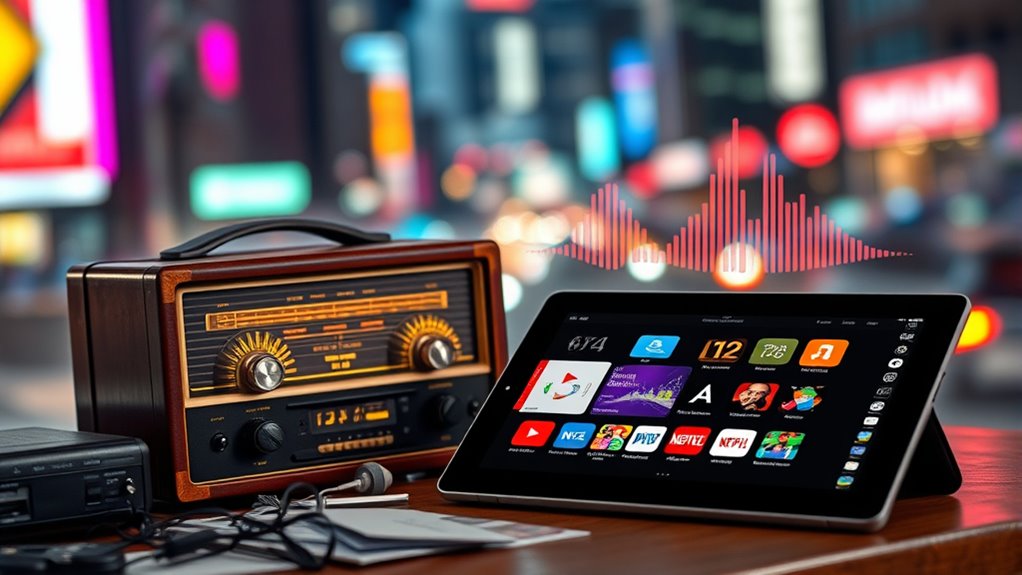
In recent years, streaming audio has rapidly overtaken traditional radio as the preferred way for people to listen to music and podcasts. This shift is reshaping how you consume audio content, making it more personalized, on-demand, and accessible across various devices. As streaming platforms expand their libraries and improve user interfaces, you find it easier than ever to discover new music, follow your favorite shows, or tune into niche content that traditional radio just can’t match. The convenience of pausing, skipping, or creating custom playlists gives you control over your listening experience, something that static radio broadcasts can’t offer.
One of the key drivers behind this progression is the skyrocketing popularity of podcasts. As you seek more engaging, diverse, and specialized content, podcasts fill that demand perfectly. They cover everything from true crime and comedy to education and professional development. This explosion in podcast popularity is a major factor in the decline of traditional radio’s dominance. You’re no longer confined to scheduled programming; instead, you choose what to listen to and when. This shift has also led to significant ad revenue shifts within the industry. Advertisers now see podcasts as a highly targeted and effective advertising platform, leading to increased investments in podcast sponsorships and ads. This, in turn, fuels the growth of podcast creators and streaming services, creating a cycle where more content attracts more listeners, generating even more revenue.
The rise of streaming audio also influences the revenue landscape for traditional radio. As audiences migrate to digital platforms, radio stations face declining listener numbers and ad dollars. To stay relevant, many traditional broadcasters are trying to integrate streaming options or develop their own digital content, but it’s clear that the industry is undergoing a permanent transformation. You notice that local radio ads are less effective when your listening habits lean toward on-demand content. Meanwhile, streaming platforms leverage sophisticated algorithms to personalize your experience, making it more engaging and stickier.
Ultimately, the decline of AM/FM radio and the rise of streaming audio reflect changing consumer preferences and technological advances. You’re now part of a media environment where control is in your hands, and content is tailored to your interests. This evolution not only shifts how you access entertainment but also influences the financial dynamics of the entire industry, with ad revenue moving toward digital and podcast-centric platforms. As streaming continues to grow, traditional radio’s role diminishes, highlighting a new era of audio consumption that’s more flexible, personalized, and driven by your preferences.
wireless Bluetooth headphones for streaming audio
As an affiliate, we earn on qualifying purchases.
As an affiliate, we earn on qualifying purchases.
Frequently Asked Questions
How Has Demographics Influenced Radio and Streaming Preferences?
You notice that demographic shifts greatly influence your listening preferences. Younger audiences tend to favor streaming audio for its customization and on-demand access, while older listeners often stick with traditional AM/FM radio due to familiarity. As demographics evolve, so do listener preferences, with more diverse age groups embracing digital platforms. This shift shapes content, advertising, and how broadcasters and streamers target their audiences.
What Technological Innovations Are Shaping Future Audio Consumption?
You’re likely to notice that smart speakers and AI curation are shaping how you enjoy audio content. These innovations make discovering new music or podcasts effortless, offering personalized experiences that feel almost intuitive. As you speak commands, smart speakers adapt to your preferences, while AI algorithms refine recommendations. This seamless integration of technology transforms your listening habits, making audio consumption more engaging, convenient, and tailored to your unique tastes.
How Do Advertising Strategies Differ Between Radio and Streaming Platforms?
You’ll find that advertising strategies differ markedly between radio and streaming platforms. On radio, ad revenue relies heavily on broad reach, with less precise ad targeting. Streaming platforms, however, leverage advanced ad targeting, allowing you to deliver personalized ads based on user data, which boosts ad revenue. This targeted approach makes streaming more appealing to advertisers and enhances your overall experience with relevant, tailored ads.
What Impact Does Personalized Content Have on Listener Loyalty?
Personalized content substantially boosts your listener engagement and loyalty because it makes your audience feel valued and understood. When you customize content to match your listeners’ preferences, they’re more likely to stay tuned and interact regularly. This level of content customization creates a stronger connection, encouraging repeat listening and fostering a loyal community. Ultimately, personalized experiences make your audience feel more connected, increasing their commitment to your streaming platform.
Are Traditional Radio Stations Adapting to Digital Transformation Effectively?
Like a ship steering stormy seas, traditional radio stations are struggling with digital integration, but some steer toward calmer waters. You see, they’re trying to enhance audience engagement through apps, social media, and online streaming. While progress varies, those embracing digital tools can connect more deeply with listeners, fostering loyalty. So, yes, some stations adapt effectively, but others need to accelerate their digital transformation to stay afloat.
As an affiliate, we earn on qualifying purchases.
Conclusion
As the waves of technology crash forward, your familiar radio dial quietly fades into the background, replaced by the vibrant, endless ocean of streaming audio. Like a sunrise chasing away the shadows, streaming platforms illuminate your world with personalized soundscapes, inviting you to dive deeper and discover new horizons. Though the old radio may whisper its last tune, your journey with music continues, more alive and boundless than ever before.
smartphone holder for listening to music
As an affiliate, we earn on qualifying purchases.
As an affiliate, we earn on qualifying purchases.
personalized streaming music player
As an affiliate, we earn on qualifying purchases.
As an affiliate, we earn on qualifying purchases.
Fall Picks
fall essentials
As an affiliate, we earn on qualifying purchases.