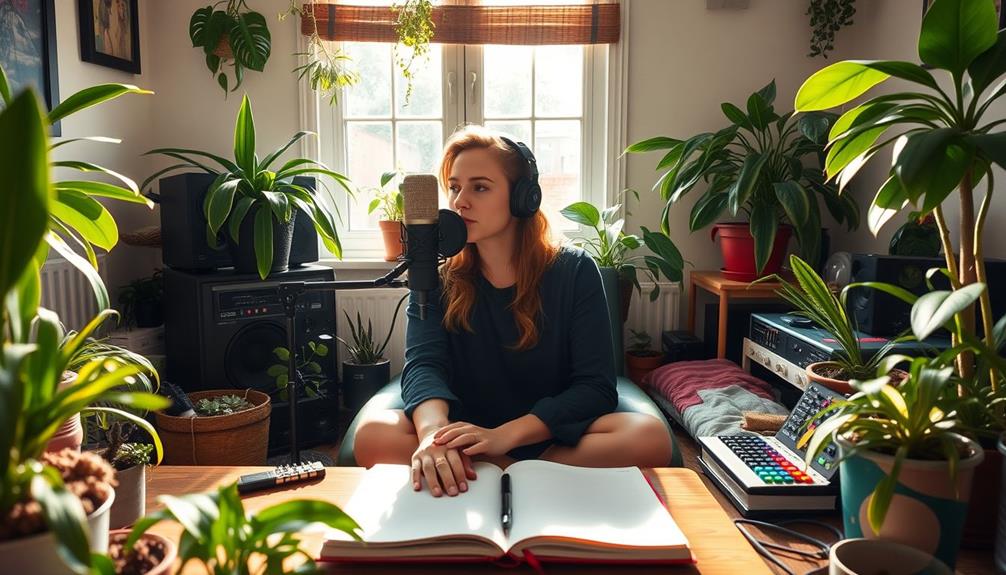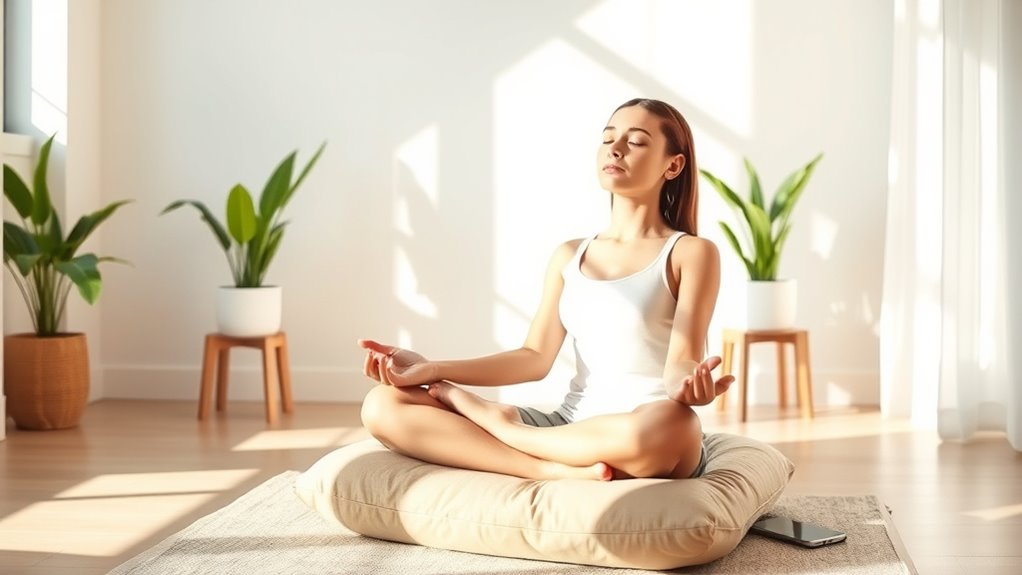

Many users prefer mindfulness apps for self-improvement because they make practicing meditation easy and accessible anytime, anywhere. These apps help you stay consistent with guided sessions, track your progress, and build habits that reduce stress and boost mental clarity. They also create a supportive environment with reminders and community features, making it simple to stay motivated. Keep exploring to discover how these apps can transform your mental well-being and resilience over time.
Key Takeaways
- Meditation apps offer flexible, on-the-go access to guided sessions tailored to user needs.
- They effectively reduce stress, anxiety, and improve emotional regulation for self-improvement.
- Features like progress tracking and reminders promote consistent daily mindfulness practice.
- They provide a variety of styles and themes, making meditation engaging and adaptable.
- The proven benefits and ease of use make them a preferred, convenient self-improvement tool for most users.

In today’s fast-paced world, mindfulness apps have become valuable tools for self-improvement, helping you stay centered and focused amid daily stresses. These apps offer a variety of mindfulness techniques designed to enhance your mental clarity, reduce anxiety, and foster a sense of calm. When you practice regularly, you begin to notice the tangible benefits of meditation, such as improved concentration, better emotional regulation, and increased resilience to stress. The convenience of having guided sessions at your fingertips makes it easier to integrate mindfulness into your daily routine, whether you’re at home, work, or on the go.
Many users find that meditation benefits extend beyond just momentary relaxation. As you deepen your practice with these apps, you may discover that your overall mental health improves. You become more aware of your thoughts and feelings without judgment, which allows you to respond more skillfully to challenges rather than reacting impulsively. This heightened awareness is a core aspect of mindfulness techniques, and apps make it accessible by providing structured guidance that suits your pace and preferences. Over time, these practices help you develop a calmer mind and more balanced emotional state, which can positively impact your relationships and productivity.
The popularity of meditation tools stems from their proven effectiveness and ease of use. Unlike traditional methods that might require in-person classes or extensive resources, mindfulness apps offer a flexible way to learn and practice at your own convenience. You can choose from various meditation styles, durations, and themes, tailoring your experience to your specific needs. This personalized approach encourages consistency, which is key to experiencing lasting benefits. As you stick with your practice, you’ll likely notice improvements in sleep quality, stress management, and overall well-being.
Moreover, these apps often include features like progress tracking, reminders, and community support, which motivate you to stay committed. The integration of mindfulness techniques into your daily life becomes less of a chore and more of a natural habit. As you experience the cumulative benefits of meditation, you’ll probably find it easier to navigate life’s uncertainties with greater ease and clarity. The combination of convenience, customization, and proven benefits explains why 70% of users prefer meditation tools for self-improvement. They not only help you manage stress but also empower you to cultivate a more mindful, balanced, and resilient mindset every day.
Additionally, some apps incorporate backyard greenhouses and other outdoor spaces as part of their mindfulness practices, encouraging users to connect with nature for enhanced relaxation and well-being.
guided meditation app for stress relief
As an affiliate, we earn on qualifying purchases.
As an affiliate, we earn on qualifying purchases.
Frequently Asked Questions
How Do Mindfulness Apps Compare to Traditional Meditation Classes?
Mindfulness apps often offer flexibility and convenience that traditional classes can’t match, making it easier for you to fit meditation into your busy schedule. While classes provide social connection and real-time guidance, apps support your digital detox by encouraging solo practice. Both methods help you improve self-awareness, but apps give you control over your pace, making meditation more accessible and personalized.
Are There Any Age Restrictions for Using Mindfulness Apps?
There are usually no strict age restrictions for using mindfulness apps, but your user maturity matters most. Younger users should have parental guidance, especially for apps with advanced features or content. As long as you’re mature enough to follow instructions and understand the practices, you can benefit from these tools. Always check the app’s terms and age recommendations to guarantee safe and appropriate use.
Can Mindfulness Apps Address Mental Health Disorders?
Think of mindfulness apps as a lifeboat amid stormy seas; they can support your mental health journey. While they may not replace virtual therapy, they help with symptom management and stress reduction. Many users find these tools beneficial for managing anxiety and depression, but if you’re dealing with serious mental health disorders, it is crucial to seek professional help. Mindfulness apps are a helpful supplement, not a sole solution.
How Secure Is My Personal Data on Mindfulness Apps?
Your personal data on mindfulness apps varies in security depending on the app’s data privacy policies. Many apps prioritize user anonymity and implement encryption to safeguard your information. However, you should always review their privacy practices and permissions before sharing sensitive details. Be cautious about what data you provide, and choose apps with transparent, strict data privacy measures to ensure your personal information stays secure.
Do Mindfulness Apps Require Prior Meditation Experience?
You don’t need prior meditation experience to start with mindfulness apps. They often offer beginners’ guidance, making it easy to build meditation familiarity step-by-step. Coincidentally, many users find that these tools help them improve focus and reduce stress even if they’re just starting out. So, whether you’re a novice or experienced, mindfulness apps adapt to your level, guiding you toward self-improvement without requiring previous meditation knowledge.
mindfulness meditation tracker device
As an affiliate, we earn on qualifying purchases.
As an affiliate, we earn on qualifying purchases.
Conclusion
So, while many prefer meditation apps for self-improvement, it’s amusing how we seek peace through screens instead of real silence. You’d think unplugging would be the answer, yet here we are, scrolling for calm. Ironically, the tools designed to quiet your mind often keep you glued to your device. Maybe true mindfulness isn’t about apps at all—it’s about finding stillness beyond the screen, even if that’s the one thing we’re avoiding.
best meditation apps for anxiety
As an affiliate, we earn on qualifying purchases.
As an affiliate, we earn on qualifying purchases.
meditation app with community support
As an affiliate, we earn on qualifying purchases.
As an affiliate, we earn on qualifying purchases.