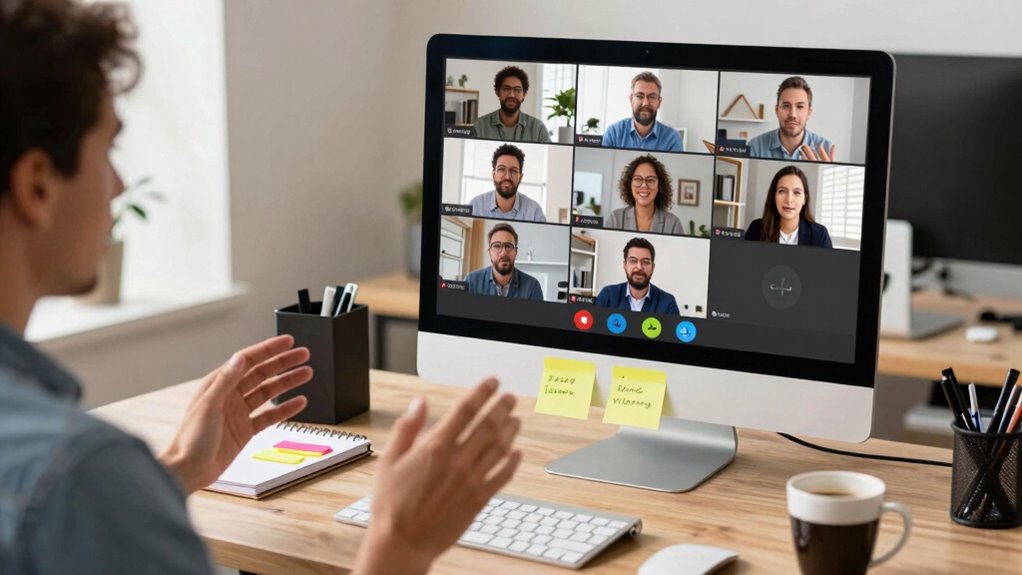

Strong communication in remote work means being clear, respectful, and consistent. You explain your ideas simply and concisely so everyone understands. You listen actively, ask questions, and show engagement to build trust. Using the right tools and setting clear expectations keeps everyone on the same page. Maintaining professionalism and digital etiquette fosters a positive environment. If you keep refining these habits, you’ll find your remote teamwork becoming more effective and connected.
Key Takeaways
- Consistently uses clear, respectful language across all communication channels to avoid misunderstandings.
- Demonstrates active listening by engaging fully and asking clarifying questions during virtual interactions.
- Maintains timely responses and sets expectations for availability to build trust and reliability.
- Employs proper digital etiquette, such as politeness and prompt replies, to foster professionalism.
- Uses a variety of communication tools effectively, ensuring messages are concise and aligned with team goals.

Effective communication is the cornerstone of successful remote work, especially as teams become more distributed. When your team operates across different locations, how you exchange information can make or break your productivity and cohesion. Virtual collaboration relies heavily on clear, consistent, and respectful communication. It’s about more than just sending messages; it’s about ensuring everyone understands and feels valued. To achieve this, mastering digital etiquette is essential. Simple gestures like replying promptly, using polite language, and avoiding misunderstandings through clear wording help create a respectful, efficient environment. When you practice good digital etiquette, you set a tone of professionalism that encourages others to do the same.
Effective remote work depends on clear, respectful communication and practicing good digital etiquette to foster professionalism and understanding.
In remote work, strong communication means being intentional about your message. You want your team to grasp your ideas quickly and accurately, so avoid ambiguity or overly complex language. Use concise, precise language, especially in written communication. Clarity prevents confusion and saves time. When participating in virtual collaboration, make your purpose clear from the start, whether you’re scheduling a meeting, sharing updates, or asking for feedback. This directness helps keep everyone on the same page and minimizes unnecessary back-and-forth. Incorporating effective communication strategies can further improve team interactions and project outcomes.
Active listening is another vital component of effective remote communication. When your teammates speak—whether during video calls or in written messages—give them your full attention. Show engagement by asking relevant questions or summarizing their points to confirm understanding. This demonstrates respect and helps prevent miscommunications. Remember, tone can be hard to interpret in digital formats, so choose your words thoughtfully and consider how they might be received. Additionally, being aware of media literacy can help you better interpret online messages and avoid falling for misinformation, which is crucial in maintaining trust within your team. Building awareness of digital communication tools**** also ensures that your messages are delivered through the most effective channels, reducing confusion.
Consistent use of communication tools also plays a role in strong remote work relationships. Whether it’s email, chat apps, or video conferencing, make sure everyone knows when and how to use each platform appropriately. Set expectations about response times and availability, so team members don’t feel ignored or overwhelmed. Regular check-ins foster transparency and build trust, making it easier to address issues before they escalate.
Ultimately, effective communication in remote work hinges on your ability to adapt to digital environments while maintaining professionalism. Virtual collaboration becomes smoother when you respect digital etiquette, communicate clearly, and listen actively. When you prioritize these principles, your team operates more cohesively, tasks get completed efficiently, and everyone feels connected despite the physical distance. This balanced approach creates a productive, respectful remote workplace where ideas flow freely, and collaboration thrives.

TONOR Conference USB Microphone, Omnidirectional Condenser PC Mic for Video Conference, Recording, Skype, Online Class, Court Reporter, Plug & Play Compatible with Mac OS X Windows PC Compute, G11
- Omnidirectional Pickup Pattern: Captures sound from 360° around the mic
- Long Pickup Distance: Effective at 11.5 ft for clear audio
- Ideal for Video Conferences: Suitable for meetings, seminars, and remote training
As an affiliate, we earn on qualifying purchases.
As an affiliate, we earn on qualifying purchases.
Frequently Asked Questions
How Can I Improve My Virtual Listening Skills?
To improve your virtual listening skills, focus on active listening by giving your full attention during calls and avoiding distractions. Practice clarifying questions to make certain of understanding, like asking for examples or summaries. Make eye contact through your camera, nod, and provide verbal affirmations to show engagement. Taking notes can also help you remember key points and stay attentive. These steps will make your remote communication more effective and collaborative.
What Tools Best Support Remote Team Communication?
Did you know 86% of employees prefer remote work because of better communication? To support your team, use video conferencing tools like Zoom or Microsoft Teams for face-to-face interactions. Collaborative platforms like Slack or Asana keep everyone aligned on tasks and updates. These tools foster real-time communication, reduce misunderstandings, and build stronger connections, helping your team stay productive and engaged, no matter where they’re working from.
How Often Should Remote Teams Have Check-Ins?
You should schedule check-ins for your remote team at least once a week, but adjust based on your team’s needs. Use these meetings for virtual team bonding to strengthen relationships and encourage open dialogue. Incorporate asynchronous updates to keep everyone informed between meetings. Regular check-ins foster trust, improve collaboration, and guarantee that everyone stays aligned, making your remote work environment more effective and cohesive.
How Do I Handle Miscommunication Remotely?
When handling miscommunication remotely, you should clarify misunderstandings promptly, ask open-ended questions, and encourage feedback. Pay attention to non-verbal cues like tone and facial expressions during video calls, and be mindful of cultural differences that can affect interpretation. Reiterate key points clearly and confirm everyone’s understanding. Using these strategies helps prevent miscommunication from escalating and fosters clearer, more effective remote collaboration.
What Are Signs of Poor Remote Communication?
You notice poor remote communication when non-verbal cues are missing or misunderstood, leading to confusion or frustration. If team members rarely respond promptly, ignore clarifications, or seem disengaged, it signals issues. Cultural differences can also cause misinterpretations, making messages seem insensitive or unclear. Pay attention to inconsistent feedback or misunderstandings, as these signs indicate your remote communication needs improvement to foster better collaboration.

Unwritten Rules of Golf: A Guide to the Unwritten Rules of Golf – Handle Slow Play, Avoid Blunders, and Master Course Etiquette with Confidence
As an affiliate, we earn on qualifying purchases.
As an affiliate, we earn on qualifying purchases.
Conclusion
Effective communication is the backbone of successful remote work. When you prioritize clarity, consistency, and active listening, you build trust and collaboration across distances. Did you know that 86% of employees and executives cite lack of collaboration or ineffective communication for workplace failures? By embracing strong, intentional communication practices, you guarantee your team stays connected, productive, and engaged—no matter where you’re working from. Make communication a priority, and watch your remote team thrive.

Internal Team Communication Made Efficient with AI: Transform Collaboration, Productivity, and Workplace Communication with Artificial Intelligence
As an affiliate, we earn on qualifying purchases.
As an affiliate, we earn on qualifying purchases.

Active Listening Techniques: 30 Practical Tools to Hone Your Communication Skills
As an affiliate, we earn on qualifying purchases.
As an affiliate, we earn on qualifying purchases.






![I Made Tinnitus My Friend, Then It Disappeared [Video]](https://thinkozeal.com/wp-content/uploads/2026/08/i-made-tinnitus-my-friend-then-it-disappeared-video-featured-260x140.jpg)