To master digital communication and time management in remote or hybrid work, you should establish clear channels for updates and collaboration, such as shared documents and task management tools. Develop good virtual habits like regular check-ins, setting boundaries, and using status updates. Create routines with scheduled breaks and dedicated focused work periods. By honing these skills, you’ll boost productivity and balance. Keep exploring further tips to enhance your remote work effectiveness.

Turn your wind-down time into listening time
- Thousands of audiobooks, podcasts and originals
- Listen on your phone, tablet or Echo — also offline
- Cancel anytime
Key Takeaways
- Establish clear communication channels and workflows to ensure seamless information sharing and task tracking.
- Develop proactive communication habits, such as regular check-ins and status updates, to maintain team cohesion.
- Use time management tools like calendars and prioritized to-do lists to focus on high-impact tasks.
- Set consistent routines, including scheduled breaks, to enhance productivity and prevent burnout.
- Maintain boundaries between work and personal life to support well-being and work-life balance.
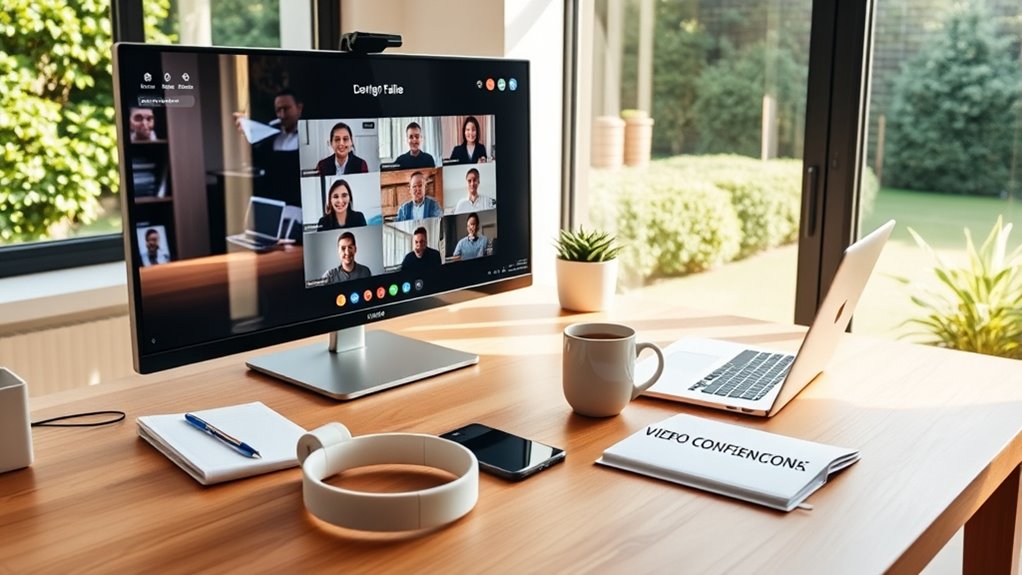
The shift toward remote and hybrid work has transformed the way we approach our jobs, offering greater flexibility and autonomy. But with this new landscape comes the challenge of maintaining effective communication and staying productive across distances. Virtual collaboration becomes essential as you work alongside colleagues who are often scattered across different locations. To succeed, you need to leverage the right productivity tools that facilitate seamless interaction and keep everyone aligned. These tools can include instant messaging platforms, video conferencing apps, shared document editors, and task management software. They help bridge the physical gap, guaranteeing your team stays connected, engaged, and focused on common goals.
Using virtual collaboration effectively requires discipline and intentionality. You should establish clear communication channels for different purposes—like quick updates via chat, in-depth discussions through video calls, and document sharing for collaborative work. This prevents information from getting lost and minimizes misunderstandings. Productivity tools streamline your workflow by centralizing tasks and deadlines, making it easier to prioritize and track progress. For instance, task management apps enable you to assign responsibilities, set deadlines, and monitor completion without the need for constant meetings. When everyone has visibility into ongoing work, accountability naturally improves, and you can identify bottlenecks early before they impact overall productivity.
Establish clear communication channels and use productivity tools to enhance accountability and streamline workflows.
In addition to choosing the right tools, you need to develop good habits for virtual collaboration. Be proactive in communicating your availability, so teammates know when you’re accessible and when you need focused time. Use status updates or presence indicators to signal your current working mode. Regular check-ins, whether daily or weekly, help reinforce team cohesion and keep everyone on the same page. Make sure your virtual meetings are purposeful, well-organized, and concise. This respects everyone’s time and keeps engagement high. Screen sharing, collaborative note-taking, and real-time feedback during meetings make remote discussions more interactive and productive. Incorporating effective communication strategies enhances team collaboration and minimizes misunderstandings.
Time management becomes essential as remote work blurs the boundaries between professional and personal life. To stay on top of your tasks, set a routine that mirrors your traditional workday—start and end at consistent times, schedule breaks, and dedicate uninterrupted blocks of time for deep work. Use calendar tools to block time for focused tasks and avoid multitasking, which can diminish your efficiency. Prioritize your to-do list daily, focusing on high-impact activities first. This way, you guarantee your efforts align with your goals and deadlines, preventing work from spilling into personal time. Remember, mastering digital communication and time management isn’t just about using tools; it’s about creating habits that support your productivity and well-being in a remote or hybrid work environment.
remote work task management software
As an affiliate, we earn on qualifying purchases.
As an affiliate, we earn on qualifying purchases.
Frequently Asked Questions
How Can I Build Rapport With Remote Colleagues Effectively?
You can build rapport with remote colleagues effectively by starting with virtual introductions to break the ice and create familiarity. Keep up informal check-ins, like quick chats or casual messages, to foster a friendly environment. Show genuine interest in their work and personal lives, and be consistent with your communication. These small efforts help establish trust and camaraderie, making remote collaboration more natural and enjoyable.
What Tools Enhance Real-Time Collaboration Across Different Time Zones?
Think of tools as your digital compass. Use virtual whiteboards for real-time brainstorming and instant messaging for quick, clear communication across time zones. These tools keep everyone aligned like a well-orchestrated symphony, regardless of when they work. By embracing them, you guarantee seamless collaboration, fostering understanding and productivity. Just as a compass guides explorers, these tools guide your team through the complexities of remote teamwork.
How Do I Manage Distractions in a Hybrid Work Environment?
To manage distractions in a hybrid work environment, focus on strategies like setting clear boundaries and designated workspaces. Use distraction management techniques such as turning off notifications and scheduling focused work periods. Communicate your availability to colleagues to minimize interruptions, and take regular breaks to maintain productivity. By implementing these focus strategies, you create a productive environment that helps you stay on task despite potential distractions.
What Strategies Ensure Consistent Team Communication Remotely?
Did you know that 87% of remote workers say clear communication boosts productivity? To guarantee consistent team communication, prioritize virtual team bonding to strengthen relationships. Use asynchronous updates for flexibility, allowing team members to share progress without real-time meetings. Regular check-ins, clear expectations, and collaborative tools help everyone stay aligned and engaged, making remote communication seamless and effective.
How Can I Balance Work and Personal Life When Working Remotely?
To balance work and personal life when working remotely, you need to set clear personal boundaries and stick to a schedule. Create designated work hours, avoid checking emails after hours, and communicate your boundaries to colleagues. Prioritize tasks, take regular breaks, and make time for personal activities. This helps maintain a healthy work life balance, reduces stress, and guarantees you can enjoy both your professional and personal pursuits.
video conferencing apps for team collaboration
As an affiliate, we earn on qualifying purchases.
As an affiliate, we earn on qualifying purchases.
Conclusion
Now that you’ve mastered digital communication and time management, you’re ready for the next challenge—keeping remote work productive and engaging. But what if subtle distractions or overlooked routines threaten your progress? Stay sharp, because the true test begins when you face unexpected hurdles. Are you prepared to adapt and thrive in this evolving work landscape? The key to success lies just beyond what you see—ready to discover it? The journey continues, and your best move is yet to come.
As an affiliate, we earn on qualifying purchases.
virtual meeting productivity tools
As an affiliate, we earn on qualifying purchases.
As an affiliate, we earn on qualifying purchases.
Fall Picks
fall essentials
As an affiliate, we earn on qualifying purchases.