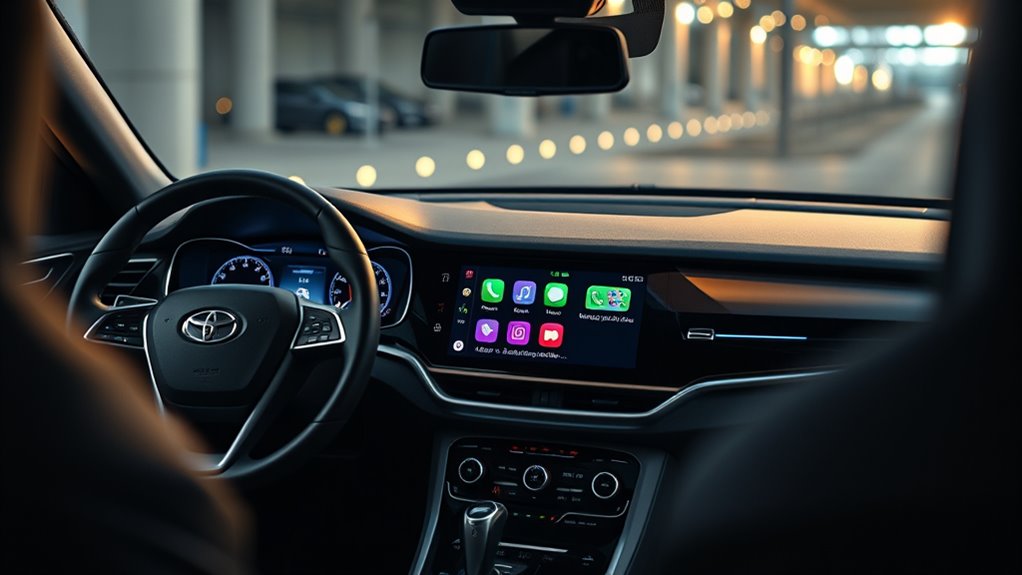

The evolution of in-car audio systems has turned your driving experience into something much more connected and safer. With advancements like Apple CarPlay and Android Auto, you can mirror your smartphone to the vehicle’s display, quickly access apps, navigation, and music using voice commands. Wireless streaming already makes everything easier, from playlists to podcasts, while voice control reduces distractions. If you keep exploring, you’ll discover how these innovations continue shaping smarter, more enjoyable journeys.
Key Takeaways
- In-car audio systems have evolved from basic radios to sophisticated entertainment hubs integrated with smart technology.
- Voice command systems enable hands-free control of audio, increasing safety and convenience for drivers.
- Wireless streaming via Bluetooth or Wi-Fi allows seamless playback of media from smartphones and tablets.
- Apple CarPlay and Android Auto mirror device interfaces onto vehicle displays, offering safer app and navigation access.
- These advancements enhance driving safety, enjoyment, and connectivity, transforming the in-car experience into a smart, intuitive environment.
Have you ever wondered how in-car audio has transformed over the years? It’s incredible to see how far it’s come, especially with the advent of connected cars and smart integrations. Today, your car isn’t just a vehicle; it’s a hub of entertainment and information. One of the biggest leaps forward is voice command integration, which allows you to control your audio system hands-free. Instead of fiddling with buttons or screens, you can simply speak your commands. Want to change the song, adjust the volume, or ask for directions? Just say the word. This feature is not only convenient but also enhances safety by keeping your hands on the wheel and eyes on the road. Voice command systems have become smarter over time, understanding natural language and context, making interactions feel more intuitive. As these technologies continue to evolve, they contribute to a safer and more enjoyable driving experience. Wireless streaming is another game-changer in the evolution of in-car audio. Gone are the days of tangled cords and limited media options. Now, you can effortlessly connect your smartphone or tablet to your car’s audio system via Bluetooth or Wi-Fi. Wireless streaming offers a seamless experience, allowing you to play your favorite playlists, podcasts, or audiobooks without any physical connection. It also means you can switch between devices easily, whether it’s your phone, tablet, or other compatible gadgets. This flexibility makes your driving experience more personalized and convenient, especially with the increasing popularity of streaming services like Spotify, Apple Music, and Google Podcasts. The integration of these technologies has paved the way for platforms like Apple CarPlay and Android Auto, which are transforming how you interact with your device while on the road. These systems mirror your phone’s interface on your car’s display, giving you access to apps, navigation, messaging, and music in a safe, driver-friendly manner. With voice command integration, you can ask your car to play a specific song, send a message, or get directions without taking your eyes off the road. Wireless streaming is seamlessly incorporated into these platforms, so connecting your device is quick and hassle-free, without the need for cables. As a result, your in-car audio experience becomes safer, more connected, and more aligned with your digital lifestyle. In addition, understanding the importance of emotional support can help drivers manage stress and stay focused during long or challenging trips. In short, the evolution of in-car audio with voice command integration and wireless streaming has made driving more enjoyable and safer. These advancements allow you to stay connected, entertained, and focused, transforming your vehicle into a smart, intuitive space that adapts to your needs.
Frequently Asked Questions
How Do I Update My Apple Carplay or Android Auto Software?
To update your Apple CarPlay or Android Auto software, check for wireless updates through your car’s settings or your phone’s app. Make certain your system is compatible with the latest version, and keep your device connected to Wi-Fi or Bluetooth for seamless updates. Sometimes, updates happen automatically, but you can also manually initiate them in your vehicle’s infotainment system or phone app to ensure you have the latest features.
Can I Use Both Apple Carplay and Android Auto Simultaneously?
You can’t use Apple CarPlay and Android Auto simultaneously on the same device, as most vehicles and systems prioritize dual device compatibility but only support one at a time. While it’s tempting to access both, your best bet is to switch between them depending on your device preference. This guarantees you enjoy seamless, safe navigation and entertainment without overloading your system’s capabilities.
What Are the Compatibility Requirements for In-Car Audio Systems?
You need a compatible in-car audio system that supports Bluetooth pairing and is up-to-date with firmware updates. Make certain your vehicle’s infotainment system can connect seamlessly via Bluetooth for calls and media. Check the manufacturer’s specs for compatibility with your smartphone’s OS and guarantee the system receives regular firmware updates for peak performance and new features. This guarantees smooth integration with both Apple CarPlay and Android Auto.
How Do Connected Cars Impact Data Privacy and Security?
Connected cars impact your data privacy and security by collecting and transmitting personal information, which can be vulnerable if not protected. You should look for cars that use data encryption to safeguard your data and review privacy policies to understand how your information is used. Being aware of these measures helps you protect your personal data, ensuring your connected car experience remains safe and secure.
Are There Any Differences in Sound Quality Between Traditional and Connected Audio Systems?
You’ll notice that connected audio systems often deliver similar or even better sound quality compared to traditional setups. The key factors are signal stability and digital processing, which can enhance clarity and bass response. However, your experience depends on the quality of the system and connection. Stable signals ensure consistent sound, so high-quality Wi-Fi or Bluetooth connections make a big difference in achieving ideal sound quality in connected cars.
Conclusion
As you embrace the future of in-car audio, you’ll notice how connected cars, Apple CarPlay, and Android Auto transform your driving experience. Did you know that 85% of new vehicles now include some form of smartphone integration? This shift means you’ll enjoy seamless entertainment and smarter navigation on the go. So, embrace these innovations, and let your drive become more connected, convenient, and enjoyable than ever before.