
Smart lighting becomes truly impactful when it connects ambiance to your emotions. By using colors and brightness levels that align with your mood and routines, you can create a space that enhances well-being and supports relaxation or energy. Personalization allows you to control the atmosphere instantly, reflecting natural rhythms and external cues. When your environment responds to how you feel, it transforms ordinary lighting into a powerful tool for mood and mental health—more insights await if you keep exploring.
Key Takeaways
- Linking lighting colors and intensity to emotional states enhances user engagement and emotional resonance.
- Personalization features allow users to create environments that support specific moods and routines.
- Incorporating color psychology helps craft ambiance that positively influences mental well-being.
- Connecting lighting design to natural rhythms fosters relaxation and emotional stability.
- Seamless integration of ambiance controls transforms simple lighting into emotional expression tools.
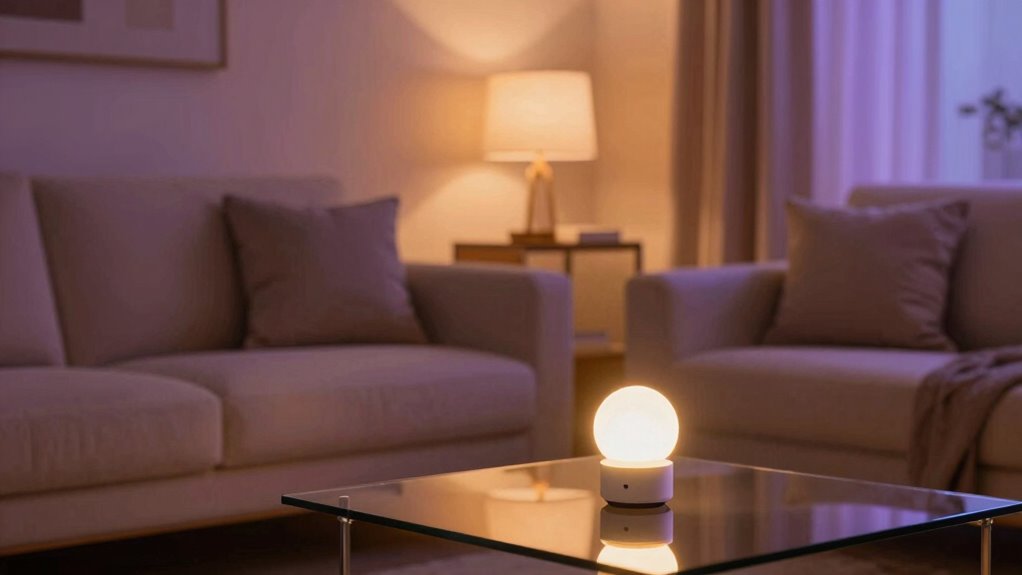
Have you ever wondered how smart lighting can transform your living space? It’s not just about brightening a room; it’s about creating an environment that enhances your mood and makes everyday moments more meaningful. Smart lighting systems tap into the principles of color psychology to influence your emotions, making your space more inviting, calming, or energizing, depending on what you need. When you choose the right colors and adjust the lighting to suit different occasions, you’re designing an atmosphere that resonates with your feelings and routines. This connection between ambiance and emotion is at the core of a compelling user experience, turning ordinary spaces into personalized retreats.
Smart lighting transforms your space into a personalized retreat that enhances mood and emotional well-being.
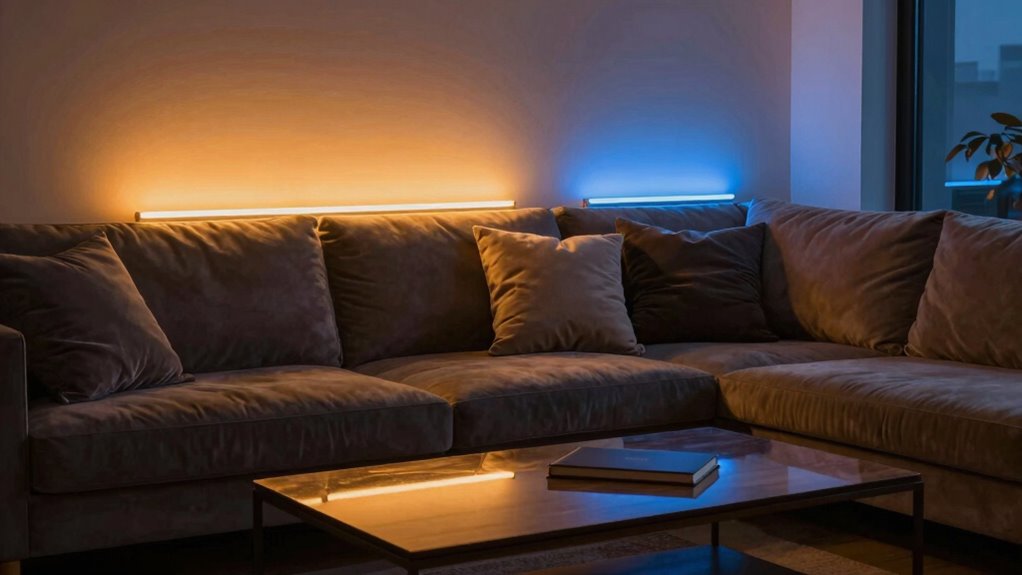
With smart lighting, you have control over a spectrum of colors that can evoke specific emotional responses. For example, soft blues and greens promote relaxation, perfect for winding down after a long day, while vibrant reds and yellows can boost energy during mornings or workouts. By understanding the impact of color psychology, you can craft environments that support your mental and emotional well-being. The beauty of this technology lies in its adaptability—you can program your lights to change throughout the day, aligning your surroundings with your natural rhythms. This seamless integration heightens your user experience, making your interactions with your environment feel intuitive and satisfying. Incorporating biodiversity principles into your lighting choices can also enhance your connection to the natural world around you.
Furthermore, smart lighting allows for personalized control that directly influences your mood. Imagine walking into a room and immediately feeling a sense of calm because the lights are set to a gentle, warm hue. Or, picture hosting a lively dinner party where the lighting shifts to bright, dynamic colors that energize your guests. You’re actively shaping the ambiance to match your emotional intent, which makes your space more than just a place to be—it becomes an extension of your feelings and personality. When your lighting adapts to your preferences, it enhances your overall experience, creating a sense of comfort and control that traditional lighting simply can’t match. Understanding color psychology can help you select the most effective hues for different settings and moods.
Ultimately, smart lighting’s ability to connect ambiance to emotion is what makes it so powerful. It’s not just about illumination; it’s about crafting atmospheres that elevate your everyday life. By understanding how color psychology influences mood and integrating that knowledge into your lighting choices, you turn a simple switch into a tool for emotional expression and well-being. Recognizing the emotional impact of lighting choices enables you to create environments that truly support your mental health and happiness. The result is a user experience that’s deeply personal, effortlessly adaptable, and genuinely transformative.
As an affiliate, we earn on qualifying purchases.
Frequently Asked Questions
How Does Smart Lighting Adapt to Different Emotional States?
You can adapt smart lighting to your emotional states through ambient synchronization and emotional calibration. When your mood shifts, the lighting adjusts in real-time to reflect or influence your feelings. For example, it brightens for energy, dims for relaxation, or changes color to match your mood. This dynamic response creates a personalized environment that enhances your emotional well-being, making your space more comfortable and emotionally connected.
Can Smart Lighting Be Customized for Individual Preferences?
Yes, smart lighting can be customized for your individual preferences. You have a variety of personalization options, allowing you to set the perfect ambiance. With user control, you can easily adjust brightness, color, and timing to match your mood or activity. This flexibility guarantees your lighting experience is tailored to your unique needs, creating a more comfortable and personalized environment that enhances your daily routines.
What Are the Privacy Concerns With Emotion-Based Lighting?
You should be aware that emotion-based lighting raises privacy concerns, especially regarding data security. Your personal emotional responses could be collected and stored, risking potential breaches. Privacy regulations aim to protect your data, but gaps still exist. Always review the privacy policies of smart lighting systems to guarantee your emotional data isn’t misused, and opt for providers who prioritize data security and comply with relevant privacy laws.
How Quickly Can Smart Lighting Respond to Mood Changes?
Smart lighting responds almost instantly, like a lightning strike, thanks to advanced lighting automation and sensors. When your mood shifts, the system quickly adjusts colors based on color psychology principles, creating the perfect ambiance. This seamless response helps you feel more comfortable and in control, making your environment truly reflect your emotions. With rapid reaction times, your smart lighting adapts smoothly to your changing mood, enhancing your overall experience.
Are There Health Implications of Using Emotion-Driven Lighting?
Using emotion-driven lighting can positively impact your emotional well-being by creating calming or energizing atmospheres. However, there’s some concern about disrupting sleep patterns or causing eye strain if the lighting isn’t properly calibrated. Light therapy, when used appropriately, can enhance mood and reduce stress. Just make certain your lighting settings promote a healthy balance, avoiding excessive brightness or blue light exposure, especially before bedtime, to support your overall health.
As an affiliate, we earn on qualifying purchases.
Conclusion
Imagine walking into your home as the lights shift seamlessly to match your mood—calm, energized, or cozy. With smart lighting that connects ambiance to emotion, you don’t just see the change—you feel it. Some might think it’s just a fancy gadget, but it’s truly about creating a space that reflects and enhances your inner world. Embrace this innovation, and turn every moment at home into a personalized, immersive experience.
As an affiliate, we earn on qualifying purchases.
smart lighting for relaxation and energy
As an affiliate, we earn on qualifying purchases.
As an affiliate, we earn on qualifying purchases.