

Teaching money skills early helps you build a solid financial foundation for your youth. By explaining concepts like budgeting, saving, and basic investing, you empower them to make responsible decisions. Using simple activities and real-life examples makes these lessons engaging and practical. Encouraging good habits now can prevent future debt and financial stress. Keep exploring ways to introduce these topics, as strengthening their financial literacy will benefit them for years to come.
Key Takeaways
- Introducing basic financial concepts like saving, budgeting, and investing lays a strong foundation for lifelong money skills.
- Practical activities such as tracking expenses or simulating investments make financial learning engaging and tangible.
- Teaching responsible borrowing and debt avoidance helps youth develop healthy money management habits early.
- Setting financial goals and differentiating needs versus wants foster responsible spending and disciplined saving.
- Early financial education promotes informed decision-making, leading to greater financial stability and confidence in adulthood.
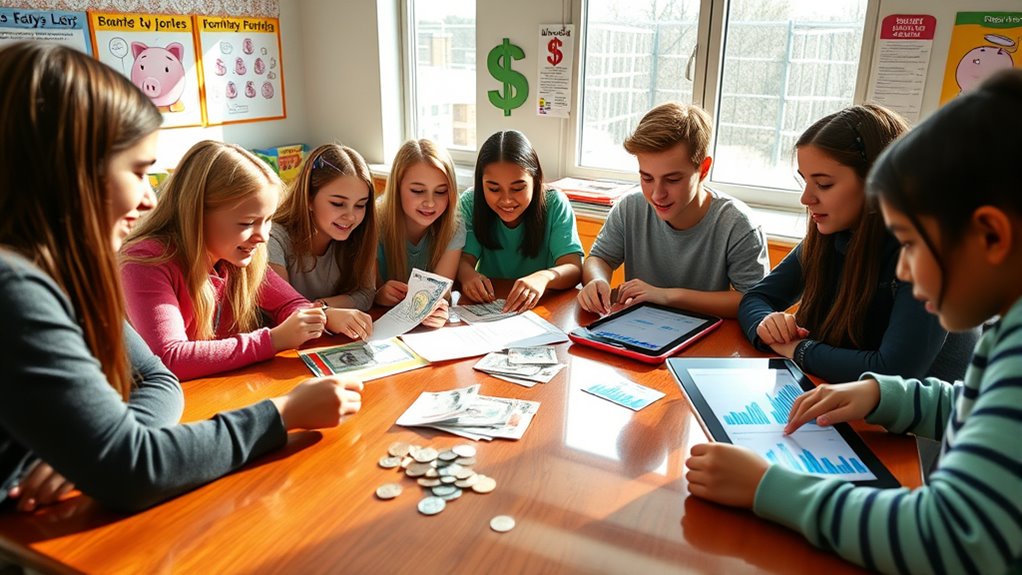
Have you ever wondered why so many young people struggle with money later in life? The answer often lies in the lack of early financial education. When you start learning about money early on, you set yourself up for a more secure financial future. Teaching kids about investment strategies and budgeting techniques isn’t just about handling money today—it’s about building skills that last a lifetime. If you want to help the youth in your life become financially savvy, understanding how to introduce these concepts is essential.
Early financial education builds lifelong money skills for a secure future.
Investment strategies are often seen as complex, but they can be simplified for young learners. You can start by explaining the basics of compound interest and how investments grow over time. Showing them how to research different options—like stocks, bonds, or mutual funds—gives them a foundation to make informed decisions later. You don’t need to turn them into financial experts overnight; instead, introduce them to the idea that money can work for them if they learn how to invest wisely. Practical activities, like simulating investments or opening a beginner’s account, make these concepts tangible and engaging.
Budgeting techniques are equally important. Many young people don’t realize how significant it is to track their income and expenses. Teaching them to create simple budgets helps them understand where their money goes and how to prioritize saving. You can encourage them to set financial goals, whether it’s saving for a new gadget or college, and then show them how to allocate funds toward those goals. Emphasize the importance of distinguishing between needs and wants, and help them develop habits like saving a portion of their allowance or earnings. These skills foster discipline and give them confidence in managing their money responsibly.
You should also highlight the importance of avoiding debt and living within their means. Educating about credit cards, loans, and interest rates helps prevent future financial pitfalls. Use real-life examples, like how paying off a credit card balance on time can boost their credit score, or how overspending can lead to unnecessary debt. Additionally, understanding the role of financial literacy and responsible money management from an early age can significantly impact their ability to make sound financial decisions in adulthood. By understanding these concepts early, they can develop a healthy relationship with money, instead of viewing it as something to fear or avoid.

Sewing Machine Projects for Children: For children aged 7+ years – A fun and creative guide to making 30 toys, decorations, bags, and more
As an affiliate, we earn on qualifying purchases.
As an affiliate, we earn on qualifying purchases.
Frequently Asked Questions
When Is the Best Age to Start Teaching Kids About Money?
You should start teaching kids about money as early as age 3, focusing on age-appropriate concepts that match their developmental milestones. At this stage, introduce simple ideas like saving and spending with toys or allowance. As they grow, gradually introduce more complex topics. Early financial education builds healthy habits, helping them understand money’s value and make smarter decisions later in life.
How Can Parents Make Financial Lessons Engaging for Children?
You can make financial lessons engaging by incorporating gamification techniques, like earning points or rewards for saving or budgeting, which makes learning fun. Use storytelling strategies to create relatable scenarios that help children understand money concepts in a memorable way. Keep lessons interactive, involve games, or use real-life examples to hold their attention and make financial education a rewarding experience they’ll enjoy and remember.
What Are Effective Methods to Teach Saving and Budgeting?
Did you know that kids who learn about saving early are three times more likely to develop good money habits? To teach saving and budgeting effectively, use practical exercises like setting up a mock budget or savings jar. Incorporate visual aids such as charts or graphs to make concepts clearer. You can also involve them in real-life decisions, helping them see how money works and build confidence in managing their finances.
How Do Cultural Differences Influence Financial Education for Youth?
Cultural differences shape how you approach financial education by influencing norms and financial perspectives. You might find that in some cultures, saving is emphasized, while others prioritize spending or communal sharing. These cultural norms affect how you teach money skills, making it essential to tailor lessons to respect diverse values. Understanding these perspectives helps you create more effective, relatable financial education for youth, fostering healthy money habits rooted in their cultural context.
Are There Any Online Tools or Apps Suitable for Teaching Kids About Money?
Imagine a treasure chest waiting to be opened—online tools can do just that. You’ll find digital games and interactive stories that make learning about money fun and engaging. Apps like FamZoo, PiggyBot, and Money Lion offer hands-on experiences, helping kids grasp concepts like saving, budgeting, and spending. These tools turn financial education into an adventure, making it easier for your child to build strong money skills early on.

QUOKKA Financial Literacy Flash Cards for Teens – 110 Cards Teaching Kis About Money Management, Budgeting, Savings – Easy Money Games for Kids Ages 12+ – Fun Financial Literacy Games and Learning
110 CARDS FOR FINANCIAL LEARNING: these flashcards explain essential money concepts like budgeting, saving, economy, and stocks; simple…
As an affiliate, we earn on qualifying purchases.
As an affiliate, we earn on qualifying purchases.
Conclusion
Think of financial education as planting a seed in a young mind’s garden. With proper care and guidance, that seed grows into a strong tree, bearing the fruits of wise money decisions. Early lessons act as sunlight and water, shaping a future where you can confidently navigate financial storms and harvest success. The more you nurture your financial knowledge now, the more resilient and fruitful your financial journey will become.

Money Skills for Teens: A Beginner’s Guide to Budgeting, Saving, and Investing. Everything a Teenager Should Know About Personal Finance (Life Skills for Tweens & Teens)
As an affiliate, we earn on qualifying purchases.
As an affiliate, we earn on qualifying purchases.

Paycheck to Billionaire: Master Financial Freedom – Smart Investing & Cost Management Board Game – Ideal for Game Night, Educational Play – Perfect for Boys and Girls Ages 8+, Adults and Family
🎓 Educational & Fun for All Ages: Dive into financial freedom with "Paycheck to Billionaire," a strategic board…
As an affiliate, we earn on qualifying purchases.
As an affiliate, we earn on qualifying purchases.