

To create a personal budget that leads to financial stability, start by tracking all your expenses to understand your spending habits. Set clear financial goals like saving or paying off debt, then list your income and fixed costs. Allocate funds toward goals and variable expenses, staying flexible to adapt as needed. Regularly review and adjust your budget to stay on track, and adopt a mindful approach to managing your money to build confidence and security. Learn more about fine-tuning your budget for lasting success.
Key Takeaways
- List all sources of income to establish your total monthly earnings.
- Track all expenses to understand spending habits and identify overspending areas.
- Set clear financial goals and break them into manageable milestones for motivation.
- Create a realistic budget by allocating funds for fixed and variable expenses.
- Regularly review and adjust your budget to stay aligned with changing income and priorities.

Have you ever wondered how some people seem to manage their money effortlessly? The secret often lies in creating a solid personal budget. It all starts with understanding where your money goes and what you want to achieve financially. To do that, you need to begin by tracking expenses. This means keeping a detailed record of every dollar you spend, from rent and groceries to entertainment and miscellaneous purchases. You can do this using apps, spreadsheets, or even a simple notebook. The goal is to get an accurate picture of your spending habits. Once you know where your money is going, you can identify areas where you might be overspending and adjust accordingly. Tracking expenses isn’t about restricting yourself; it’s about gaining awareness and control over your finances.
Understanding your spending habits through expense tracking is key to gaining financial control and achieving your goals.
After you’ve tracked your expenses for a few weeks, the next step is setting financial goals. Think about what you want to accomplish—whether it’s paying off debt, saving for a vacation, building an emergency fund, or investing for the future. Clear goals give your budgeting efforts purpose and direction. Break these goals into manageable milestones, like saving a specific amount each month or reducing your debt by a certain percentage. When your goals are well-defined, it becomes easier to prioritize your spending and savings. You’ll find motivation in seeing your progress and staying committed to your financial plan.
Creating a realistic budget involves comparing your income to your expenses and goals. Start by listing your total monthly income, including all sources like wages, side gigs, or passive income. Then, subtract your fixed costs—like rent, utilities, and insurance—and variable expenses such as groceries, transportation, and entertainment. With this information, you can allocate funds toward your financial goals. For example, if you want to save $200 a month, see how that fits into your overall budget and adjust your discretionary spending accordingly. Remember, a budget isn’t a strict rulebook; it’s a flexible plan that adapts to your income and priorities. Additionally, being aware of regional divorce statistics can help you plan for unexpected financial changes or emergencies.
To stay on track, review your budget regularly—weekly or monthly—and make necessary adjustments. Life changes, expenses fluctuate, and new goals emerge. The key is to stay proactive and honest with yourself. Celebrate small victories along the way, like sticking to your spending limits or reaching a savings milestone. Over time, these habits will help you develop financial stability and confidence. Creating a personal budget isn’t about deprivation; it’s about making conscious decisions that align with your goals and values. With discipline and awareness, you’ll find it easier to manage your money and build a secure financial future.
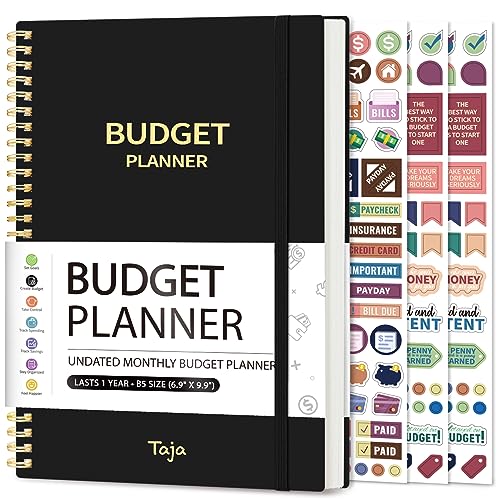
Budget Planner – Monthly Budget Book with Expense Tracker Notebook, Undated Bill Organizer & Finance Planner to Take Control of Your Money, Account Book to Manage Your Finances-Black
Effective Budget Planning – Take control of your finances with the budget account book. This comprehensive planner allows…
As an affiliate, we earn on qualifying purchases.
As an affiliate, we earn on qualifying purchases.
Frequently Asked Questions
How Often Should I Review and Adjust My Budget?
You should review your budget at least monthly to guarantee it stays accurate and effective. Regular review frequency helps you spot overspending or income changes early. When you notice discrepancies, adjust your strategies accordingly—like cutting expenses or reallocating funds. Staying consistent with these reviews and adjustments keeps your finances on track, allowing you to meet your financial goals more easily and adapt to any unexpected expenses or income fluctuations.
What Tools or Apps Are Best for Budgeting?
You should try tracking apps like Mint or YNAB, which help you monitor spending and stay on budget. The envelope system can also be effective; you can use physical envelopes or digital ones in apps like Goodbudget. These tools make it easy to allocate funds, track expenses, and stay disciplined, helping you manage your finances more effectively and reach your financial goals faster.
How Can I Save More on Monthly Expenses?
To save more on monthly expenses, focus on effective savings strategies like setting aside a specific amount each month. Use expense tracking tools to monitor your spending habits closely. Cut unnecessary costs, compare prices before buying, and look for discounts. Automate your savings to guarantee consistency. By regularly reviewing your expenses, you can identify areas to reduce and boost your overall savings, making your financial goals more achievable.
What Should I Do if I Overspend?
If you overspend, start by tracking expenses to identify where your money went. Then, set limits for each category to prevent future overspending. Cut back on non-essential expenses and adjust your budget accordingly. Consider using budgeting apps for real-time monitoring. Staying disciplined and reviewing your spending regularly helps you stay on track, making it easier to regain financial stability and avoid overspending in the future.
How Do I Prioritize Debt Repayment Within My Budget?
You should prioritize debt repayment by starting with the debt snowball method, focusing on paying off the smallest balances first for quick wins. At the same time, consider interest prioritization by targeting high-interest debts to minimize overall costs. Allocate a specific amount toward these debts each month, adjusting your budget as needed. This combined approach keeps you motivated and helps you clear debts more efficiently.

Mastering Expense Tracking and Budgeting Apps: Automated Tracking and Financial Planning
As an affiliate, we earn on qualifying purchases.
As an affiliate, we earn on qualifying purchases.
Conclusion
Remember, starting a personal budget might seem overwhelming at first, but it’s the key to your financial stability. Don’t let fear of complexity stop you—break it into simple steps and stay consistent. Even if your income fluctuates, adjust your budget accordingly. Taking control today sets you up for a secure future. So, don’t wait for perfect conditions—begin now and watch your financial confidence grow. You’ve got this!

Personal Budget Spreadsheet: A Simple Digital Template for Budgeting (Google Sheets & Microsoft Excel)
As an affiliate, we earn on qualifying purchases.
As an affiliate, we earn on qualifying purchases.

The Intentional Life Planning Journal: Decluttering, Financial budgeting, Goal setting, Mindfulness
As an affiliate, we earn on qualifying purchases.
As an affiliate, we earn on qualifying purchases.