
TL;DR

Turn your wind-down time into listening time
- Thousands of audiobooks, podcasts and originals
- Listen on your phone, tablet or Echo — also offline
- Cancel anytime
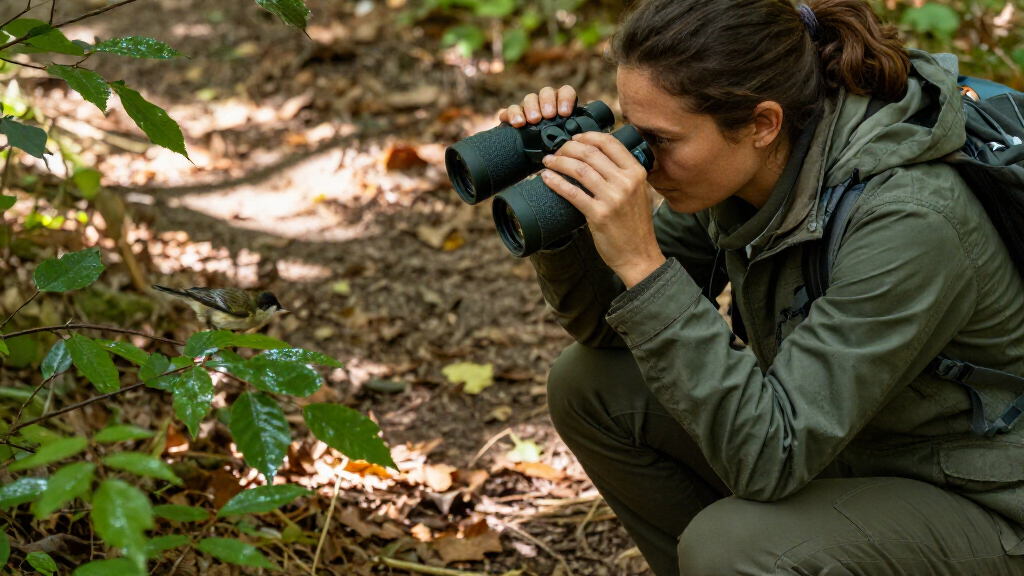
A BBC report describes research linking expert birdwatchers with differences in brain activity and organisation, as well as care-home studies reporting benefits from birdwatching. The findings do not establish that birdwatching prevents or slows cognitive decline; researchers say more work is needed to determine cause and effect.
Research on experienced birdwatchers has found differences in brain activity and organisation compared with novices, while care-home studies described by the BBC report wellbeing and cognitive improvements among residents offered opportunities to watch birds. The findings suggest birdwatching may support engagement and brain health, but do not prove that it slows cognitive decline or prevents dementia.
Erik Wing, who led the brain-imaging research at Baycrest Academy for Research and Education in Toronto, compared MRI scans of expert birders and novices as they identified birds. The experts showed different patterns in regions involved in attention, visual perception and recognition, with greater activity in some of those regions, particularly when identifying unfamiliar birds.
Wing also found that some brain regions in experts had higher measures of organisation and coherence than those in novices of the same age. The report says brain organisation tends to decline with age and that lower measures are associated with reduced cognition. However, the study cannot establish whether birdwatching produced the differences or whether people with those brain characteristics were more likely to become expert birders.
Separate research described in the report examined birdwatching in residential care. Elisabeth Kals, a professor at the Catholic University of Eichstätt-Ingolstadt, and her team installed bird feeders outside 65 nursing homes, positioned for residents to watch from indoor common areas. The team assessed cognition, mobility and wellbeing using self-reports and information from staff and family, and reported improvements after a few weeks. The report does not give detailed effect sizes or establish how long any changes lasted.
Possible Benefits Beyond Bird Expertise
The findings matter because birdwatching is an accessible activity that can be adapted for people with limited mobility or memory difficulties. A view from a window, a feeder outside a shared room or a supported outing may give residents a way to focus on something, share an experience and connect with other people. The BBC report describes an Age UK group in the West Midlands where older participants with memory difficulties become animated while watching and discussing birds.
That account illustrates a possible social and emotional benefit, not proof of a clinical effect. The distinction is important: the brain-imaging results concern experienced birders, while the care-home work concerns access to birdlife and reported changes among residents. Together they offer reasons for further study, but they do not show that birdwatching can replace dementia care or halt disease progression.
Products Worth Considering

Levoit Core 600S-P Smart Air Purifier for Large Rooms

Levoit Vital 200S-P Smart Air Purifier for Large Rooms

Bowflex SelectTech 840 Adjustable Kettlebell
As an affiliate, we earn on qualifying purchases.
From Bird Identification to Care Homes
The research covers two related but different questions. Wing’s work asks whether long-term bird identification expertise is associated with brain differences. The care-home study asks what happens when residents have a regular opportunity to observe local birds. The BBC report also describes a Polish study of 388 birdwatchers: people who said birding was especially important and interesting to them were more likely to report psychological restoration than skilled birders who were less enthusiastic.
These studies do not all measure the same outcome. MRI activity and brain organisation, self-reported restoration, and care-home assessments of cognition and wellbeing are distinct measures. The report presents them as converging reasons to investigate birdwatching, not as a single trial showing that the hobby slows age-related brain change.
““acquiring this skill earlier in life might produce benefits that continue through to older adults””
— Erik Wing, who led the brain research at Baycrest Academy for Research and Education
Cause, Duration and Clinical Effect
The brain-imaging research does not show whether birdwatching caused the differences in experts’ brains, and the report says further research is needed to determine how those differences relate to broader cognitive function. It also does not establish that the brain patterns translate into a slower rate of decline for an individual.
For the care-home findings, the report describes improvement after a few weeks but does not provide enough detail to judge the size, durability or clinical importance of the changes. It is also unclear which elements—bird observation, social participation, time outdoors or other factors—may have contributed. The evidence therefore supports cautious interest, not a claim that birdwatching is a dementia treatment.
Further Studies Needed on Decline
Researchers will need to test whether birdwatching itself contributes to brain changes and whether any benefits extend beyond short-term engagement or wellbeing. Studies that follow participants over time, include suitable comparison groups and measure cognitive outcomes could help distinguish cause from association.
For care homes and community groups, the report describes birdwatching as an activity that can be offered in accessible ways, including from indoors. Whether such programmes produce lasting cognitive benefits remains an open research question. The immediate evidence is that residents and participants can engage with birdlife; the longer-term effect on cognitive decline has not been established.
Key Questions
Does birdwatching prevent dementia?
No. The research described in the BBC report does not show that birdwatching prevents dementia or stops its progression.
What did brain scans of expert birdwatchers show?
In a study led by Erik Wing, experts differed from novices in activity and organisation in some brain regions involved in attention, visual perception and recognition. The findings do not establish what caused those differences.
Can people with dementia take part?
The report describes an Age UK birdwatching group attended by older people with memory difficulties, and a care-home project that let residents watch birds from indoor common areas. These are examples of activities, not evidence of a treatment effect.
Do the studies prove that birdwatching slows cognitive decline?
No. Researchers have reported brain differences and wellbeing or cognitive improvements in separate settings, but cause, duration and effects on long-term decline remain unclear.
Source: bbc.com