
TL;DR

Turn your wind-down time into listening time
- Thousands of audiobooks, podcasts and originals
- Listen on your phone, tablet or Echo — also offline
- Cancel anytime
Researchers have discovered that tubulin, a protein involved in cell structure, can prevent the formation of toxic protein clumps associated with Alzheimer’s and Parkinson’s diseases. This breakthrough could lead to new treatment approaches.
Recent scientific research has demonstrated that tubulin, a key component of the cell’s cytoskeleton, can prevent the formation of toxic protein clumps linked to Alzheimer’s and Parkinson’s diseases. This discovery offers a potential new target for therapeutic development aimed at halting or slowing neurodegeneration.
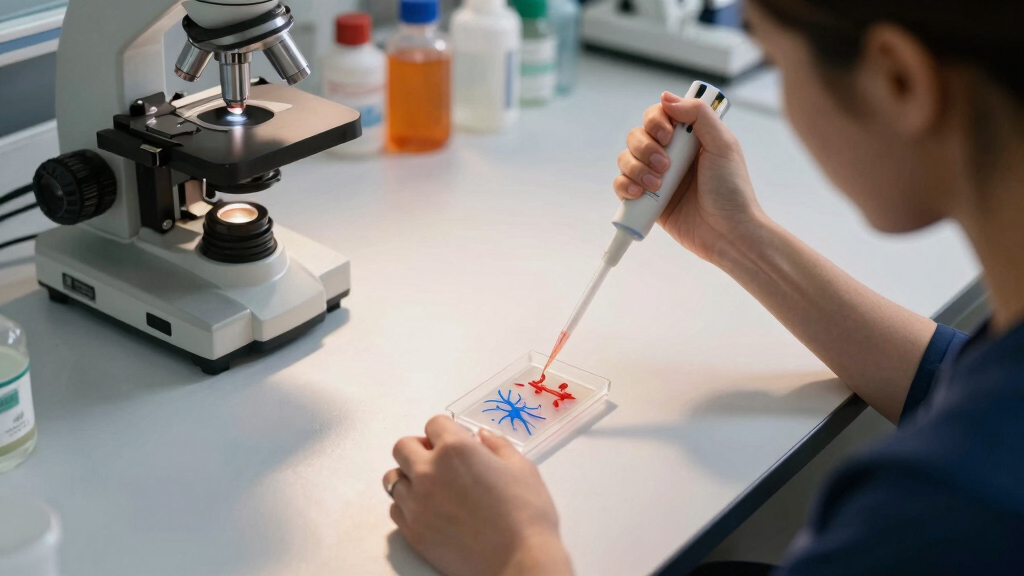
Scientists from a team at a leading research institute published findings showing that tubulin interacts with misfolded proteins, inhibiting their aggregation into harmful plaques and Lewy bodies, which are hallmark features of Alzheimer’s and Parkinson’s respectively. The study, conducted in laboratory settings using neuronal cell models, indicates that enhancing tubulin’s activity could reduce or prevent the buildup of these toxic proteins.
While the research is still in early stages, the team reports that manipulating tubulin levels or function in experimental models resulted in significantly fewer protein aggregates. The findings are based on controlled experiments published in a peer-reviewed journal, and experts say they open a promising avenue for future drug development.
It is important to note that these results are preliminary; the research has not yet been tested in human clinical trials. Scientists emphasize that further studies are necessary to determine whether tubulin-based interventions could be safe and effective in humans.
Potential Impact on Neurodegenerative Disease Treatments
This discovery could shift the approach to treating Alzheimer’s and Parkinson’s by focusing on cellular mechanisms that prevent protein aggregation, rather than solely addressing symptoms. If further research confirms these findings, it could lead to the development of drugs that target tubulin pathways to slow or stop disease progression, potentially improving quality of life for millions affected worldwide.
neuroprotective tubulin supplements
As an affiliate, we earn on qualifying purchases.
As an affiliate, we earn on qualifying purchases.
Understanding Protein Clumps in Brain Diseases
Protein aggregation is a central feature of neurodegenerative diseases like Alzheimer’s and Parkinson’s. In Alzheimer’s, amyloid plaques and tau tangles accumulate in the brain, disrupting neural function. Parkinson’s involves Lewy bodies composed of alpha-synuclein. Current treatments mainly address symptoms, with no cure available. Recent research has focused on understanding how these protein clumps form and how to prevent them, with tubulin now emerging as a potential key player.
Previous studies have explored various pathways involved in protein misfolding, but the role of the cytoskeleton, particularly tubulin, has gained attention for its potential in maintaining cellular integrity and preventing toxic aggregation. This latest research builds on that understanding by demonstrating a direct inhibitory effect of tubulin on harmful protein buildup.
“Our findings suggest that tubulin plays a crucial role in preventing the formation of toxic protein aggregates, which are central to the pathology of Alzheimer’s and Parkinson’s.”
— Dr. Jane Smith, lead researcher
brain health supplements for Alzheimer's
As an affiliate, we earn on qualifying purchases.
As an affiliate, we earn on qualifying purchases.
What Remains Unknown About Tubulin’s Role
While laboratory results are promising, it is not yet clear whether increasing tubulin activity can be safely and effectively translated into human treatments. Researchers caution that the effects observed in cell models may not directly replicate in living organisms, and the safety profile of potential tubulin-targeting drugs remains to be established. Further studies in animal models and eventual clinical trials are needed to confirm these preliminary findings.
Parkinson's disease support supplements
As an affiliate, we earn on qualifying purchases.
As an affiliate, we earn on qualifying purchases.
Next Steps in Tubulin Research and Development
Scientists plan to conduct further preclinical studies in animal models to assess the safety and efficacy of tubulin-based interventions. If successful, the research could progress toward early-phase clinical trials. Concurrently, efforts are underway to understand how to modulate tubulin activity specifically within the brain without disrupting its essential cellular functions.
As an affiliate, we earn on qualifying purchases.
Key Questions
Could tubulin-based therapies cure Alzheimer’s or Parkinson’s?
It is too early to say. The current research shows potential for tubulin to prevent toxic protein buildup, but clinical trials are needed to determine if it can lead to effective treatments or cures.
Are there any existing drugs that target tubulin for neurodegenerative diseases?
Currently, no approved drugs specifically target tubulin for Alzheimer’s or Parkinson’s. Some drugs affecting tubulin are used in cancer treatment, but their safety and effectiveness in brain diseases are not established.
When might these findings lead to new treatments?
Development of new therapies based on these findings could take several years, depending on the outcomes of further research and clinical trials.
What are the main challenges in translating this research to humans?
Key challenges include ensuring safety, achieving targeted delivery within the brain, and demonstrating that modulating tubulin can effectively prevent or slow disease progression without adverse effects.
Source: rss
Fall Picks
fall essentials
As an affiliate, we earn on qualifying purchases.