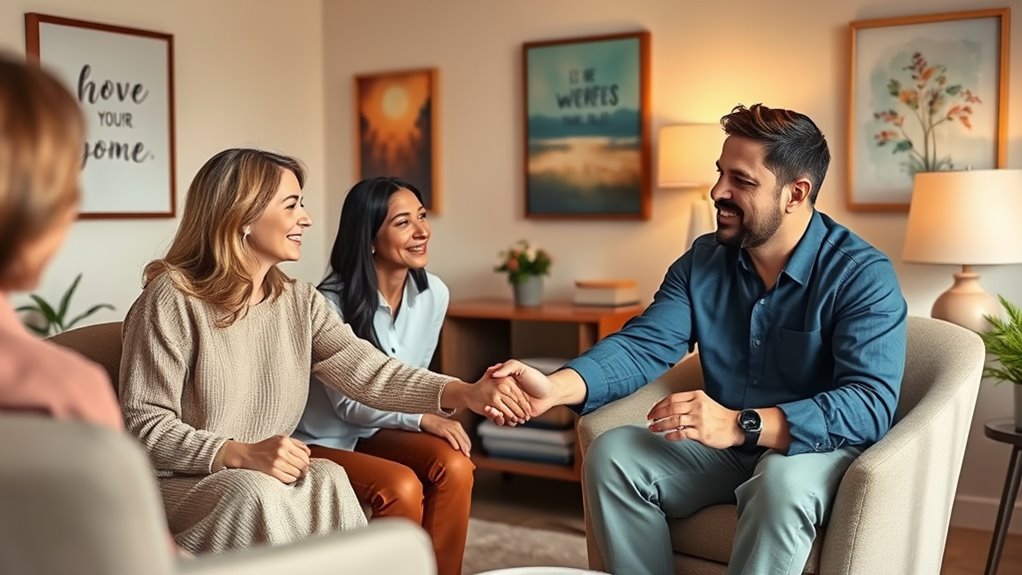

Many believe that marriage counseling signals failure, but it’s actually a sign of strength and dedication to growth. Seeking help shows you’re willing to invest in your emotional resilience and communication skills. It’s a proactive step to build a healthier relationship, not a last resort. Overcoming misconceptions can open the door to greater connection and understanding. Keep exploring why counseling can be a powerful tool for strengthening your partnership.
Key Takeaways
- Seeking marriage counseling shows proactive effort to strengthen the relationship, not failure or weakness.
- Counseling helps develop better communication skills, fostering healthier and more resilient partnerships.
- Overcoming misconceptions, like therapy being only for crises, encourages early intervention and growth.
- Viewing therapy as a strength promotes emotional resilience and demonstrates a commitment to mutual well-being.
- Addressing communication barriers in counseling creates deeper connections and effective conflict resolution skills.

Marriage counseling is often misunderstood, leading many couples to hesitate or dismiss it altogether. They might assume it’s only for couples on the brink of divorce or that it signals failure. But seeking help is actually a sign of strength, not weakness. It’s about investing in your emotional resilience—the ability to bounce back from setbacks and handle stress more effectively. When you’re aware of your own feelings and reactions, you’re better equipped to navigate relationship challenges. Counseling helps you develop this resilience, which is vital for maintaining a healthy partnership over time.
One of the biggest barriers to effective communication in relationships is often miscommunication or the presence of communication barriers. These barriers can include assumptions, unspoken expectations, or lingering resentments that prevent honest dialogue. Many couples come into counseling feeling frustrated because they feel misunderstood or unheard. The truth is, these communication barriers aren’t signs of failure—they’re normal issues that many couples face. Counseling provides a safe space where you can explore what’s really going on beneath the surface. Your counselor can teach you how to listen more actively and express yourself clearly, reducing misunderstandings and fostering deeper connection.
By addressing communication barriers head-on, you’ll learn tools to express your needs without blame or criticism. This shift makes it easier to discuss difficult topics and resolve conflicts without escalating into arguments. Over time, you’ll notice that conversations become more productive and less emotionally draining. This process boosts your emotional resilience because you learn how to manage your reactions and stay grounded during disagreements. Instead of feeling overwhelmed or shutting down, you gain the skills to stay present and work through issues constructively. Additionally, understanding the role of attention in creative practice underscores the importance of focused presence in effective communication and relationship growth.
Many people believe that seeking therapy means admitting defeat or that it’s a last resort. However, recognizing that your relationship could benefit from outside help actually demonstrates a proactive attitude. It shows you’re willing to work on yourself and your partnership. Counseling isn’t about fixing something broken; it’s about strengthening your emotional foundation and building healthier communication habits. When you approach counseling with an open mind, you’re actively working toward a more resilient, understanding relationship. It’s a courageous step that can transform how you connect, communicate, and support each other through life’s inevitable ups and downs. So, instead of viewing therapy as a sign of weakness, see it as a powerful tool that empowers you and your partner to grow stronger together.

The Practical Marriage Counseling Workbook: Therapy-Based Exercises to Improve Communication, Rebuild Intimacy, and Create a Safe, Loving Relationship That Lasts a Lifetime
As an affiliate, we earn on qualifying purchases.
As an affiliate, we earn on qualifying purchases.
Frequently Asked Questions
Can Marriage Counseling Work for All Relationship Issues?
Marriage counseling can work for many relationship issues, but it’s not a one-size-fits-all solution. Your emotional resilience and communication skills play a big role in the process. When you’re open to growth and willing to improve how you connect, counseling becomes more effective. It helps you build tools to navigate conflicts, strengthen your bond, and create a healthier relationship, even if some issues are more challenging than others.
Is Counseling Only for Couples on the Brink of Divorce?
No, marriage counseling isn’t just for couples on the brink of divorce. Many people hold onto marriage counseling misconceptions, thinking it’s only for crises, but therapy benefits couples at any stage. You can use counseling to improve communication, deepen understanding, or prevent issues from escalating. Seeking help shows strength and commitment, not weakness, and therapy can strengthen your relationship regardless of how serious the problems seem.
How Long Does Marriage Counseling Typically Last?
Marriage counseling typically lasts anywhere from a few sessions to several months, depending on your needs. Session duration usually ranges from 45 to 60 minutes, and therapy length varies based on your goals and progress. If you’re working through specific issues, it might be shorter. For ongoing challenges, you might continue therapy longer. The key is to communicate openly with your counselor and stay committed to the process.
Are There Different Types of Marriage Therapy?
Yes, there are different types of therapy and session formats to suit your needs. For example, you might try Emotionally Focused Therapy, which focuses on emotional bonds, or Cognitive-Behavioral Therapy, which addresses thought patterns. Sessions can be in person, online, or even in group settings. Choosing the right type of therapy and session format depends on your relationship’s unique challenges, and a qualified therapist can help guide you.
What if Only One Partner Wants to Attend Counseling?
If only one partner shows individual willingness and therapy commitment, you can still benefit from counseling. Your openness can inspire your partner to join later, and personal work often leads to positive changes. You might find clarity, improve communication, and strengthen your relationship even alone. Remember, seeking help is a sign of strength, not weakness, and taking the first step demonstrates your commitment to growth and healing, regardless of your partner’s participation.

Communication Skills for Couples: Guide to Improve Communications, Resolve Conflict, Deepen Intimacy, Strengthen Marriage and Create a Healthy Relationship
As an affiliate, we earn on qualifying purchases.
As an affiliate, we earn on qualifying purchases.
Conclusion
Just like tending a garden, marriage needs regular care and attention. When you seek counseling, you’re watering and nurturing your relationship, not admitting defeat. Imagine a couple who thought counseling was only for crises—after they started, their bond grew stronger than ever. Remember, asking for help isn’t a sign of weakness; it’s planting seeds for a healthier, happier future together. Embrace the support—you’re investing in your love’s growth.

The Seven Principles for Making Marriage Work: A Practical Guide from the Country's Foremost Relationship Expert
As an affiliate, we earn on qualifying purchases.
As an affiliate, we earn on qualifying purchases.

Couples Conflict Resolution Workbook: Stop Fighting. Communicate Better. Solve Problems as a Team. (Relationship Skills Series)
As an affiliate, we earn on qualifying purchases.
As an affiliate, we earn on qualifying purchases.