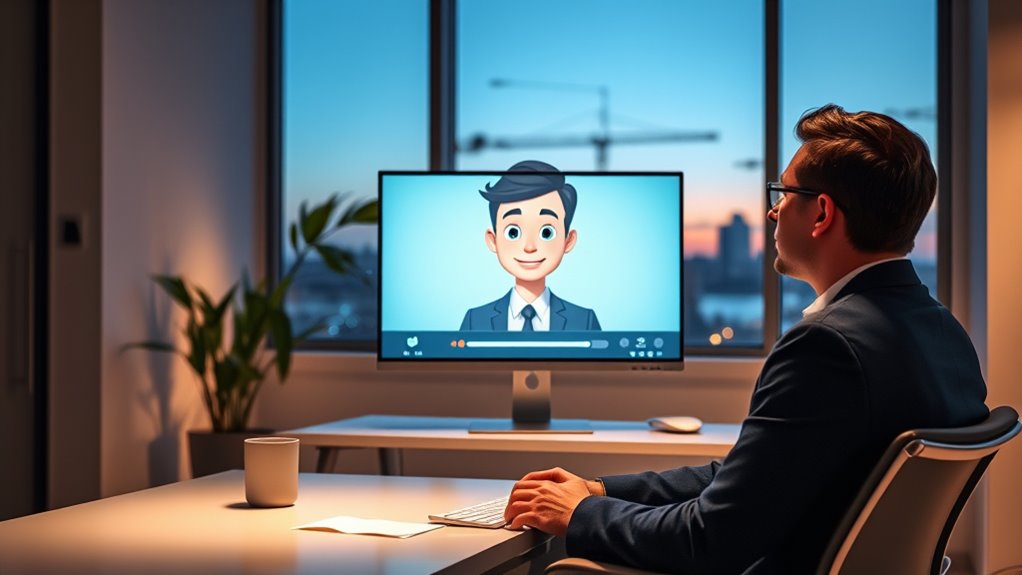

When you face a virtual AI interview, you’ll respond to behavioral, technical, or situational questions while the system analyzes not only your answers but also your facial expressions, body language, and tone. It assesses confidence, engagement, and authenticity in real time to evaluate your fit for the role. To succeed, stay natural, make eye contact, and practice clear responses. Keep going, and you’ll discover how to navigate this tech-driven interview process effectively.
Key Takeaways
- AI interviews analyze responses, tone, facial expressions, and body language for a comprehensive candidate assessment.
- Prepare by testing equipment, reviewing the job description, and practicing common questions aloud.
- During the interview, maintain natural responses, eye contact, and positive body language for better evaluation.
- AI systems focus on authenticity, confidence, engagement, and communication skills using advanced algorithms.
- Post-interview, receive feedback and insights to identify strengths and areas for improvement.

Virtual AI interviews are transforming the way companies evaluate candidates by making the process more efficient and accessible. Instead of traditional in-person interviews, you now often connect with an AI-powered system that assesses your skills, personality, and responses. To succeed, you need to focus on candidate preparation, which involves understanding how AI technology evaluates you and practicing accordingly. These systems analyze not just what you say but how you say it—your tone, facial expressions, and body language—using advanced algorithms. Knowing this, you can tailor your preparation to present yourself confidently and authentically.
When you get ready for a virtual AI interview, familiarize yourself with the platform ahead of time. Many systems simulate real interview environments, so testing your equipment—camera, microphone, and internet connection—is essential for a smooth experience. AI technology often includes prompts or questions based on the role you’re applying for, so review the job description thoroughly. Practice common interview questions aloud, paying attention to clarity and conciseness, since AI can assess your communication skills objectively. Remember, the AI system is designed to evaluate consistency and authenticity, so be honest and stay true to your experience.
During the interview, you’ll likely encounter a mix of behavioral questions, technical queries, or situational challenges. The AI will analyze your responses in real time, looking for specific keywords and evaluating your confidence and engagement levels. It may also record your facial expressions and gestures, so maintaining eye contact and displaying positive body language can enhance your impression. Since AI systems are constantly improving, they can detect nuances that might escape human interviewers, making candidate preparation even more critical. Practice making your responses natural but focused, and consider doing mock interviews to get comfortable with the AI’s evaluation style. Additionally, understanding the privacy and cookie policies of the platform can help you navigate data collection and consent issues confidently.
AI analyzes responses, facial expressions, and body language in real time, emphasizing the importance of natural, focused answers and mock interviews.
Post-interview, you’ll usually receive feedback or insights based on your performance, which can be eye-opening. These insights can help you understand how the AI system interpreted your responses, highlighting areas for improvement. Remember, even if you don’t get the job, the experience with AI technology is valuable, as it hones your ability to communicate effectively in digital environments. Overall, embracing the AI interview process means understanding the technology behind it and preparing thoughtfully. This way, you can navigate the experience confidently, showcase your true potential, and leave a positive impression on the virtual interviewer.

Logitech C920x HD Pro PC Webcam, Full HD 1080p/30fps Video, Clear Audio, Light Correction, Works with Microsoft Teams, Google Meet, Zoom, Nintendo Switch 2’s New GameChat Mode, Mac/Tablet- Black
Compatible with Nintendo Switch 2’s new GameChat mode
As an affiliate, we earn on qualifying purchases.
As an affiliate, we earn on qualifying purchases.
Frequently Asked Questions
How Accurate Are AI Interview Assessments?
AI interview assessments are quite accurate because they analyze behavioral patterns through behavioral analysis, providing reliable insights into your suitability for a role. Your candidate scoring depends on how well your responses match desired traits, making the evaluation objective. While not perfect, AI tools continuously improve, offering consistent and fair assessments, helping employers make smarter hiring decisions based on data-driven insights.
Can AI Interviews Detect Dishonesty?
AI interviews can sometimes detect dishonesty through lie detection and honesty assessment techniques, but they’re not foolproof. They analyze facial expressions, voice tone, and word choices to identify inconsistencies or signs of deception. While these tools can give you insights, they shouldn’t be solely relied upon to judge honesty, as false positives and negatives are possible. Be genuine, and focus on clear, honest communication during your interview.
What Technologies Power Virtual AI Interviewers?
Around 75% of companies now use AI-powered tools for interviews. Your virtual interviewer relies on facial recognition and voice analysis technologies to evaluate your responses. Facial recognition tracks microexpressions, while voice analysis detects tone, pitch, and hesitation. These technologies work together to assess honesty, confidence, and emotional state, giving employers deeper insights into your personality and suitability for the role. Be honest and stay calm to make the best impression.
How Is Candidate Privacy Protected During AI Interviews?
During AI interviews, your privacy is safeguarded through strict data security measures like encryption and secure servers to address privacy concerns. Companies also follow privacy regulations to ensure your personal information isn’t misused. You can trust that your data is handled responsibly, with access limited to authorized personnel. These practices aim to safeguard your privacy and build confidence during the interview process, addressing your privacy concerns effectively.
Are AI Interviewers Biased or Fair?
AI interviewers aim to be fair, but algorithm fairness and bias mitigation are ongoing challenges. While developers work to diminish bias, some algorithms might still favor certain groups unintentionally. You should stay aware that biases can exist, but companies often implement measures to improve fairness. Trust that the technology continues to evolve, and your honest responses help ensure the most accurate assessment, regardless of potential biases.

Logitech H390 Wired Headset for PC/Laptop, Stereo Headphones with Noise Cancelling Microphone, USB-A, in-Line Controls, Works with Chromebook – Black
Digital Stereo Sound: Fine-tuned drivers provide enhanced digital audio for music, calls, meetings and more
As an affiliate, we earn on qualifying purchases.
As an affiliate, we earn on qualifying purchases.
Conclusion
As you step into the world of virtual AI interviews, think of yourself as a star performer on a glowing stage, each question a spotlight guiding your path. While the digital curtain rises, remember that behind the screen, the AI is simply a mirror reflecting your strengths. Embrace the experience, let your confidence shine through, and turn this high-tech encounter into your shining moment. Soon, you’ll walk off the stage with your future in hand, ready to dazzle.
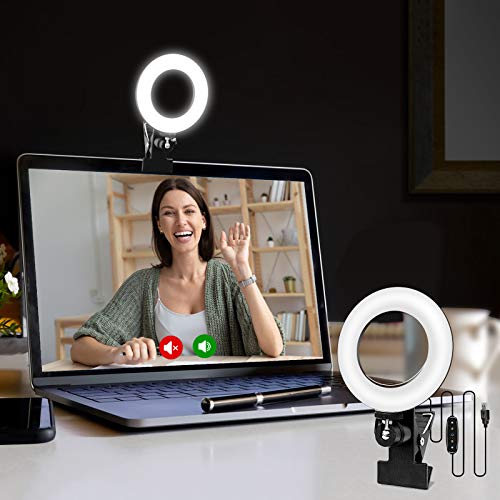
Cyezcor Video Conference Lighting Kit, Ring Light for Monitor Clip On,for Remote Working, Distance Learning,Zoom Call, Self Broadcasting and Live Streaming, Computer Laptop Video Conferencing
【ADJUSTABLE TEMPERATURE AND BRIGHTNESS】Our video conference lights have 3 color temperatures (white light/warm light/natural light) which are 3200k-6800k,…
As an affiliate, we earn on qualifying purchases.
As an affiliate, we earn on qualifying purchases.

Nulaxy Ergonomic Adjustable Laptop Stand for Desk, Dual Foldable Computer Riser with Advanced Heat-Vent, Heavy-Duty Portable Notebook Holder for Posture Correction, Compatible with Mac 10-17" Laptops
Ergonomic Posture Correction: Designed to elevate your laptop to the perfect eye level, this adjustable laptop stand significantly…
As an affiliate, we earn on qualifying purchases.
As an affiliate, we earn on qualifying purchases.