

Breaking the “man up” myth means understanding that vulnerability is a sign of strength, not weakness. Instead of hiding feelings, you should embrace emotional resilience by confronting and processing your emotions. Asking for help is brave and promotes real growth, breaking stereotypes that suggest seeking support diminishes masculinity. Recognizing mental health as essential and expressing emotions openly fosters a healthier, more authentic life. If you want to learn how to challenge these harmful ideas, there’s more to discover below.
Key Takeaways
- Redefine masculinity to include emotional vulnerability and seeking help as signs of strength.
- Challenge the “Man Up” stereotype by promoting open conversations about mental health.
- Normalize vulnerability as an essential part of resilience and personal growth.
- Encourage men to view asking for help as a courageous and responsible act.
- Support mental health awareness to reduce stigma and foster authentic emotional expression.
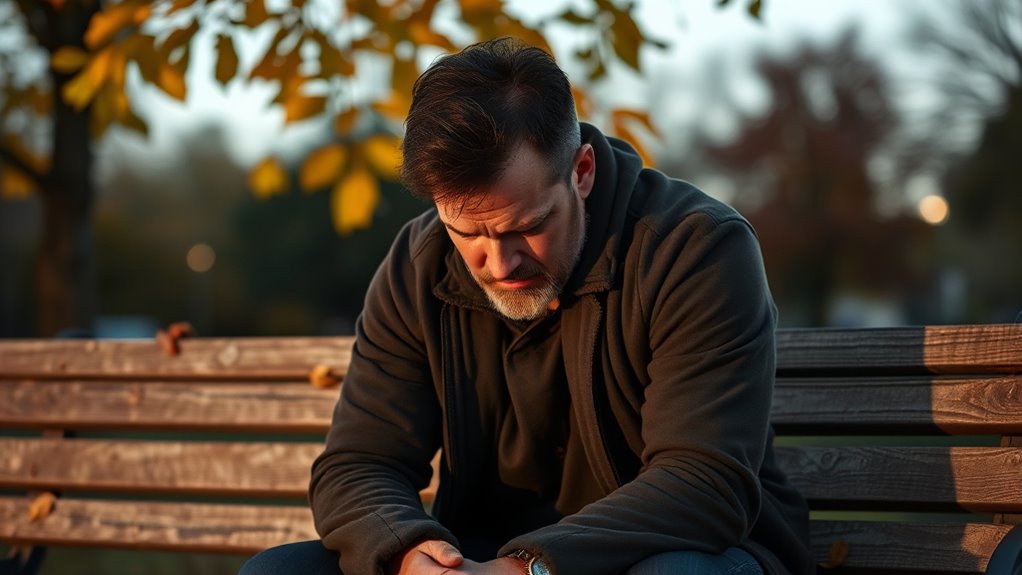
For too long, the phrase “man up” has been used to dismiss men’s emotional struggles and reinforce harmful stereotypes about masculinity. It suggests that showing vulnerability or admitting to mental health issues is a sign of fragility, which only deepens the mental health stigma many men face. But true emotional resilience isn’t about never experiencing difficulty; it’s about having the strength to confront and process your feelings. When you’re told to “man up,” it discourages you from seeking help or opening up about what you’re going through, making it harder to build genuine resilience. Instead, resilience means recognizing your emotions, understanding they’re valid, and having the courage to face them head-on. Breaking this cycle starts with changing how you view mental health in men—seeing it not as a flaw but as a crucial part of overall well-being.
A better understanding of glycolic acid products can also help men incorporate effective skincare routines that promote skin health and confidence, challenging stereotypes about masculinity and self-care. The mental health stigma surrounding men often pushes you to hide your struggles, fearing judgment or being perceived as weak. This silence can lead to feelings of isolation, worsening your mental state over time. You might think that admitting to stress, anxiety, or depression makes you less of a man, but that’s a misconception. It takes real strength to acknowledge your mental health needs and seek support. By doing so, you challenge the stereotypes that have labelled emotional expression as unmasculine. It’s important to realize that vulnerability isn’t a sign of weakness, but an act of courage that can lead to greater emotional resilience. When you allow yourself to be honest about your feelings, you open the door to healing and growth.
Seeking help isn’t a sign of failure; it’s an act of self-respect. Whether it’s talking to friends, family, or mental health professionals, reaching out shows that you prioritize your well-being. You don’t have to face everything alone, and you shouldn’t have to. Cultivating emotional resilience involves understanding that everyone has struggles, and asking for help is a proactive step toward managing those challenges effectively. It’s time to redefine masculinity—not by suppressing emotions but by embracing vulnerability as a strength. Challenging the mental health stigma means recognizing that true resilience includes your capacity to seek support and express your feelings openly. When you do, you’re not weakening yourself—you’re reinforcing your mental and emotional strength, paving the way for a healthier, more authentic life.

Worry for Nothing: Guided Anxiety Journal, Cognitive Behavioral Therapy Mental Health Journal, Anxiety Relief & Self Care, Journal for Men & Women, Mental Health Gifts
- Improves Mental Health: Enhances mindfulness and emotional awareness
- Discreet Design: Elegant cover hides anxiety themes
- Research-Backed Exercises: Based on Cognitive Behavioral Therapy
As an affiliate, we earn on qualifying purchases.
As an affiliate, we earn on qualifying purchases.
Frequently Asked Questions
How Can Friends Support Men Hesitant to Seek Help?
You can support men hesitant to seek help by encouraging emotional openness and showing understanding. Offer peer encouragement by listening without judgment and reminding them that asking for help is a sign of strength, not weakness. Be patient and consistent, creating a safe space where they feel comfortable sharing. Your support can help break down stigma, making it easier for them to seek the help they need.
What Signs Indicate a Man Needs Mental Health Assistance?
You should watch for signs like emotional awareness fading, with men showing withdrawal or mood swings. Behavioral changes, such as losing interest in activities or acting aggressively, also indicate distress. *Notably*, studies show men are less likely to seek help despite experiencing these signs. If you notice these shifts, encourage open conversations and support, emphasizing that mental health struggles are normal and seeking help is a sign of strength.
Are There Cultural Barriers to Men Seeking Help?
Yes, cultural barriers like strict gender norms and expectations can make men hesitant to seek help. You might feel pressured to appear strong and self-reliant, fearing that asking for support is a sign of weakness. These cultural expectations often discourage men from opening up about their struggles, preventing them from getting the help they need. Recognizing and challenging these norms is an essential step toward encouraging men to seek mental health support.
How Does Stigma Affect Men’s Willingness to Get Help?
Did you know that over 70% of men believe showing emotion is a sign of weakness? Stigma heavily influences your willingness to seek help by reinforcing masculinity stereotypes and emotional suppression. This pressure makes you less likely to ask for support, fearing judgment or feeling weak. Breaking these barriers requires recognizing that vulnerability isn’t a flaw, but a strength, and seeking help is a brave step toward health and authenticity.
What Role Do Workplaces Play in Encouraging Men to Seek Support?
Workplaces play a vital role in encouraging men to seek support by promoting corporate wellness programs that prioritize mental health. You can foster a supportive environment by implementing peer mentorship initiatives, where men feel comfortable sharing their struggles. When leadership openly discusses mental health and normalizes help-seeking, it reduces stigma, making it easier for men to ask for help without fear of judgment or appearing weak.

Resilient Man: Conquer Self-Sabotage and Embrace Emotional Vulnerability 2 Books in 1: Master Emotional Intelligence, Build Stronger Relationships, … Personal Growth (Self Help Books for Men)
As an affiliate, we earn on qualifying purchases.
As an affiliate, we earn on qualifying purchases.
Conclusion
As you walk past a rain-soaked park, you notice a man sitting alone on a bench, tears streaming down his face. It’s a quiet reminder that seeking help isn’t a sign of weakness but strength. Just like the unexpected rain can refresh the earth, opening up about your struggles can bring clarity and healing. Breaking the “man up” myth starts with you, embracing vulnerability and showing that real courage lies in asking for support.
Worry for Nothing: Guided Anxiety Journal, Cognitive Behavioral Therapy Mental Health Journal, Anxiety Relief & Self Care, Journal for Men & Women, Mental Health Gifts
- Improves Mental Health: Enhances mindfulness and emotional awareness
- Discreet Design: Elegant cover hides anxiety themes
- Research-Backed Exercises: Based on Cognitive Behavioral Therapy
As an affiliate, we earn on qualifying purchases.
As an affiliate, we earn on qualifying purchases.

The Ordinary Glycolic Acid 7% Exfoliating Toner, Brightening and Smoothing Daily Toner for More Even-Looking Skin Tone, 8.1 Fl Oz
- Exfoliating Toner: Smoothes skin and evens tone
- Contains 7% Glycolic Acid: Promotes even skin tone and radiance
- Multi-Use Formula: Hydrates scalp and rebalances dry skin
As an affiliate, we earn on qualifying purchases.
As an affiliate, we earn on qualifying purchases.