
Many married people use dating apps like Tinder to seek emotional connections, excitement, or validation, challenging traditional views about these platforms only being for cheating. They often turn to online interactions to fill emotional gaps or explore curiosity, which can threaten trust and boundaries in relationships. Understanding why they do this and how it affects marriages is important. Explore further to learn more about this complex modern relationship dynamic and how others navigate it.
Key Takeaways
- Up to 30% of Tinder users are married, often seeking emotional connection or excitement outside their marriage.
- Many married users justify app use as fulfilling unmet emotional needs or for validation.
- Emotional infidelity via dating apps can threaten trust and stability in marriages.
- Open communication about boundaries and motivations can help prevent online interactions from harming relationships.
- Recognizing early signs of emotional infidelity allows couples to address issues before they escalate.
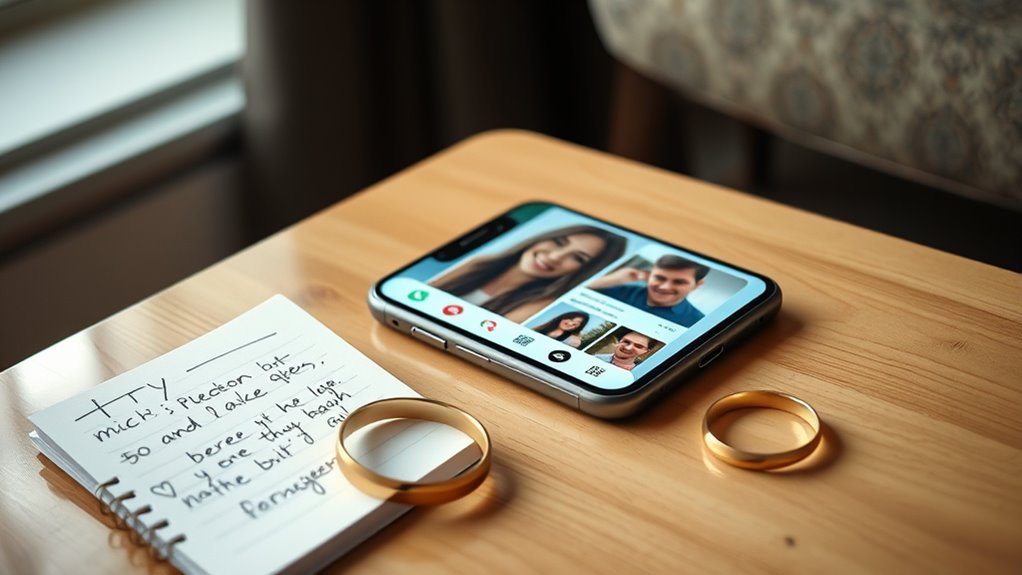
Despite popular assumptions, many married people are turning to dating apps to explore their feelings, seek companionship, or find excitement outside their marriage. This trend highlights a complex reality: not everyone on these platforms is looking to cheat, but some are charting emotional infidelity in ways that challenge traditional relationship boundaries. When you’re married, the line between harmless curiosity and emotional infidelity can feel blurry, especially in today’s digital age where connections happen with a few taps. If you’re on a dating app and you’re not sure whether your actions cross the line, it’s essential to understand what relationship boundaries mean for you and your partner.
For some, swiping and chatting serve as a form of emotional release or validation, but it can quickly evolve into something deeper. Emotional infidelity often begins with casual conversations that seem innocent at first but gradually develop into a source of emotional support outside your marriage. If you’re sharing personal feelings or confiding in someone else more than your partner, you risk crossing boundaries that could threaten your relationship’s foundation. It’s vital to recognize these signals early and ask yourself if your interactions align with the commitments you’ve made. Maintaining clarity about what’s acceptable can help prevent the situation from escalating into something more damaging.
Many married individuals justify their presence on dating apps by convincing themselves that they’re only seeking validation or excitement, but this can be a slippery slope. When emotional needs aren’t being fully met within your marriage, it’s tempting to look elsewhere. However, doing so without openly communicating with your partner can lead to feelings of betrayal and distrust. Boundaries in a relationship aren’t just about rules; they’re about mutual respect and understanding. If you’re feeling disconnected or unfulfilled, the healthier approach is to discuss these feelings openly with your spouse rather than covertly seeking solace online. This honesty can help you redefine boundaries together and find ways to reconnect.
Open communication fosters trust and helps redefine boundaries rather than seeking solace online.
Additionally, understanding that eye patch benefits include emotional and aesthetic improvements can serve as a reminder that maintaining honesty and transparency in your relationship is equally beneficial for emotional health. It’s also important to recognize that the presence of married people on dating apps isn’t inherently malicious. Some use these platforms to explore feelings or curiosity without any intention to cheat. But the danger lies in allowing emotional connections to deepen unchecked. When these online interactions become more emotionally significant than your real-life relationship, it can cause serious harm. Setting clear boundaries—such as limiting conversations to superficial topics or avoiding sharing intimate details—can help preserve your marriage’s integrity. Ultimately, understanding your motivations and respecting relationship boundaries are crucial to charting these digital spaces without jeopardizing your marriage.

Not "Just Friends": Rebuilding Trust and Recovering Your Sanity After Infidelity
As an affiliate, we earn on qualifying purchases.
As an affiliate, we earn on qualifying purchases.
Frequently Asked Questions
How Do Married Users Justify Using Dating Apps Publicly?
You might justify using dating apps publicly by believing it’s harmless or a way to explore without crossing marital boundaries. Some see it as a way to fulfill emotional needs or curiosity while convincing themselves it’s ethically acceptable if their partner is unaware. However, you should consider the ethical considerations and the impact on trust in your relationship, as transparency often helps maintain healthy boundaries.
What Are the Common Motivations for Married People to Join Tinder?
You join Tinder for emotional fulfillment and novelty seeking, aiming to enrich your life outside your marriage. You crave new connections, excitement, or validation that’s missing at home. This motivation drives you to explore the app, seeking a fresh spark or deeper emotional bonds. By doing so, you hope to feel more fulfilled and keep your relationship dynamic, even while pursuing new experiences and connections on the platform.
How Do Couples Typically Handle Trust Issues Related to App Use?
Like Pandora’s box, trust issues can open wide when couples navigate app use. You handle this by setting clear privacy boundaries and practicing communication transparency. You openly discuss expectations and concerns, ensuring both feel secure. Regular check-ins help rebuild trust and prevent misunderstandings. By fostering honesty and respecting boundaries, you turn potential conflict into an opportunity for deeper connection, much like a well-tuned orchestra working in harmony.
What Safeguards Exist to Prevent Married Users From Deception?
You’re right to worry about deception; apps implement verification measures like photo verification and phone number checks to reduce fraud. However, privacy concerns can limit how much personal info is shared, making it harder to verify identities fully. These safeguards help, but they’re not foolproof. Staying cautious and trusting your instincts remain essential when interacting with someone on dating apps, especially if you suspect deception.
Are There Specific Patterns in Messaging Behaviors of Married Tinder Users?
You notice that married Tinder users often show specific messaging patterns, like limited emotional expression and delayed response timing. They may avoid sharing too much about themselves upfront, keeping conversations superficial or brief. When they do engage emotionally, responses might be slower, indicating hesitation or concealment. These behaviors can hint at underlying deception or an attempt to hide their true relationship status, making it essential to stay cautious.

The Set Boundaries Workbook: Practical Exercises for Understanding Your Needs and Setting Healthy Limits
As an affiliate, we earn on qualifying purchases.
As an affiliate, we earn on qualifying purchases.
Conclusion
So, next time you see someone on a dating app, remember that about 30% of users might actually be married. It’s not always about seeking something new—sometimes, it’s about curiosity, validation, or just the thrill. Don’t jump to conclusions. Instead, enjoy your own journey and trust that everyone’s reasons are different. Embrace the complexity, and let genuine connections happen naturally, without assumptions. After all, everyone’s on their own unique path.
The Relationship Check-In Journal: Couples Journaling: Meaningful Couples Conversation Starters, Routine Talks with your Partner, Become a Better Wife, Husband, Girlfriend, Boyfriend
As an affiliate, we earn on qualifying purchases.
As an affiliate, we earn on qualifying purchases.

The Practical Marriage Counseling Workbook: Therapy-Based Exercises to Improve Communication, Rebuild Intimacy, and Create a Safe, Loving Relationship That Lasts a Lifetime
As an affiliate, we earn on qualifying purchases.
As an affiliate, we earn on qualifying purchases.