
At-home wellness systems for couples range from structured therapy workbooks to hands-on massage guides, and the right one depends on whether you and your partner want to rebuild trust, deepen physical connection, or simply carve out regular time together. My top pick is the Couples Relationship Blueprint & Practical At-Home Therapy: 2-in-1 Edition, because it combines a long-term relationship framework with practical exercises in a single system. For couples who want a time-boxed commitment, The 8 Week Intimacy Challenge stands out with its 56-day structure, while The Couple’s Massage Handbook is the strongest choice for physical, screen-free connection. The main tradeoff in this category is depth versus accessibility — clinical-style workbooks demand more emotional effort but deliver deeper change, while massage and weekend-retreat guides are easier to start but stay on the surface. Read on for the full breakdown of all ten systems.

Turn your wind-down time into listening time
- Thousands of audiobooks, podcasts and originals
- Listen on your phone, tablet or Echo — also offline
- Cancel anytime
Key Takeaways
- The 2-in-1 Blueprint edition earned the top spot because it is the only entry that pairs a long-term relationship framework with actionable at-home therapy exercises, covering both planning and practice in one system.
- Workbooks with a fixed schedule (the 8 Week Intimacy Challenge and the 12-Step Roadmap) consistently outperformed open-ended workbooks for adherence, because couples actually finish programs with clear start and end dates.
- The three massage guides clustered tightly in quality, separating mainly by experience level: beginners are better served by the beginners’ full-body guide, while the Handbook suits couples ready for deeper, healing-focused touch work.
- The DIY Weekend Retreat is the most niche pick — it delivers high intensity in a short window but requires a full free weekend, which rules it out for most busy couples.
- Couples in crisis should gravitate toward the conflict-resolution-focused workbooks rather than intimacy challenges, since passion-focused programs can frustrate pairs dealing with unresolved trust issues.
| At-Home Couples Therapy Workbook |  | Best for Communication Repair | Format: Guided workbook | Primary Focus: Communication and conflict repair | Secondary Topics: Intimacy, emotional connection | VIEW ON AMAZON | See Our Full Breakdown |
| The Complete Couples Therapy Workbook: Step-by-Step Exercises to Improve Intimacy, Build Trust, and Resolve Relationship Conflicts | 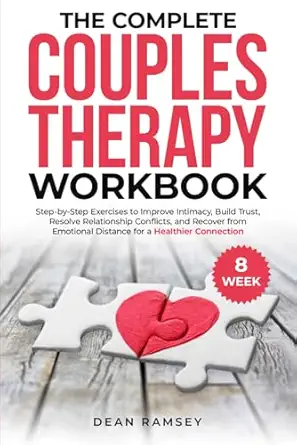 | Best Overall | Format: Workbook | Approach: Step-by-step exercises | Topics: Intimacy, trust, conflict resolution, emotional distance | VIEW ON AMAZON | See Our Full Breakdown |
| The Intimacy Workbook for Couples: A 12-Step Relationship Therapy Roadmap |  | Best Structured Program | Format: Workbook | Program Structure: 12-step roadmap | Primary Focus: Emotional connection and intimacy | VIEW ON AMAZON | See Our Full Breakdown |
| Couple’s Massage Handbook: Deepen Your Relationship with the Healing Power of Touch |  | Best for Emotional Connection Through Touch | Format: Guidebook | Primary Focus: Couples massage and healing touch | Secondary Focus: Intimacy and relationship connection | VIEW ON AMAZON | See Our Full Breakdown |
| Couple’s Guide to Massage: Best Techniques and Tricks to Give Your Partner Blissful Massages at Home |  | Best Practical Massage Starter | Format: Guidebook | Primary Focus: Massage techniques and tricks | Secondary Focus: Couples connection and stress relief | VIEW ON AMAZON | See Our Full Breakdown |
| Couples Massage at Home for Beginners: Simple Full-Body Techniques |  | Best Hands-On Starter | Format: Book | Focus: Full-body couples massage | Skill Level: Beginner | VIEW ON AMAZON | See Our Full Breakdown |
| The 8 Week Intimacy Challenge: 56 Intimacy Boosting Practices to Reignite Passion, Deepen Connection, and Grow Closer Than Ever |  | Best Structured Program | Format: Book | Series: Relationship Reignite Book Series | Program Length: 8 weeks | VIEW ON AMAZON | See Our Full Breakdown |
| Couples Relationship Blueprint & Practical At-Home Therapy: 2-in-1 Edition |  | Best Communication Toolkit | Format: 2-in-1 edition | Focus Areas: Emotional intimacy, trust, communication | Use: At-home relationship support | VIEW ON AMAZON | See Our Full Breakdown |
| Couple Therapy: Do the Sessions at Home |  | Best Session-Style Format | Format: Book | Structure: Guided therapy-style sessions | Primary Use: At-home couples sessions | VIEW ON AMAZON | See Our Full Breakdown |
| The Conscious Couples Weekend Retreat: A DIY Guide to Co-Creating an Extraordinary Relationship |  | Best Immersive Deep-Dive | Format: Book (DIY guide) | Structure: Weekend retreat program | Pacing: Self-guided | VIEW ON AMAZON | See Our Full Breakdown |
| at home wellness systems for couple | Format | Approach |
|---|---|---|
| At-Home Couples Therapy Workbo | Guided workbook | Collaborative, exercise-based |
| The Complete Couples Therapy W | Workbook | Step-by-step exercises |
| The Intimacy Workbook for Coup | Workbook | Sequential, therapy-inspired |
| Couple’s Massage Handbook: Dee | Guidebook | — |
| Couple’s Guide to Massage: Bes | Guidebook | Practical, technique-driven |
| Couples Massage at Home for Be | Book | — |
| The 8 Week Intimacy Challenge: | Book | — |
| Couples Relationship Blueprint | 2-in-1 edition | Evidence-informed toolkit |
| Couple Therapy: Do the Session | Book | Conversation-led |
| The Conscious Couples Weekend | Book (DIY guide) | — |
More Details on Our Top Picks
At-Home Couples Therapy Workbook
This pick makes the most sense for couples whose core problem is what gets said and what goes unsaid. Where The Complete Couples Therapy Workbook spreads itself across many topics, this one concentrates on honest communication and collaborative conflict repair, which gives it a sharper focus for partners who keep circling the same arguments. The exercises push both people toward repairing ruptures together rather than assigning blame, and it touches on restoring intimacy without making that the whole agenda. Compared with The Intimacy Workbook for Couples, this is the better choice when emotional distance starts with conversational habits rather than physical connection. The tradeoff is scope: couples wanting a long, structured program may finish this quickly and want more.
Pros:- Focused specifically on honest, direct communication
- Includes exercises for repairing conflict as a team
- Addresses intimacy without narrowing the whole book to it
- Approachable format that doesn’t require therapy background
Cons:- Narrower topic coverage than more comprehensive workbooks
- Both partners need to engage for the exercises to work
Best for: Couples who repeatedly hit the same communication breakdowns and want targeted exercises for conflict repair
Not ideal for: Couples seeking a long-term structured program or dealing with issues that need professional intervention
- Format:Guided workbook
- Primary Focus:Communication and conflict repair
- Secondary Topics:Intimacy, emotional connection
- Approach:Collaborative, exercise-based
- Audience:Couples at any stage
- Use:Self-guided at home
Our verdict“Buy this if your arguments repeat themselves and you want a targeted fix for how you talk to each other.”
The Complete Couples Therapy Workbook: Step-by-Step Exercises to Improve Intimacy, Build Trust, and Resolve Relationship Conflicts
This option stands out as the most complete package in the lineup, covering intimacy, trust, conflict resolution, and emotional distance in one structured format. The step-by-step exercise design matters here: compared with the At-Home Couples Therapy Workbook, which zeroes in on communication, this spreads its program across a wider range of relationship territory, making it the safest single purchase for couples who aren’t sure where their problems actually sit. It also works alongside professional therapy, which most workbooks in this roundup don’t explicitly address. The tradeoff is that breadth costs depth — no single topic gets the focused attention a dedicated title provides, and progress depends entirely on both partners showing up consistently.
Pros:- Step-by-step structure makes it easy to follow without guidance
- Covers the widest topic range of any workbook in this roundup
- Explicitly designed to work alongside professional therapy
- Suitable for couples at any relationship stage
Cons:- Breadth means less depth on any one issue
- Requires genuine commitment from both partners
- Not a substitute for therapy in serious situations
Best for: Couples who want one comprehensive workbook covering multiple relationship issues rather than buying several specialized titles
Not ideal for: Couples in crisis or dealing with serious issues like betrayal trauma, where professional therapy should lead
- Format:Workbook
- Approach:Step-by-step exercises
- Topics:Intimacy, trust, conflict resolution, emotional distance
- Audience:Couples at any stage
- Therapy Compatibility:Can be used independently or alongside therapy
- Focus:Recovering connection and rebuilding a stronger relationship
Our verdict“If you’re buying one workbook and don’t know exactly what’s broken, this is the one to start with.”
The Intimacy Workbook for Couples: A 12-Step Relationship Therapy Roadmap
What separates this title is its 12-step roadmap — a defined sequence that tells couples exactly where they are and what comes next. Compared with The Complete Couples Therapy Workbook, which organizes by topic, this model is better suited to partners who struggle with follow-through, because a numbered path creates momentum and a visible finish line. Its focus on rediscovering passion also positions it closer to the physical side of connection than the communication-first workbooks in this roundup. The tradeoff is rigidity: couples whose specific problems don’t map onto the prescribed steps may find the sequence forces a pace that doesn’t fit, and there’s less flexibility to jump around than topic-based alternatives offer.
Pros:- Defined 12-step structure creates accountability and momentum
- Centers emotional connection and physical intimacy together
- Clear roadmap removes guesswork about where to start
- Designed specifically for couples, not individuals
Cons:- Sequential format is rigid and hard to adapt
- Narrower focus than comprehensive multi-topic workbooks
- Less guidance available on communication mechanics
Best for: Couples who want a clear, sequential program for rebuilding passion and tend to abandon unstructured self-help
Not ideal for: Couples who want to cherry-pick topics or address a specific issue like communication breakdowns first
- Format:Workbook
- Program Structure:12-step roadmap
- Primary Focus:Emotional connection and intimacy
- Secondary Focus:Reigniting passion
- Audience:Couples
- Approach:Sequential, therapy-inspired
Our verdict“Pick this if you and your partner work better with a numbered path than an open-ended workbook.”
Couple’s Massage Handbook: Deepen Your Relationship with the Healing Power of Touch
This handbook takes a different route to the same goal: instead of conversation exercises, it uses therapeutic touch as the vehicle for connection. That framing matters — this is better suited to couples who feel emotionally blocked but freeze at the thought of discussion-based workbooks like The Complete Couples Therapy Workbook, because massage creates closeness without requiring a hard conversation first. It’s accessible for all experience levels, so no prior technique is needed, and the emphasis on healing touch gives it a warmer, more restorative tone than the clinical workbooks in this roundup. The tradeoff is that it won’t resolve underlying conflicts on its own — it rebuilds warmth and physical trust, not communication patterns.
Pros:- Uses physical touch as a low-pressure entry to reconnection
- Accessible for complete beginners
- Warm, healing-focused tone rather than clinical exercises
- Directly addresses physical intimacy and closeness
Cons:- Doesn’t tackle communication or conflict-resolution skills
- Not a substitute for structured therapeutic work on deeper issues
Best for: Couples who are emotionally distant and find physical connection an easier entry point than talk-based exercises
Not ideal for: Couples whose core issues are unresolved conflict or communication breakdowns that touch alone won’t fix
- Format:Guidebook
- Primary Focus:Couples massage and healing touch
- Secondary Focus:Intimacy and relationship connection
- Experience Level:All levels, no prior training needed
- Audience:Couples
- Use Setting:At home
Our verdict“Choose this when the distance between you feels physical before it feels verbal — it rebuilds warmth through hands-on practice.”
Couple’s Guide to Massage: Best Techniques and Tricks to Give Your Partner Blissful Massages at Home
Where the Couple’s Massage Handbook leans into emotional depth and healing framing, this guide is the practical, technique-first option — tricks and methods for giving a genuinely good massage at home, with connection as the byproduct rather than the curriculum. This pick makes the most sense for couples who want a low-commitment shared activity: there’s no workbook to complete, no steps to track, and no conversations required, which makes it the easiest entry point in the entire roundup. Compared with the Couples Massage at Home for Beginners title also in this guide, this one is more trick-and-technique oriented than full-body-routine oriented. The tradeoff is depth — it teaches massage, not relationship repair, so couples with real friction should pair it with a workbook.
Pros:- Technique-focused with practical, easy-to-follow instructions
- Zero commitment barrier — no exercises or program to complete
- Great for stress relief and de-stressing together
- Beginner-friendly tricks that produce immediate results
Cons:- Minimal relationship or emotional-growth content
- Techniques may feel basic for anyone with massage experience
Best for: Couples wanting a fun, low-pressure shared ritual focused on relaxation and stress relief rather than therapy work
Not ideal for: Couples looking for relationship repair or communication improvement — massage tips won’t address underlying conflict
- Format:Guidebook
- Primary Focus:Massage techniques and tricks
- Secondary Focus:Couples connection and stress relief
- Approach:Practical, technique-driven
- Experience Level:Beginners
- Use Setting:At home
Our verdict“If you want date-night ideas rather than therapy homework, this is the lightest, most fun pick in the lineup.”
Couples Massage at Home for Beginners: Simple Full-Body Techniques
Most books in this roundup work on the relationship through conversation and reflection; this one takes a physical, hands-on approach that sets it apart. Where The 8 Week Intimacy Challenge asks couples to commit to a two-month practice schedule, this guide is designed for immediate, low-pressure use — a single relaxing evening rather than a structured program. The full-body technique coverage means beginners aren’t left guessing where to start, and the spa-night framing turns an ordinary evening into something intentional. Compared with the Couple’s Massage Handbook, which leans into the emotional side of touch, this option is more practical and instructional. The tradeoff is scope: it addresses stress and connection through massage alone, so couples hoping for communication tools or deeper relational work will need a companion title.
Pros:- Truly beginner-friendly with no prior massage knowledge required
- Covers full-body techniques rather than isolated moves
- Works as a spontaneous evening activity — no multi-week commitment
- Doubles as a relaxation and intimacy-building ritual
- Creates structured ‘spa night’ routines couples can repeat
Cons:- Narrow focus — it won’t help with communication or conflict skills
- Requires no products or tools beyond the book, so results depend entirely on the couple’s effort
Best for: Couples who want a low-commitment, tactile way to relax together without enrolling in a weeks-long program
Not ideal for: Couples dealing with communication breakdowns or trust issues — massage techniques won’t touch those problems
- Format:Book
- Focus:Full-body couples massage
- Skill Level:Beginner
- Primary Use:Stress relief, tension easing, intimacy
- Suggested Setting:At-home spa nights
- Commitment Level:Single-session friendly
Our verdict“Buy this if you and your partner relax best through touch rather than talkbooks and want something you can start tonight.”
The 8 Week Intimacy Challenge: 56 Intimacy Boosting Practices to Reignite Passion, Deepen Connection, and Grow Closer Than Ever
This is the most goal-oriented option in the lineup, and that’s exactly why it earns a spot. Instead of a reference book couples dip into occasionally, it functions as a guided 8-week curriculum with 56 discrete practices — roughly one per day. That structure is the key differentiator: Couples Massage at Home for Beginners offers an evening; this offers a habit. Compared with the Couples Relationship Blueprint, which reads more like a toolkit, the challenge format creates momentum and accountability, which matters for couples who start strong and then drift. The honest tradeoff is that momentum cuts both ways — both partners must stay engaged for the full two months, and a lapsed week can stall the whole thing. It’s also not a substitute for therapy when serious underlying issues exist.
Pros:- Clear 8-week timeline removes ambiguity about how to proceed
- 56 practices give daily variety so routines never feel stale
- Balances physical passion with emotional connection
- Progressive structure builds on itself week to week
Cons:- Demands sustained commitment from both partners
- Not equipped to handle serious relationship issues that need a professional therapist
Best for: Motivated couples who thrive on daily structure and want a defined start and finish to rebuilding intimacy
Not ideal for: Couples with uneven motivation — if one partner won’t sustain a daily practice for eight weeks, the format collapses
- Format:Book
- Series:Relationship Reignite Book Series
- Program Length:8 weeks
- Number of Practices:56
- Structure:Daily guided challenge
- Focus Areas:Passion, connection, closeness
Our verdict“Pick this if you both want a disciplined, calendar-driven program and will actually show up for it daily.”
Couples Relationship Blueprint & Practical At-Home Therapy: 2-in-1 Edition
This option earns its place by being the foundational-skills pick — the one that addresses communication and trust directly rather than treating them as byproducts. The two-in-one format bundles a relationship framework with practical exercises, which gives couples both the ‘why’ and the ‘how’ in a single purchase. Where The 8 Week Intimacy Challenge prescribes a fixed schedule, this is more of a dip-in toolkit: couples can pull the exercise they need on a given week, whether that’s rebuilding trust after a rough patch or improving how arguments get resolved. That flexibility is the strength and the weakness — compared with the challenge format, there’s less built-in momentum, so self-direction is required. Pairs who need external structure may drift; pairs who know their problem areas will get more targeted value here.
Pros:- Two-in-one format combines theory with practical exercises
- Directly targets communication and trust, not just intimacy
- Evidence-informed approach grounds the exercises
- Modular structure lets couples focus on their specific issues
Cons:- No built-in schedule means progress depends on self-motivation
- Broader scope means less depth on any single topic than specialized titles
Best for: Couples who know their weak spots — communication, trust, emotional intimacy — and want targeted exercises rather than a fixed curriculum
Not ideal for: Couples who procrastinate without a schedule — the flexible format offers no deadlines or progression to keep them going
- Format:2-in-1 edition
- Focus Areas:Emotional intimacy, trust, communication
- Use:At-home relationship support
- Approach:Evidence-informed toolkit
- Structure:Modular exercises
- Commitment Level:Self-paced
Our verdict“This makes the most sense for couples who want a flexible, therapy-adjacent reference they can return to on demand.”
Couple Therapy: Do the Sessions at Home
The premise here is the most therapy-like experience in the roundup: instead of exercises or a challenge, it walks couples through session-style conversations they can run themselves at home. That framing matters for a specific buyer — couples who want the feel of guided therapeutic dialogue without the cost or scheduling of an actual therapist. Compared with the Couples Relationship Blueprint, which is organized around skills and tools, this is organized around the session itself, which can make it feel more approachable for partners intimidated by ‘workbook’ language. The obvious limitation, shared by every title here but most acute with this one, is that self-guided sessions are not real therapy — a book can’t mediate a heated moment or notice what a trained counselor would catch. Sparse accompanying detail also means buyers are trusting the title’s promise sight-unseen.
Pros:- Session format mimics the feel of professional counseling
- Removes cost and scheduling barriers of real therapy
- Conversation-led approach suits partners allergic to worksheets
- Works entirely at home with no additional materials
Cons:- Cannot replace a trained therapist’s insight or neutrality
- Limited published detail makes it harder to evaluate fit before buying
Best for: Budget-conscious couples who want therapist-style guided sessions at home and can’t access or afford counseling
Not ideal for: Couples in active crisis — a self-run session format is no substitute for a professional mediator when conflict is severe
- Format:Book
- Structure:Guided therapy-style sessions
- Primary Use:At-home couples sessions
- Setting:Home-based, self-guided
- Approach:Conversation-led
- Commitment Level:Per-session
Our verdict“A reasonable entry point for couples curious about therapy-style conversations, provided expectations stay realistic.”
The Conscious Couples Weekend Retreat: A DIY Guide to Co-Creating an Extraordinary Relationship
This pick plays a unique role: it’s the intensive option in a lineup otherwise built on gradual, drip-fed progress. Rather than spreading effort across eight weeks like The 8 Week Intimacy Challenge, it compresses everything into a single dedicated weekend — exercises, reflection, and connection work bundled into one immersive block. That intensity suits couples at an inflection point: before a milestone, after a rough season, or when a slow weekly cadence simply hasn’t produced change. The self-guided retreat format also lets couples set their own pace and privacy, with none of the vulnerability of a group workshop. The tradeoff is logistical — carving out a full weekend is genuinely hard for couples with young kids, shift work, or packed calendars, and a half-hearted attempt at a retreat designed for depth will likely disappoint.
Pros:- Concentrated format delivers depth a weekly routine can’t match
- Self-guided — no group setting or facilitator needed
- Structured exercises give the weekend a clear arc
- Couples control the pacing, setting, and privacy
Cons:- Requires a serious block of dedicated time many couples can’t spare
- One-shot format offers less reinforcement than ongoing programs
Best for: Couples at a turning point who can genuinely block off a full weekend and want concentrated, workshop-style depth
Not ideal for: Parents or busy couples who can’t free up two uninterrupted days — the format breaks down when squeezed into fragments
- Format:Book (DIY guide)
- Structure:Weekend retreat program
- Pacing:Self-guided
- Focus:Deepening connection and co-creating the relationship
- Time Required:One dedicated weekend
- Includes:Structured exercises and facilitation guidance
Our verdict“Choose this if you want a powerful single weekend of focused work together instead of months of incremental exercises.”

How We Picked
I evaluated each system through a single lens: how well it helps two people improve their relationship together at home, without a therapist present. That meant judging structure and pacing (does the program have a clear path couples can actually follow?), balance between partners (are exercises designed for mutual participation rather than one person doing the work?), and emotional accessibility (can a hesitant partner engage without feeling ambushed?). I also weighed versatility across relationship stages, since some couples arrive in crisis while others simply want to strengthen what already works.
Because this category spans therapy workbooks, massage guides, and retreat formats, I ranked within a shared hierarchy: programs that combine depth with doability placed highest, tightly structured programs placed next, and single-format or niche-audience guides filled out the lower tier. Rankings favor systems a couple will realistically finish over ones that are impressive on paper but sit unread on a shelf.
| at home wellness systems for couple | Approach |
|---|---|
| At-Home Couples Therapy Workbo | Collaborative, exercise-based |
| The Complete Couples Therapy W | Step-by-step exercises |
| The Intimacy Workbook for Coup | Sequential, therapy-inspired |
| Couple’s Massage Handbook: Dee | — |
| Couple’s Guide to Massage: Bes | Practical, technique-driven |
| Couples Massage at Home for Be | — |
| The 8 Week Intimacy Challenge: | — |
| Couples Relationship Blueprint | Evidence-informed toolkit |
| Couple Therapy: Do the Session | Conversation-led |
| The Conscious Couples Weekend | — |
Factors to Consider When Choosing At Home Wellness Systems For Couples
Before choosing a system, it helps to understand what actually drives success with at-home couples wellness programs. The differences between these ten products matter less than matching the format to your relationship’s current state and your combined motivation level.Match the Program to Your Relationship Stage
The most common mistake couples make is buying an intimacy-boosting program when the real problem is unresolved conflict. Passion-focused systems presuppose a foundation of trust; when that foundation is cracked, exercises about closeness often produce frustration instead of connection. Couples recovering from a breach of trust should start with a conflict-resolution or communication-focused workbook and move to intimacy work later. Conversely, stable couples who have simply drifted into routine will find conflict-heavy programs tedious and may quit before week two. An honest conversation about where you actually are — not where you wish you were — is the single highest-value step before purchasing anything in this category.
Structured Programs Beat Open-Ended Ones
Across this roundup, the systems with fixed schedules — a 12-step roadmap, an 8-week challenge, a weekend retreat — consistently create better follow-through than open-ended workbooks. This mirrors what behavioral research says about habit formation: defined start dates, session lengths, and endpoints give couples permission to begin and a moment to celebrate finishing. Open-ended workbooks are not useless, but they require more self-discipline and usually work best for couples who already have a weekly ritual in place. If you and your partner have struggled to sustain shared habits in the past, pay a little more attention to pacing than to content depth. A program you finish always beats a more thorough program you abandon.
Consider Both Partners’ Comfort With Emotional Work
A couples wellness system only works if both people engage, and most failed programs fail because one partner felt pushed into emotional territory too quickly. Some workbooks open with heavily introspective prompts that feel like therapy homework to a skeptical partner; others start with lighter, activity-based exercises that build trust in the process before asking harder questions. If one of you is reluctant, choose a program that begins with shared activities — massage, date-style exercises, or the lighter introductory workbooks — rather than clinical-style reflection. The reluctant partner’s willingness is usually the bottleneck, not the motivated partner’s enthusiasm. Buying the most rigorous system on the list will backfire if it triggers resistance on night one.
Physical Connection Programs Fill a Different Gap
Massage guides belong in this category because touch-based connection operates through a different channel than conversation-based therapy. For couples where talking about the relationship has itself become exhausting or contentious, hands-on practices can rebuild closeness without requiring a single difficult conversation. The tradeoff is durability: physical connection programs strengthen bonds but rarely resolve underlying conflicts, so they work best as a complement or an entry point, not a complete solution. They also carry the lowest barrier to entry of any format here — no emotional vulnerability required to start. Couples who pair one massage guide with one structured workbook typically report better balance than those using either format alone.
Time Commitment and Realistic Scheduling
Be honest about the time you can genuinely protect together each week. The weekend retreat format demands an entire uninterrupted weekend, which sounds romantic but is impractical for couples with young children, shift work, or caregiving duties. Daily-challenge programs require short but frequent check-ins, which suits couples who see each other nightly but not those with conflicting schedules. Weekly-session workbooks fit most lifestyles but depend on both partners remembering and prioritizing the session. Before buying, look at your actual calendar for the next month — not your idealized one. The right cadence for your schedule will outperform a better-written program at the wrong cadence every time.
When to Buy Two Systems Instead of One
Because these products are books rather than devices, combining formats is affordable enough to be worth considering. A strong pairing strategy: one conversation-based workbook plus one massage or touch-based guide, covering both emotional and physical connection channels. Another effective pairing is a short, high-energy challenge to build momentum, followed by a deeper framework book for sustained work once the habit is established. Avoid buying two overlapping therapy workbooks at once — couples who stack similar programs tend to bounce between them and finish neither. If your budget only allows one, buy the single system that matches your most pressing need and commit to finishing it before adding anything else.
Frequently Asked Questions
Can an at-home workbook really replace couples therapy with a professional?
For couples dealing with everyday drift, communication friction, or faded intimacy, a well-structured workbook can produce meaningful change — the exercises mirror what therapists assign as homework anyway. The difference is that a book cannot observe your dynamic, catch the argument you gloss over, or adapt when an exercise triggers one of you. If your relationship involves betrayal, addiction, abuse, or one partner has already mentally checked out, a workbook is the wrong tool and professional help is the responsible route. Many couples also use these systems productively as a bridge — building communication skills at home while waiting for or between therapy sessions. The honest framing is that workbooks replace therapy for maintenance-level needs, not for crisis-level ones.
My partner is skeptical about relationship exercises. Which format is least likely to scare them off?
Start with physical or activity-based formats rather than introspective ones. The massage guides are the gentlest entry point because they require zero emotional disclosure — you are learning a skill together, and connection happens as a side effect. Short, game-like daily challenges are the next-easiest option, since each exercise is small enough to feel low-stakes. Avoid opening with the clinical-style therapy workbooks that begin with questions about childhood, attachment, or past wounds; those are valuable later but often trigger resistance in a hesitant partner on day one. Whatever you choose, frame it as something you are curious about rather than something the relationship needs — the framing determines whether it feels like an invitation or an indictment.
Is a time-boxed program like an 8-week challenge better than an open-ended workbook?
For most couples, yes — completion rates matter more than content depth. A fixed schedule creates a defined commitment, a visible finish line, and natural momentum, while open-ended workbooks quietly turn into shelf decoration once life gets busy. The catch is what happens after the program ends: time-boxed challenges often produce a strong eight weeks followed by a relapse into old patterns. The strongest approach for motivated couples is a two-stage plan — a short challenge to build the habit, then an open-ended or framework-style book to sustain it. If you can only buy one and you know follow-through is a weakness, take the time-boxed program every time.
Do we need to do these exercises together at the same time, or can we work through them separately?
Most of the systems in this roundup are designed for shared, same-time participation — the value comes from the conversation and the shared vulnerability, not the reading itself. A few workbooks include individual reflection sections meant to be done alone before pairing up, and that rhythm can actually help partners who process slowly or feel put on the spot. Massage guides are inherently together-time, which is part of their appeal. The pattern that fails is one partner reading ahead and assigning exercises to the other; that recreates a parent-child dynamic and breeds resentment. Agree on a rhythm before starting, and treat the sessions as protected couple time the way you would a date.
Are the massage guides actually useful if neither of us has any training?
Yes — all three massage guides in this comparison are written for complete beginners, but they differ in how much technique they assume. The beginner-focused full-body guide breaks down basic strokes, body mechanics, and even how to set up a home space, which matters more than people expect; sore wrists and an awkward setup ruin the experience faster than imperfect technique. The more advanced handbooks reward couples willing to practice and repeat, but can overwhelm a first-timer expecting instant results. Approach it as a skill you learn together over weeks, not a one-evening transformation. For most couples, the payoff is less about massage quality and more about the ritual of unhurried, dedicated physical attention.
Conclusion
After comparing all ten systems, my recommendations break down cleanly by what brought you here. For best overall, the Couples Relationship Blueprint & Practical At-Home Therapy: 2-in-1 Edition earns the top spot because it is the only system that covers both long-term relationship design and day-to-day therapeutic practice. For best value, The Intimacy Workbook for Couples: A 12-Step Relationship Therapy Roadmap delivers the most complete structured program for the commitment required. For couples wanting a premium-feeling experience, The Conscious Couples Weekend Retreat offers the most immersive option — provided you can protect a full weekend. For beginners and skeptical partners, Couples Massage at Home for Beginners is the gentlest on-ramp in the lineup, with The 8 Week Intimacy Challenge as the best pick for couples who want a short, energizing sprint to rebuild momentum. And for couples specifically working through conflict, the Complete Couples Therapy Workbook targets trust and resolution more directly than any intimacy-focused pick. Choose based on your relationship’s honest starting point, not its aspiration, and pick the one system you will actually finish.
Halloween Picks
halloween
As an affiliate, we earn on qualifying purchases.