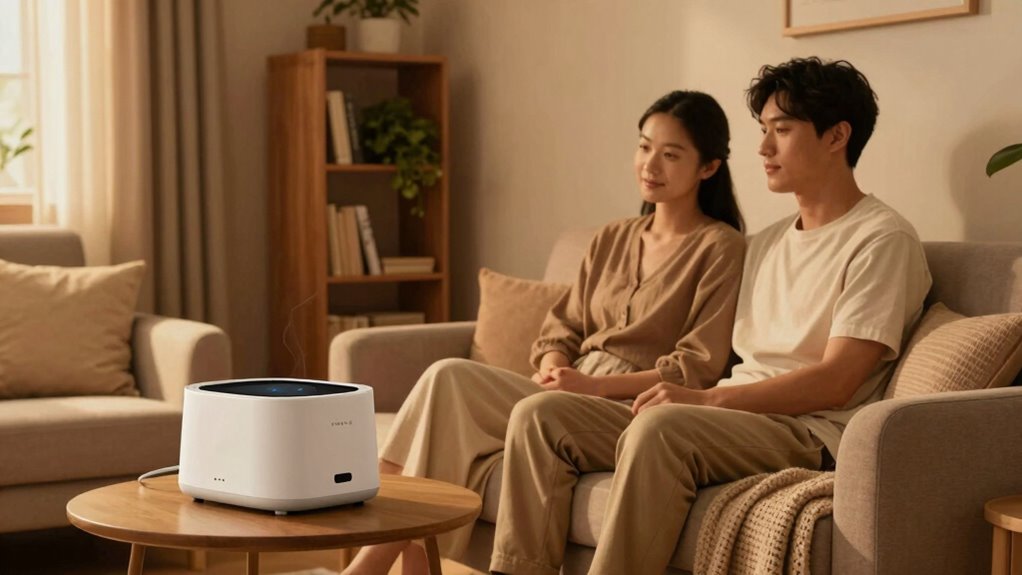

You can naturally integrate recovery technology into your daily life by using apps for mindfulness, guided conversations, or habit tracking that fit into your routines without feeling clinical. Schedule friendly check-ins or shared mindfulness exercises to build connection and emotional resilience. Keep the technology supportive and unobtrusive, creating a cozy environment that fosters growth. If you keep exploring, you’ll discover more ways to strengthen your bond without turning home into a clinic.
Key Takeaways
- Integrate recovery tools seamlessly into daily routines to promote natural, non-clinical use at home.
- Use user-friendly apps that encourage shared experiences without making therapy feel formal.
- Schedule casual, tech-assisted check-ins to foster connection without creating a clinical atmosphere.
- Focus on maintaining a warm, comfortable home environment while using recovery technology.
- Balance technology use with genuine, face-to-face interaction to keep home feeling relaxed and supportive.

In today’s digital age, recovery technology offers couples innovative ways to support each other through challenges. You don’t need to turn your home into a clinic to benefit from these tools. Instead, you can seamlessly integrate them into your daily life, strengthening your bond while maintaining a sense of normalcy. One effective approach is using mindfulness exercises through apps or guided recordings. When you and your partner practice mindfulness together, it helps you stay present, manage stress, and foster emotional connection. These exercises can be as simple as focused breathing, body scans, or short meditation sessions. Incorporating them into your routine doesn’t require much time or space, and it encourages a calm, supportive environment where both of you feel heard and understood. Incorporating recovery technology into daily routines can also promote consistency and long-term benefits, especially when these tools are tailored to your unique needs. Utilizing digital health tools tailored for emotional well-being can enhance your efforts and provide personalized support. Additionally, understanding how therapeutic techniques work can help you choose the most effective tools for your relationship. Recognizing how these techniques work can deepen your understanding and make the process more effective.
Practicing mindfulness together fosters emotional connection, reduces stress, and creates a calm, supportive environment at home.
Communication strategies are another vital aspect of recovery technology that can help you avoid turning your home into a clinical setting. Many apps provide tools designed to improve how you talk to each other, emphasizing active listening and empathy. For example, some platforms offer prompts for reflective responses or guided conversations that help you express feelings without judgment. Using these tools regularly can make your conversations more meaningful, reducing misunderstandings and fostering a safe space for vulnerability. You might also schedule “tech-assisted check-ins,” where you use specific prompts from an app to discuss your feelings or concerns. This structured approach keeps communication open and honest without feeling forced or clinical. Incorporating communication technology can also help set healthy boundaries and promote mutual understanding.
You can also leverage technology for accountability and motivation. Shared digital journals or habit-tracking apps allow you to set goals together, like practicing mindfulness daily or engaging in positive communication exercises. Tracking progress in a non-intrusive way keeps both of you engaged without feeling like you’re in therapy sessions. Additionally, virtual support groups or online forums can supplement your efforts, providing community and encouragement without disrupting your home environment. These resources offer a sense of connection and understanding, helping you realize you’re not alone in your journey.
Ultimately, the goal is to blend recovery tools naturally into your daily life, making them part of your routine rather than a separate, clinical process. When you choose user-friendly apps and simple strategies, you can foster growth, understanding, and emotional resilience together. By doing so, you support each other’s recovery while preserving the comfort and familiarity of your home—turning everyday moments into opportunities for connection and healing.

BayWel 100 Mindful Meditations Cards – Mindfulness & Meditation Self‑Care Prompts | Desk & Travel Deck for Stress Relief, Focus, Motivation & Well‑Being
- Simple Daily Mindfulness Practices: Bite-sized meditation prompts and affirmations
- 100 Unique Meditation Prompts: Guided practices for mindfulness and emotional regulation
- Versatile Use for Solo or Group: Ideal for home, therapy, yoga, and team sessions
As an affiliate, we earn on qualifying purchases.
As an affiliate, we earn on qualifying purchases.
Frequently Asked Questions
Can Recovery Technology Be Safely Used by Beginners at Home?
Yes, recovery technology can be safely used by beginners at home if you follow personalized protocols and guarantee proper device maintenance. Start with simple routines tailored to your needs, and gradually increase intensity under guidance. Always read instructions carefully, keep devices clean, and perform regular maintenance. This approach minimizes risks, making recovery technology a safe and effective addition to your wellness routine without turning your home into a clinic.
Are There Privacy Concerns With Using Recovery Devices in Shared Spaces?
While recovery devices in shared spaces can raise privacy concerns, you can easily manage them by choosing discreet, soundproof solutions. Be mindful of your surroundings and set boundaries, like using curtains or screens, to protect your privacy. Clear communication with your partner about your needs also helps. With these simple steps, you can enjoy the benefits of recovery technology without worrying about shared space privacy issues.
How Often Should Couples Use Recovery Technology for Optimal Results?
You should use recovery technology about 3 to 5 times a week for ideal results, ensuring mindful usage to prevent overuse. Pay attention to your body’s responses and adjust as needed. Regular device maintenance is essential to keep the devices functioning properly and safely. By balancing usage and maintaining your equipment, you maximize benefits without risking burnout or device failure, fostering a consistent recovery routine.
What Are the Costs Associated With Home Recovery Technology?
The costs of home recovery technology vary depending on the devices and features you choose. A cost comparison shows prices can range from affordable options to more advanced systems. Keep in mind, insurance coverage might help offset expenses, but it often doesn’t cover all costs. To avoid surprises, check with your provider about what’s covered and explore different options to find a solution that fits your budget and needs.
Are There Contraindications or Health Risks for Certain Users?
Think of recovery technology as a double-edged sword—you need to wield it carefully. Medical contraindications and health risk factors can make certain users vulnerable to adverse effects, like overexposure or unintended harm. If you have pre-existing conditions or health concerns, consult your healthcare provider before diving in. Ignoring these risks could turn a helpful tool into a threat, so stay informed, cautious, and always prioritize your safety.

WE'RE NOT REALLY STRANGERS Couples Edition, Conversation Card Game
- Number of Cards: 150 conversation cards
- Game Levels: 3 levels of questions and wildcards
- Purpose: Enhances understanding and connection
As an affiliate, we earn on qualifying purchases.
As an affiliate, we earn on qualifying purchases.
Conclusion
Think of recovery technology as a gentle lighthouse guiding your relationship through stormy seas. When you and your partner embrace these tools, you’re not turning your home into a clinic but rather illuminating your shared path to wellness. Just like a lighthouse prevents ships from crashing, these devices help you navigate challenges together with clarity and support. With a little effort, you’ll find your home becoming a sanctuary where healing and connection thrive, not a place of illness.

Stay on Track Habit Tracker Wall Calendar – Daily, Weekly & Monthly Habit Journal for Goal Setting & Productivity – Undated Spiral Planner by ThreeKin Collective
- Comprehensive Habit Tracking: Daily goals, habits, tasks, reflections
- Structured Layout: Morning routines, priorities, evening reviews
- Goal Setting Tools: Monthly planning and progress tracking
As an affiliate, we earn on qualifying purchases.
As an affiliate, we earn on qualifying purchases.

BestSelf Relationship Journals – 13-Week Guided Workbook, Him & Her Set
- Couples Therapy Journal: Explore questions and exercises together
- Deepen Relationship Bonds: Enhance communication and intimacy
- Improve Communication Skills: Foster trust and understanding
As an affiliate, we earn on qualifying purchases.
As an affiliate, we earn on qualifying purchases.