Guided meditation journals pair reflection prompts with mindfulness practices, but the right choice depends on how much structure and writing you want. I rank The Mindfulness Journal as the best overall for its mix of daily practices, prompts, and reflection. Inner Peace is a more approachable starting point for beginners, while The Five Minute Journal suits readers who want a brief gratitude routine rather than extended meditation work. The main tradeoffs are daily versus weekly pacing, meditation depth versus general wellbeing, and guided structure versus open-ended writing. Read on for the full breakdown and a guide to matching a journal to your routine.

Turn your wind-down time into listening time
- Thousands of audiobooks, podcasts and originals
- Listen on your phone, tablet or Echo — also offline
- Cancel anytime
Key Takeaways
- The Mindfulness Journal ranks first because its combination of practices, prompts, and reflection offers a broad entry point without narrowing the journal to one time of day or theme.
- Inner Peace is the clearer beginner choice: its beginner-focused framing may feel more approachable than journals aimed at longer-term mindfulness or self-inquiry.
- Time commitment changes the experience: The Five Minute Journal favors a short gratitude habit, while a 100-day or six-month daily journal asks for more sustained writing.
- Weekly formats suit readers who dislike daily assignments: A Year of Mindfulness and A Year of Zen both use a 52-week structure, giving the practice a slower cadence.
- Not every pick is meditation-centered: the balance journals, intention journal with affirmation deck, and gratitude journal lean toward broader mental health or reflection goals.
| The Untethered Soul Guided Journal: Practices to Journey Beyond Yourself |  | Best for Readers of The Untethered Soul | Format: Guided journal | Companion work: The Untethered Soul | Focus: Inner awareness | VIEW LATEST PRICE | See Our Full Breakdown |
| The Mindfulness Journal: Daily Practices, Writing Prompts, and Reflections for Living in the Present Moment | 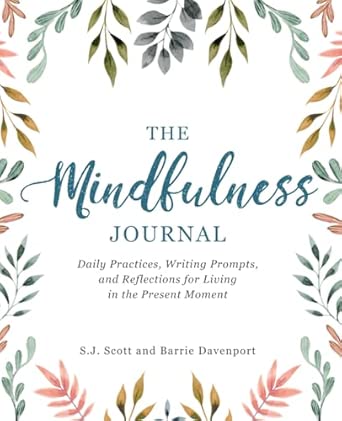 | Best for Everyday Mindfulness | Format: Mindfulness journal | Practice schedule: Daily practices | Writing content: Writing prompts | VIEW LATEST PRICE | See Our Full Breakdown |
| Inner Peace: A Guided Meditation Journal for Beginners |  | Best for Meditation Beginners | Format: Guided meditation journal | Intended experience level: Beginners | Stated focus: Cultivating inner peace | VIEW LATEST PRICE | See Our Full Breakdown |
| Mindfulness & Meditation Guided Journal |  | Best for a Structured 30-Day Practice | Format: Guided journal | Content: Mindfulness and meditation | Prompt schedule: Daily | VIEW LATEST PRICE | See Our Full Breakdown |
| Morning Meditations: A Guided Journal to Start Each Day Feeling Calm and Energized |  | Best for a Morning Routine | Format: Guided journal | Stated focus: Morning meditation | Intended effect: Start each day feeling calm and energized | VIEW LATEST PRICE | See Our Full Breakdown |
| Finding Balance: A 100-Day Mental Health Journal |  | Best for Mood and Habit Tracking | Duration: 100 days | Format: Notebook | Calendar type: Daily and weekly | VIEW LATEST PRICE | See Our Full Breakdown |
| A Year of Mindfulness: A 52-Week Guided Journal to Cultivate Peace and Presence |  | Best for Year-Long Mindfulness | Format: Guided journal | Duration: 52 weeks | Focus: Mindfulness, peace, and presence | VIEW LATEST PRICE | See Our Full Breakdown |
| Purple Canyon Intention Journal and Rainbow Affirmation Deck |  | Best for Affirmations and Goal Setting | Duration: 52 weeks | Included items: Guided gratitude journal and rainbow affirmation deck | Features: Meditations, goal-setting prompts, and daily mindfulness cards | VIEW LATEST PRICE | See Our Full Breakdown |
| Finding Balance Mental Health Journal, 6-Month Guided Daily Journal |  | Best for a Six-Month Guided Routine | Duration: 6 months | Prompts: 26 | Format: Notebook | VIEW LATEST PRICE | See Our Full Breakdown |
| A Year of Zen: A 52-Week Guided Journal |  | Best for a Simple Weekly Reflection Plan | Format: Guided journal | Duration: 52 weeks | Focus: Zen and reflection | VIEW LATEST PRICE | See Our Full Breakdown |
| The Five Minute Journal: Undated Guided Gratitude Journal |  | Best for a Quick Daily Practice | Brand: Intelligent Change | Format: Guided, undated journal | Binding: Hardcover | VIEW LATEST PRICE | See Our Full Breakdown |
| guided meditation journal | Format |
|---|---|
| The Untethered Soul Guided Jou | Guided journal |
| The Mindfulness Journal: Daily | Mindfulness journal |
| Inner Peace: A Guided Meditati | Guided meditation journal |
| Mindfulness & Meditation Guide | Guided journal |
| Morning Meditations: A Guided | Guided journal |
| Finding Balance: A 100-Day Men | Notebook |
| A Year of Mindfulness: A 52-We | Guided journal |
| Purple Canyon Intention Journa | — |
| Finding Balance Mental Health | Notebook |
| A Year of Zen: A 52-Week Guide | Guided journal |
| The Five Minute Journal: Undat | Guided, undated journal |
More Details on Our Top Picks
The Untethered Soul Guided Journal: Practices to Journey Beyond Yourself
I’d choose this journal when meditation is part of a broader interest in inner awareness, rather than simply a way to record daily moods. Its stated connection to The Untethered Soul gives the practices a particular personal-growth frame, which sets it apart from The Mindfulness Journal, whose prompts focus more directly on present-moment attention. That connection is also its main limitation: readers unfamiliar with the companion book may find less context in the product description for how to approach the exercises. The available details do not specify a schedule, page count, or particular meditation techniques, so I would not pick it for a highly structured daily routine. It makes the strongest case for readers who already connect with its source material and want reflective prompts to complement that reading.
Pros:- Designed to accompany The Untethered Soul
- Centers practices on inner awareness
- Connects journaling with personal-growth reflection
Cons:- Its companion-book focus may be less useful to readers unfamiliar with the source
- The supplied details do not describe a daily structure or specific meditation methods
Best for: Readers of The Untethered Soul who want a companion journal for reflection on awareness and personal growth.
Not ideal for: Meditation beginners seeking clearly described step-by-step exercises or a specified daily schedule.
- Format:Guided journal
- Companion work:The Untethered Soul
- Focus:Inner awareness
- Additional focus:Personal growth
- Content:Practices
- Practice framing:Journey beyond yourself
Our verdict“Choose this companion journal if The Untethered Soul already informs your personal-growth practice; choose a more explicitly structured option for standalone daily guidance.”
The Mindfulness Journal: Daily Practices, Writing Prompts, and Reflections for Living in the Present Moment
This is the clearest fit in this group for someone who wants mindfulness woven into ordinary days. Daily practices, writing prompts, and reflections give the reader several ways to return attention to the present, rather than making the journal depend on a single kind of meditation exercise. Compared with Mindfulness & Meditation Guided Journal, it is not described as a 30-day program, which may suit readers who would rather use a flexible daily resource than follow a defined course. The tradeoff is that the supplied description does not explain how long each practice takes, how prompts are sequenced, or whether meditation instructions are included. I’d favor it for a reader who wants regular written reflection; someone seeking a clearly bounded plan may prefer the 30-day alternative.
Pros:- Includes daily mindfulness practices
- Combines writing prompts with reflection
- Keeps attention on the present moment
- Not described as limited to a 30-day course
Cons:- The supplied details do not specify the length or sequence of practices
- Specific meditation techniques are not described
Best for: Readers seeking a flexible daily mindfulness habit built around short practices, writing prompts, and reflection.
Not ideal for: Buyers who want a defined-length meditation program or detailed information about specific exercises before choosing.
- Format:Mindfulness journal
- Practice schedule:Daily practices
- Writing content:Writing prompts
- Reflection content:Reflections
- Stated focus:Living in the present moment
- ASIN:1973531690
Our verdict“Pick this for an open-ended, prompt-led mindfulness routine, and choose Mindfulness & Meditation Guided Journal if a 30-day structure matters more.”
Inner Peace: A Guided Meditation Journal for Beginners
The title makes the intended reader unusually clear: someone new to meditation who wants a journal framed around cultivating inner peace. That beginner focus distinguishes it from The Untethered Soul Guided Journal, which is positioned as a companion to a specific personal-growth book, and from Mindfulness & Meditation Guided Journal, which specifies a 30-day format. Here, however, the available product information offers no further detail about prompts, meditation instructions, or pacing. That makes it difficult to judge how much guidance a newcomer will receive from the pages themselves. I’d shortlist it based on its beginner-oriented purpose, not on assumed exercises or structure; readers who need a defined daily plan may find the 30-day journal easier to evaluate from the information provided.
Pros:- Explicitly designed for beginners
- Combines a guided-journal format with meditation
- Has a clear inner-peace focus
Cons:- The supplied description provides no details about exercises or prompts
- No duration or daily schedule is specified
Best for: First-time meditators looking for a journal explicitly aimed at beginners and centered on inner peace.
Not ideal for: Readers who need a known schedule, described meditation techniques, or confirmed prompt details before buying.
- Format:Guided meditation journal
- Intended experience level:Beginners
- Stated focus:Cultivating inner peace
- Content category:Meditation
- Content category:Guided journaling
- ASIN:1646119266
Our verdict“Consider this if you are new to meditation and want an inner-peace focus, but favor the 30-day journal if you need a clearly stated program.”
Mindfulness & Meditation Guided Journal
The defined 30-day format is the main reason I’d rank this above less time-specific options for a reader who wants a start-and-finish routine. Daily mindfulness journal prompts pair reflection with meditation guidance, giving the practice more shape than The Mindfulness Journal, which is described as daily but not tied to a stated duration. That bounded schedule can make it easier to commit to a regular habit, though it may feel restrictive to someone who prefers an open-ended journal or wants to move at their own pace. The available information does not explain the meditation methods or how much guidance each day provides, so the structure is clearer than the content detail. I’d choose it for a month-long reset, not for a long-term journal with a specified yearlong arc.
Pros:- Provides a defined 30-day structure
- Pairs daily prompts with meditation guidance
- Combines mindfulness practice and journaling
- Offers a clear time frame for building a routine
Cons:- The fixed duration may not suit readers seeking an ongoing journal
- Specific meditation methods and daily guidance are not detailed in the supplied information
Best for: Readers who want daily mindfulness prompts and meditation guidance organized into a defined month-long practice.
Not ideal for: People who prefer an open-ended journal or need detailed information about meditation techniques before committing.
- Format:Guided journal
- Content:Mindfulness and meditation
- Prompt schedule:Daily
- Journal content:Mindfulness prompts
- Program duration:30 days
- Stated aims:Feel calmer and happier
- ASIN:1734662123
Our verdict“Choose this for a structured month of daily reflection and meditation; choose The Mindfulness Journal for a less time-bounded routine.”
Morning Meditations: A Guided Journal to Start Each Day Feeling Calm and Energized
This journal has the most specific time-of-day role in the group: it is designed to support a calm, energized start to the morning. That makes it a more targeted choice than The Mindfulness Journal, which focuses on present-moment awareness without a stated morning emphasis. Its guided-journal format may help readers pair reflection with the start of the day, but the description does not specify prompts, meditation methods, or a daily schedule. I would treat the morning focus as the differentiator, not assume it contains a particular routine. The series and volume information also identify it as part of a broader journal line, though that alone does not establish what the pages include. Choose it for a morning-centered intention; skip it if you want a flexible, all-day mindfulness resource.
Pros:- Has a clear morning-routine focus
- Uses a guided-journal format
- Aims to support both calm and energy
- Identified as part of the Everyday Inspiration Journals series
Cons:- The supplied details do not describe specific prompts or meditation practices
- No duration or daily schedule is stated
Best for: People who want a guided journal specifically framed around beginning the day with calm and energy.
Not ideal for: Readers seeking a specified meditation sequence, detailed prompts, or a journal designed for use throughout the day.
- Format:Guided journal
- Stated focus:Morning meditation
- Intended effect:Start each day feeling calm and energized
- Series:Everyday Inspiration Journals
- Volume:10
- ASIN:1631068628
Our verdict“Pick this if morning is when you want to anchor meditation and reflection; choose The Mindfulness Journal for a broader present-moment focus.”
Finding Balance: A 100-Day Mental Health Journal
Finding Balance is the most tracking-focused choice in this group: daily check-ins, weekly reflections, mood and habit logs, and progress reviews give readers a way to notice patterns over 100 days. That makes it a more structured self-reflection tool than A Year of Zen, whose supplied details describe a weekly format but not specific tracking features. A QR code for a guided audio meditation adds a meditation element beyond writing, though the journal’s main value is its consistent check-in routine. The A5 spiral-bound hardcover offers a substantial writing setup, but its size and binding may feel less convenient than a compact journal. Its tracking pages also pay off only if you return regularly, so this is a better match for routine-builders than occasional journalers.
Pros:- Daily check-ins and weekly reflections create a clear journaling rhythm.
- Mood and habit tracking can help readers review patterns over time.
- Progress review pages provide a structured way to reflect on changes.
- QR access to a guided audio meditation adds a listening practice.
Cons:- Tracking sections are less useful without regular entries.
- The spiral-bound format may not suit readers who prefer a conventional bound journal.
- Its 100-day structure is shorter than the year-long formats offered by A Year of Mindfulness and A Year of Zen.
Best for: Adults who want a 100-day routine combining mood and habit tracking with guided reflection and an audio meditation.
Not ideal for: People who journal sporadically, prefer an unbound or easily portable notebook, or want meditation practices to be the journal’s main focus.
- Duration:100 days
- Format:Notebook
- Calendar type:Daily and weekly
- Paper size:A5
- Binding:Spiral-bound
- Pages:288
- Dimensions:8.6 × 6.5 inches
- Cover material:Linen; product data also lists faux leather
- Target audience:Adults
Our verdict“Choose this journal if you want mood and habit tracking to anchor a consistent 100-day self-reflection practice.”
A Year of Mindfulness: A 52-Week Guided Journal to Cultivate Peace and Presence
A Year of Mindfulness suits readers who want a weekly commitment rather than a daily tracking system. Its 52-week structure and stated focus on peace and presence make the intention clear, while the available details do not specify particular prompts, exercises, or an audio component. That makes it less prescriptive than Finding Balance: A 100-Day Mental Health Journal, which spells out daily check-ins, habit and mood tracking, and progress reviews. In exchange, a weekly cadence may feel more manageable for someone who wants space between entries. The tradeoff is limited visibility into how each week is guided; readers seeking concrete meditation instructions or a detailed layout may prefer a journal with those features described. It is best viewed as a broad mindfulness reflection framework, not a tracking workbook.
Pros:- A 52-week structure supports reflection across a full year.
- The stated focus on mindfulness, peace, and presence gives the journal a clear theme.
- Weekly pacing may suit readers who find daily journaling difficult to sustain.
Cons:- Available product details do not describe specific prompts or exercises.
- No mood tracking, audio meditation, or layout features are specified.
- The weekly format offers less frequent check-ins than Finding Balance: A 100-Day Mental Health Journal.
Best for: Readers who want a weekly mindfulness journaling habit centered on peace and presence, without a stated daily tracking requirement.
Not ideal for: Buyers who need clearly described meditation exercises, daily prompts, mood tracking, or confirmed layout details before choosing a journal.
- Format:Guided journal
- Duration:52 weeks
- Focus:Mindfulness, peace, and presence
Our verdict“Pick this for a simple year-long weekly mindfulness framework, but choose a more fully specified journal if you need detailed guidance.”
Purple Canyon Intention Journal and Rainbow Affirmation Deck
Purple Canyon Intention Journal and Rainbow Affirmation Deck combines a year-long gratitude journal with meditation and goal-setting prompts, then adds daily mindfulness cards for a practice that can extend beyond the page. That card deck gives it a different role from A Year of Mindfulness, which is described as a weekly reflection journal without a separate activity tool. The mix may appeal to readers who like choosing an affirmation or card as a starting point, rather than relying only on written prompts. The tradeoff is uncertainty: product details do not explain the journal’s layout, the number or format of the meditations, or what the deck contains. I would choose it for variety and intention-setting, not for a clearly documented meditation curriculum or a specific tracking system.
Pros:- The 52-week journal provides a year-long structure.
- Affirmation cards offer an additional prompt beyond written journaling.
- Meditation and goal-setting prompts combine reflection with intention-setting.
Cons:- Available product details do not explain the journal layout or the deck’s contents.
- The number and format of the meditation prompts are unspecified.
- No mood or habit tracking features are listed, unlike the Finding Balance journals.
Best for: Readers who want a year-long gratitude and intention practice with affirmation cards to prompt daily mindfulness.
Not ideal for: Buyers who need a detailed description of the journal layout, meditation content, card deck, or progress-tracking features before purchasing.
- Duration:52 weeks
- Included items:Guided gratitude journal and rainbow affirmation deck
- Features:Meditations, goal-setting prompts, and daily mindfulness cards
Our verdict“Choose this if affirmation cards and goal-setting add variety to your mindfulness routine; skip it if you need clearly documented journal contents.”
Finding Balance Mental Health Journal, 6-Month Guided Daily Journal
Finding Balance Mental Health Journal pairs daily and weekly check-ins with mood and habit tracking, 26 mindfulness and self-reflection prompts, progress reviews, and QR access to a guided audio meditation. Compared with Finding Balance: A 100-Day Mental Health Journal, it offers a defined six-month span and a stated prompt count, making the journaling horizon easier to plan around. Both share the tracking-led approach and spiral binding, so the choice is less about a different method than the commitment period and presentation: this version lists a sand-colored faux-leather cover and elastic closure. The format asks for steady participation, and six months may feel too fixed for readers who want an open-ended notebook. Choose it for a guided half-year reset, not for a loose, occasional meditation journal.
Pros:- Daily and weekly check-ins provide a regular structure for reflection.
- Mood and habit tracking plus progress reviews support looking back across the six-month period.
- The 26 prompts offer a stated source of guidance for mindfulness and self-reflection.
- Includes QR access to a guided audio meditation and an elastic closure.
Cons:- The tracking approach depends on regular entries to be useful.
- Spiral binding may not suit readers who prefer a traditionally bound journal.
- Its six-month duration may feel restrictive to people seeking an undated or year-long format.
Best for: Adults who want a defined six-month journaling plan with daily check-ins, weekly reviews, mood and habit tracking, and guided prompts.
Not ideal for: Readers who prefer open-ended journaling, dislike spiral binding, or want a meditation-first journal rather than a mental-health tracking routine.
- Duration:6 months
- Prompts:26
- Format:Notebook
- Binding:Spiral-bound
- Cover and closure:Sand-colored faux leather with elastic closure
- Ruling:Full-lined or ruled
- Pages:287
- Dimensions:8.6 × 6.5 inches
- Weight:0.57 kg
Our verdict“Choose this version if a guided six-month schedule and explicit prompt count fit your journaling goals.”
A Year of Zen: A 52-Week Guided Journal
A Year of Zen offers a straightforward proposition: a guided journal organized around 52 weeks of reflection. Its year-long cadence resembles A Year of Mindfulness, but the title positions this option around Zen rather than peace and presence. The available details do not identify particular prompts, meditation instructions, or layout features, so I would not choose it expecting a defined practice sequence. That limited description also makes it harder to compare its guidance with the more specific daily and weekly tracking in Finding Balance: A 100-Day Mental Health Journal. Its appeal is the simple weekly structure, which may leave room for personal reflection; its drawback is that the level and style of guidance remain unclear. It fits readers comfortable with that uncertainty better than buyers seeking detailed meditation support.
Pros:- The 52-week duration gives reflection a year-long structure.
- The Zen theme offers a distinct focus from the peace-and-presence framing of A Year of Mindfulness.
- Weekly pacing may be more approachable than the daily tracking routine in the Finding Balance journals.
Cons:- Available details do not describe the prompts or exercises.
- No meditation audio, tracking tools, or journal layout information is specified.
- The limited feature information makes it difficult to judge how much guidance each week provides.
Best for: Readers looking for a year-long, weekly Zen-themed reflection framework and comfortable choosing without detailed prompt information.
Not ideal for: Buyers who want to preview specific prompts, meditation exercises, tracking tools, or the journal’s page layout.
- Format:Guided journal
- Duration:52 weeks
- Focus:Zen and reflection
Our verdict“Choose this for a basic weekly Zen-themed reflection plan, but look elsewhere if you need clearly described meditation guidance.”
The Five Minute Journal: Undated Guided Gratitude Journal
Short, repeatable prompts give this journal a clear advantage for readers who want a small daily pause rather than an open-ended meditation workbook. Its undated format lets you skip days without leaving dated pages behind, while the 264-page hardcover makes it a practical choice for keeping a routine in one place. Compared with Inner Peace: A Guided Meditation Journal for Beginners, this journal focuses more narrowly on gratitude and daily reflection than on meditation guidance. That focus can make starting easier, but it also means less variety for anyone seeking broader mindfulness exercises. The linen-and-fabric cover and sustainably sourced paper add tactile appeal; the tradeoff is that the guided structure depends on regular use to become a habit. Choose it for brief, consistent reflection, not a wide-ranging meditation program.
Pros:- Brief daily prompts make it approachable for new journalers
- Undated pages allow flexible use after missed days
- Gratitude and reflection prompts offer a simple daily structure
- Linen hardcover and sustainably sourced paper add tactile and material appeal
Cons:- The gratitude-led format offers less variety than broader meditation journals
- Its routine-based prompts are less useful for readers who prefer occasional, unstructured writing
Best for: Readers who want a flexible, five-minute gratitude routine with simple prompts and no fixed start date
Not ideal for: People seeking meditation techniques, varied mindfulness exercises, or a journal that supports occasional rather than regular writing
- Brand:Intelligent Change
- Format:Guided, undated journal
- Binding:Hardcover
- Cover material:Paper, linen, and fabric
- Paper size:8.7 x 5.1 inches
- Dimensions:8.7 x 5.1 x 0.8 inches
- Pages:264
- Weight:309 g
- Quantity:1
Our verdict“Choose this journal for a flexible, brief gratitude habit; pick a broader meditation journal if you want more varied practices.”

How We Picked
I compared these journals by how directly their guided content supports meditation and mindfulness, how clearly each sets expectations for time and frequency, and whether its prompts give readers a useful path beyond blank-page journaling. I also considered audience fit: a beginner-friendly format, a focused morning routine, a long-term weekly practice, or a broader mental-health and gratitude approach can each be the right choice for a different reader.
The ranking favors journals that combine usable guidance with flexibility across everyday routines. The Mindfulness Journal takes the top position for its broad mix of daily practices and reflection; narrower options rank lower when they serve a more specific goal or require a particular cadence. I distinguish those specialized strengths rather than treating every journal as interchangeable, and I account for tradeoffs such as time commitment, less meditation-specific content, or a format that may not suit every writing habit.
| guided meditation journal | Format |
|---|---|
| The Untethered Soul Guided Jou | Guided journal |
| The Mindfulness Journal: Daily | Mindfulness journal |
| Inner Peace: A Guided Meditati | Guided meditation journal |
| Mindfulness & Meditation Guide | Guided journal |
| Morning Meditations: A Guided | Guided journal |
| Finding Balance: A 100-Day Men | Notebook |
| A Year of Mindfulness: A 52-We | Guided journal |
| Purple Canyon Intention Journa | — |
| Finding Balance Mental Health | Notebook |
| A Year of Zen: A 52-Week Guide | Guided journal |
| The Five Minute Journal: Undat | Guided, undated journal |
Factors to Consider When Choosing Guided Meditation Journals
Before choosing, I’d match the journal’s structure to the practice you can realistically maintain. A guided journal can help you reflect, but its value depends on whether its prompts, pace, and focus fit your life—not on how many pages it contains.
Match the format to your available time
Daily journals can make mindfulness part of a routine, but regular prompts may start to feel like homework if your schedule changes often. Weekly formats offer more breathing room and can suit readers who prefer a longer reflection session over a short daily check-in. A five-minute format sets a low time bar, though short entries may leave less room for exploring complicated thoughts. Before buying, decide whether you want a quick habit, a daily writing practice, or a slower weekly rhythm. A common mistake is choosing an ambitious schedule based on motivation today rather than time available in an ordinary week.
Separate meditation guidance from general wellness prompts
Some journals center mindfulness practice, while others focus on gratitude, affirmations, or mental-health reflection. Those aims can overlap, but a journal that asks about feelings or intentions may not provide the meditation guidance you expect. Check whether you want prompts to use before or after meditation, written reflections that build awareness, or a broader wellbeing routine. If meditation instruction is your main goal, favor a title whose stated focus is mindfulness or meditation rather than assuming every guided journal includes the same kind of practice. Choosing by theme alone can leave you with pages that support reflection but do not match the practice you hoped to develop.
Choose a level of structure you will actually use
Highly guided prompts can make it easier to begin when you do not know what to write, while open-ended pages leave more room to follow your own thoughts. Beginners often benefit from clear cues and a defined sequence; experienced journalers may find repetitive prompts limiting. Consider whether you want the book to tell you what to reflect on or simply offer a starting point. A structured format is not automatically better if the prompts feel too prescriptive for your needs. On the other hand, a loose format may not help much if a blank page is what keeps you from journaling.
Think about duration and repeatability
A 100-day, six-month, or 52-week plan gives a journal a clear endpoint and can help make progress feel concrete. An undated journal can be easier to return to after a missed day because it does not make the calendar feel like a scorecard. The tradeoff is that a defined program may feel more motivating, while an undated format may offer greater flexibility but less of a built-in sense of progression. Ask whether you prefer completing a set course or returning to prompts whenever you need them. Avoid treating a missed entry as a reason to abandon the journal; a format that permits pauses is often more sustainable.
Decide whether a companion tool adds real value
A journal paired with an affirmation deck or other prompts can offer variety, but an extra component is useful only if you expect to use it. Some readers prefer one book that keeps their routine in one place; others enjoy choosing a prompt or affirmation to guide a session. Think about whether the companion element supports your meditation habit or adds another item to manage. The same principle applies to themed journals: a morning focus can help anchor a routine, but it may feel restrictive if your schedule changes. Choose extras for their fit with your habits, not simply because the package includes more than a journal.
Set expectations for what journaling can do
A guided journal can support reflection and a regular mindfulness habit, but it is not a substitute for professional mental-health care. Readers looking for support with ongoing distress may want a broader care plan alongside journaling. Even for general wellbeing, prompts can bring up feelings that take more time to process than a short entry allows. Choose a pace that gives you room to pause, skip a question, or write less when needed. The best fit is a journal that supports a practice without making completion feel like a test.
Frequently Asked Questions
Which journal is the best starting point if I have never meditated?
I’d start with Inner Peace if you want a journal explicitly framed for beginners. If you prefer a wider mix of daily mindfulness activities and reflection, The Mindfulness Journal is the more flexible alternative. Before choosing, think about whether you want a clearly beginner-oriented guide or varied prompts you can revisit over time. A beginner label does not mean you need to complete every entry perfectly; use the prompts at a pace that feels manageable. If you want a very short routine, The Five Minute Journal may be easier to maintain, though its focus is gratitude rather than meditation instruction.
Should I choose a daily journal or a 52-week journal?
Choose a daily format if frequent prompts help you remember to pause and you have room for a regular writing habit. A 52-week journal can be a better match if you prefer one focused reflection each week or do not want a daily assignment. The 100-day and six-month Finding Balance journals also set a defined daily cadence, but their mental-health focus differs from a meditation-centered weekly format. Think about what you can sustain during a busy week, not just what sounds appealing on a quiet day. If missing entries tends to discourage you, a slower or undated structure may feel easier to return to.
Are gratitude journals a good substitute for meditation journals?
They can support a reflective routine, but they serve a different main purpose. The Five Minute Journal is an option for readers who want a brief gratitude practice, while a meditation-focused journal is a better fit if you want prompts tied more directly to mindfulness or meditation. Gratitude entries may help you pause and notice what is going well, but they may not provide the style of guidance you expect from a meditation journal. Consider what you want to do during the practice before buying. If you want both approaches, you can pair a gratitude format with a separate meditation routine rather than expecting one journal to cover every goal.
What should I choose if I want a journal for morning reflection?
Morning Meditations is the most directly aligned option because its focus is starting the day with calm and energy. That makes it a sensible choice if you want the journal itself to anchor a morning habit. A more general mindfulness journal may suit you better if you expect to write at different times or want prompts that are not tied to the start of the day. Consider whether mornings are consistently available in your routine before choosing a time-specific format. If your schedule varies, a journal without a strong time-of-day focus may be easier to keep using.
How do I choose between a meditation journal and a mental-health journal?
Start with the outcome you want from writing. A meditation or mindfulness journal is a closer match if you want to build present-moment awareness and reflect on a contemplative practice. The Finding Balance journals are more directly framed around mental-health journaling, so they may suit readers seeking structured reflection in that area. These purposes can overlap, but the prompts may not be interchangeable. If you need support for ongoing mental-health concerns, a journal can be one personal tool, not a replacement for qualified care.
Conclusion
For a balanced starting point, I recommend The Mindfulness Journal as the best overall, thanks to its blend of daily practices, writing prompts, and reflection. Best for beginners goes to Inner Peace, while best for a short daily habit is The Five Minute Journal if gratitude—not extended meditation guidance—is your priority. I’d choose A Year of Mindfulness or A Year of Zen for a weekly cadence, and Morning Meditations for a morning-centered routine. For mental-health-focused writing, compare the 100-day and six-month Finding Balance formats by the duration you can maintain. There is no single best fit for every routine: let your preferred subject, writing time, and pace decide which journal you are most likely to return to.
Halloween Picks
halloween
As an affiliate, we earn on qualifying purchases.