For adults choosing DBT skills card decks, DBT Skills-Building Card Deck for Clients and Therapists: 101 More Mindful Practices is my best overall pick for its broad practice selection and usefulness in individual or guided work. DBT Cards for Coping Skills stands out for readers seeking a large set of coping strategies, while The Dialectical Behavior Therapy Skills Card Deck offers a more focused set of 52 daily practices. The main tradeoff is between a larger variety of prompts and a smaller deck that may feel easier to use regularly; some decks also focus on specific skills or group settings rather than broad adult use. Read on for the full breakdown, including what to check before choosing a deck.

Turn your wind-down time into listening time
- Thousands of audiobooks, podcasts and originals
- Listen on your phone, tablet or Echo — also offline
- Cancel anytime
Key Takeaways
- Deck size changes the experience: 101- and 125-card options offer more prompts to explore, while 25-, 28-, and 48-card sets may be easier to carry or use in short sessions.
- Specificity matters more than card count alone: decks centered on coping, emotional regulation, mindfulness, or real-life scenarios may suit a targeted need better than a broader collection.
- Client-and-therapist editions have a different role: the two 101-practice decks are framed for guided as well as individual use, while many other titles appear oriented toward personal reference.
- Portability varies across the lineup: the 48-card deck with a binder ring signals a carry-friendly format, while larger decks may offer more variety at the cost of bulk.
- Not every DBT-labeled deck is DBT-only: the group therapy deck also includes CBT, ACT, and positive psychology, which broadens its scope but may not suit buyers seeking a dedicated DBT resource.
| DBT Skills Cards for Teens and Adults with Real-Life Scenarios |  | Best for Scenario-Based Learning | Brand: Cognisera | Card count: 25 | Included component: Ring | VIEW LATEST PRICE | See Our Full Breakdown |
| DBT Skills-Building Card Deck for Clients and Therapists: 101 More Mindful Practices |  | Best for Mindfulness Practice | Format: Card deck | Number of practices: 101 | Approach: Dialectical behavior therapy (DBT) | VIEW LATEST PRICE | See Our Full Breakdown |
| DBT Cards for Coping Skills: 125 Skills and Strategies to Find Balance, Joy, and Purpose |  | Best for a Broad Coping-Skills Library | Card count: 125 | Card type: DBT skills and strategies cards | Stated purpose: Support coping | VIEW LATEST PRICE | See Our Full Breakdown |
| DBT Skills Cards for Teens and Adults, 25-Card Coaching Deck |  | Best for Quick Skill Selection | Brand: HOOMESUN | Card count: 24 double-sided skill cards and 1 guide card | Skill areas: Mindfulness, distress tolerance, emotion regulation, interpersonal effectiveness | VIEW LATEST PRICE | See Our Full Breakdown |
| The Dialectical Behavior Therapy Skills Card Deck: 52 Practices to Balance Your Emotions Every Day |  | Best for Everyday Emotional Balance | Card count: 52 | Practice type: Dialectical behavior therapy (DBT) | Stated purpose: Balance emotions | VIEW LATEST PRICE | See Our Full Breakdown |
| Sulieschen DBT Skills Coaching Cards, 28-Piece Set |  | Best for Quick, Portable Coaching | Brand: Sulieschen | Card count: 28 | Card size: 2.4 x 3.8 inches | VIEW LATEST PRICE | See Our Full Breakdown |
| DBT Coping Skills Cards for Emotional Regulation and Mindfulness |  | Best for Guided Practice | Brand: Raptor Studio, LLC | Card count: 50 exercise cards | Included components: 50 exercise cards; tuck box | VIEW LATEST PRICE | See Our Full Breakdown |
| The DBT Deck for Clients and Therapists: 101 Mindful Practices to Manage Distress, Regulate Emotions, and Build Better Relationships |  | Best for a Larger Practice Library | ASIN: 1683731441 | Number of practices: 101 | Intended audience: Clients and therapists | VIEW LATEST PRICE | See Our Full Breakdown |
| DBT Skills Therapy Cards for Coping |  | Best for Durable On-the-Go Use | Brand: Jiayaluja | Card count: 20 | DBT modules: Mindfulness, interpersonal effectiveness, distress tolerance, emotional regulation | VIEW LATEST PRICE | See Our Full Breakdown |
| DBT Coping Skills Flashcards, 104 Dialectical Behavior Therapy Cards |  | Best for Broad Skill Coverage | Brand: Uflognirz | Number of skills: 104 stated; product information also lists 54 items | Themes: Mindfulness, distress tolerance, emotion regulation, interpersonal effectiveness, relaxation and self-care, values and meaning | VIEW LATEST PRICE | See Our Full Breakdown |
| The Group Therapy Card Deck: CBT, DBT, ACT, and Positive Psychology Tips and Tools | 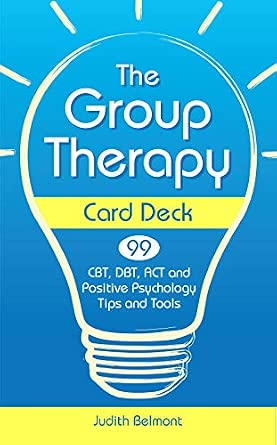 | Best for a Multimodal Therapy Mix | Format: Card deck | Approaches covered: CBT, DBT, ACT, and positive psychology | Content type: Tips and tools | VIEW LATEST PRICE | See Our Full Breakdown |
| 48-Piece DBT Coping Skills Flashcards with Binder Ring |  | Best for Portable, Focused DBT Practice | Card count: 48 | Card size: 3.15 × 4.3 in (8 × 11 cm) | Material: Paper | VIEW LATEST PRICE | See Our Full Breakdown |
| DBT skills card decks for adult | Card count | Brand | Material |
|---|---|---|---|
| DBT Skills Cards for Teens and | 25 | Cognisera | Paper |
| DBT Skills-Building Card Deck | — | — | — |
| DBT Cards for Coping Skills: 1 | 125 | — | — |
| DBT Skills Cards for Teens and | 24 double-sided skill cards and 1 guide card | HOOMESUN | Paper |
| The Dialectical Behavior Thera | 52 | — | — |
| Sulieschen DBT Skills Coaching | 28 | Sulieschen | Cardstock |
| DBT Coping Skills Cards for Em | 50 exercise cards | Raptor Studio, LLC | Cardstock |
| The DBT Deck for Clients and T | — | — | — |
| DBT Skills Therapy Cards for C | 20 | Jiayaluja | PVC |
| DBT Coping Skills Flashcards | — | Uflognirz | — |
| The Group Therapy Card Deck: C | Not specified | — | — |
| 48-Piece DBT Coping Skills Fla | 48 | Czlotyh | Paper |
More Details on Our Top Picks
DBT Skills Cards for Teens and Adults with Real-Life Scenarios
Real-life scenarios give this compact deck a practical teaching angle: readers can connect a skill to an everyday situation, then follow an explanation, action steps, and a short practice challenge. It covers mindfulness, distress tolerance, emotion regulation, and relationship skills, making it broader in scope than the mindfulness-only focus of DBT Skills-Building Card Deck for Clients and Therapists: 101 More Mindful Practices. The tradeoff is its small size: 25 cards offer a guided starting point, not the breadth of the 125-card DBT Cards for Coping Skills. A ring supports keeping cards together for individual or group practice, while the paper format calls for ordinary care. I’d choose it for clear, supported exercises over a large library of prompts.
Pros:- Everyday scenarios connect abstract DBT ideas to recognizable situations.
- Action steps and short challenges give users a concrete way to practice.
- Covers four skill areas, including relationship skills.
- Ring-bound format suits individual practice or group use.
Cons:- Only 25 cards, so the range of skills and prompts is limited.
- Paper cards may need careful handling with frequent use.
Best for: Teens and adults who learn better from everyday examples and want structured practice across several DBT skill areas.
Not ideal for: Buyers seeking a large reference deck or many distinct exercises; its 25 cards provide a limited selection.
- Brand:Cognisera
- Card count:25
- Included component:Ring
- Language:English
- Recommended age:12 years and up
- Material:Paper
- Dimensions:3.69 x 3.69 x 0.1 inches
- Skill modules:Mindfulness, distress tolerance, emotion regulation, relationship skills
Our verdict“Choose this deck if practical scenarios and step-by-step practice matter more to you than a large card count.”
DBT Skills-Building Card Deck for Clients and Therapists: 101 More Mindful Practices
This deck puts mindfulness practice first, with 101 practices grounded in DBT and intended to support distress management, emotion regulation, and relationships. That focused approach can suit readers who want a substantial set of prompts organized around mindful practice, rather than the scenario-led instruction in DBT Skills Cards for Teens and Adults with Real-Life Scenarios. Its 101 practices also give it more stated variety than that 25-card deck, though the supplied details don’t explain the card format, categories, or how much guidance each practice includes. Compared with the 125-card DBT Cards for Coping Skills, the count is smaller, but the mindfulness emphasis is clearer. I’d pick it for a practice-led resource; skip it if you need detailed specs or explicitly structured, step-by-step coaching.
Pros:- Offers 101 mindfulness practices.
- Uses a DBT approach aimed at distress management and emotion regulation.
- Designed for both clients and therapists.
- The mindfulness focus gives it a clear use case distinct from broader scenario-based decks.
Cons:- Provided product details do not specify card dimensions or included components.
- The descriptions do not clarify how the practices are organized or how much instruction each card gives.
Best for: Adults, clients, and therapists looking for a sizable collection of DBT-based mindfulness practices to use in regular sessions or personal routines.
Not ideal for: Buyers who want verified card dimensions, a listed storage feature, or clearly described step-by-step examples before choosing.
- Format:Card deck
- Number of practices:101
- Approach:Dialectical behavior therapy (DBT)
- Intended users:Clients and therapists
- Practice focus:Mindfulness
- Stated aims:Manage distress, regulate emotions, and build better relationships
Our verdict“Choose this deck for a mindfulness-centered collection of 101 DBT practices, but look elsewhere for clearly documented card features or scenario-based coaching.”
DBT Cards for Coping Skills: 125 Skills and Strategies to Find Balance, Joy, and Purpose
The main distinction here is scale: 125 cards provide the largest stated collection in this batch, making this a plausible pick for adults who want many DBT coping strategies to draw from over time. Its stated aim—supporting balance, joy, and purpose—also gives the deck a broader framing than the everyday emotion-balancing emphasis of The Dialectical Behavior Therapy Skills Card Deck: 52 Practices to Balance Your Emotions Every Day. Compared with DBT Skills Cards for Teens and Adults with Real-Life Scenarios, it offers five times the card count, but the supplied product information says little about how cards teach or organize the skills. That makes the choice a tradeoff between breadth and transparency: I’d favor it for variety, not for a clearly documented coaching format.
Pros:- 125 cards provide a broad selection of skills and strategies.
- Explicitly centers coping skills.
- Frames practice around balance, joy, and purpose.
- Offers more stated card variety than the 25-card scenario-based Cognisera deck.
Cons:- Product details do not describe card layout, instructions, or how skills are grouped.
- No storage, material, or portability information is provided.
Best for: Adults who want a large pool of DBT coping skills and strategies to select from for ongoing personal practice.
Not ideal for: Beginners who need described examples, action steps, or a clear skill-selection system; those details are not provided.
- Card count:125
- Card type:DBT skills and strategies cards
- Stated purpose:Support coping
- Theme:Balance, joy, and purpose
- Approach:Dialectical behavior therapy (DBT)
- ASIN:0593689852
Our verdict“Choose this deck if a large range of DBT coping strategies is your priority and you can accept limited detail about how the cards guide practice.”
DBT Skills Cards for Teens and Adults, 25-Card Coaching Deck
The Notice-Choose-Practice flow is the deciding feature here: color-coded categories help users move from noticing a need to selecting a skill and trying it. Each of the 24 double-sided skill cards includes action steps, context, and a guided example, while a guide card rounds out the 25-card set. That makes the deck more explicitly organized for quick coaching than DBT Skills Cards for Teens and Adults with Real-Life Scenarios, whose distinct strength is everyday scenarios and short challenges. Both cover four core areas, but this HOOMESUN deck adds a storage box and removable ring for keeping the cards together. Its compact selection is still limited beside the 101- and 125-card decks, and paper construction may be less suited to rough handling. I’d choose it for guided, portable selection rather than maximum breadth.
Pros:- Notice-Choose-Practice flow makes skill selection more structured.
- Cards include action steps, context, and guided examples.
- Covers mindfulness, distress tolerance, emotion regulation, and interpersonal effectiveness.
- Storage box and removable ring support portable organization.
Cons:- The 24 skill cards offer less breadth than decks with 101 or 125 cards.
- Paper construction may wear with frequent handling.
Best for: Adults or teens who want a portable, color-coded way to choose and practice a DBT skill, with examples that support coaching or self-guided use.
Not ideal for: Buyers who want a deep library of prompts or a durable, wipe-clean deck; this set has 24 skill cards and is made of paper.
- Brand:HOOMESUN
- Card count:24 double-sided skill cards and 1 guide card
- Skill areas:Mindfulness, distress tolerance, emotion regulation, interpersonal effectiveness
- Card dimensions:3.93 x 2.76 inches
- Material:Paper
- Included components:Guide card, storage box, removable blue ring
- Selection method:Color-coded Notice-Choose-Practice flow
Our verdict“Choose this deck for a portable, structured coaching flow; choose a larger set if variety matters more than quick skill selection.”
The Dialectical Behavior Therapy Skills Card Deck: 52 Practices to Balance Your Emotions Every Day
With 52 DBT-based practices and a stated focus on balancing emotions in everyday life, this deck occupies a middle ground between the 25-card coaching sets and the larger 101- and 125-card collections. The daily-use framing makes it a natural fit for adults who want a modest practice deck rather than an expansive coping reference. By comparison, DBT Skills-Building Card Deck for Clients and Therapists: 101 More Mindful Practices offers nearly twice as many practices and a more explicit mindfulness focus; this deck’s description instead foregrounds everyday emotional balance. The available details do not identify its skill categories, card format, or storage, so buyers have less information about how it supports practice than they do with the HOOMESUN 25-Card Coaching Deck. I’d shortlist it for the simple daily-practice premise, while recognizing that the format is not fully described.
Pros:- Includes 52 DBT-based practices.
- Designed around everyday use.
- Has a clear emotional-balance focus.
- A mid-sized option between the 25-card coaching decks and larger collections.
Cons:- The provided description does not list the specific DBT skills covered.
- Card dimensions, materials, storage, and guidance format are not specified.
Best for: Adults seeking a moderate-sized DBT practice deck for regular attention to emotional balance, without needing a large reference collection.
Not ideal for: Buyers who need specified skill categories, guided examples, or portability details; the product information does not describe those features.
- Card count:52
- Practice type:Dialectical behavior therapy (DBT)
- Stated purpose:Balance emotions
- Intended use:Everyday practice
- ASIN:1684033985
- Format:Card deck
Our verdict“Choose this deck for a mid-sized set centered on everyday emotional balance, but pick a more fully described option if coaching structure matters.”
Sulieschen DBT Skills Coaching Cards, 28-Piece Set
For adults who want a compact prompt they can keep close, the Sulieschen 28-card set covers mindfulness, emotion regulation, distress tolerance, and interpersonal effectiveness. Its double-sided format pairs guidance about when to use a skill with examples and practice steps, making each card more actionable than a bare reminder. Compared with DBT Coping Skills Flashcards, 104 Dialectical Behavior Therapy Cards, this deck offers a much smaller selection, but its concise layout and keychain option favor quick access over breadth. The tradeoff is physical size: at 2.4 x 3.8 inches, the cards may feel cramped for readers who prefer larger text or more room to review a technique. I’d choose it as a carry-along aid, not as a complete DBT learning resource.
Pros:- Covers all four core DBT skill areas
- Double-sided cards include use guidance, examples, and practice steps
- Portable format includes a keychain option
- Concise prompts suit quick reference
Cons:- The 28-card set offers less breadth than larger decks such as Uflognirz’s 104-skill deck
- Small 2.4 x 3.8-inch cards may be harder to read or use for extended study
Best for: Adults who want brief prompts for practicing core DBT skills during the day and value a keychain-ready format.
Not ideal for: Readers who need a broad reference library or larger cards that are easier to read and study at home.
- Brand:Sulieschen
- Card count:28
- Card size:2.4 x 3.8 inches
- Skill areas:Mindfulness, emotion regulation, distress tolerance, interpersonal effectiveness
- Format:Double-sided cards with a keychain option
- Material:Cardstock
- Age range:12 years and up
Our verdict“Choose this set if convenient access to concise, practical prompts matters more than a large collection of skills.”
DBT Coping Skills Cards for Emotional Regulation and Mindfulness
The 50 exercise cards make this a practical middle ground for adults who want more than a handful of reminders but don’t need a very large deck. It addresses all four core DBT modules and is described for independent practice or use alongside counseling and workbooks, so it can fit both personal routines and structured sessions. Compared with the Sulieschen DBT Skills Coaching Cards, it has more cards but lacks the listed double-sided examples and keychain option; compared with Uflognirz’s 104-skill set, it is a more limited collection. The tuck box and portable card format support taking exercises along, though the product details don’t specify how much instruction appears on each card. I’d favor it when exercise prompts are the priority, while buyers seeking a clearly described step-by-step reference may prefer Uflognirz.
Pros:- Covers mindfulness, emotion regulation, distress tolerance, and interpersonal effectiveness
- Provides 50 exercise cards, more than the compact Sulieschen set
- Can be used independently or alongside counseling and workbooks
- Tuck box and portable format support storage and travel
Cons:- Fewer cards than the 104-skill Uflognirz deck
- Product details do not describe the content or instruction level of individual cards
Best for: Adults who want a modest set of exercises for independent practice or to bring into counseling sessions.
Not ideal for: Buyers who want a large range of clearly specified techniques or detailed information about each card’s guidance.
- Brand:Raptor Studio, LLC
- Card count:50 exercise cards
- Included components:50 exercise cards; tuck box
- Age range:14 and up
- Language:English
- Material:Cardstock
- Dimensions:3.5 x 2.5 x 0.1 inches
- Educational objective:Social skills
Our verdict“Pick this deck for a portable, moderate-size set of exercises that can complement independent or counselor-guided practice.”
The DBT Deck for Clients and Therapists: 101 Mindful Practices to Manage Distress, Regulate Emotions, and Build Better Relationships
With 101 mindful practices, this deck is the strongest choice here for readers who want a larger pool of activities focused on distress, emotional regulation, and relationships. Its stated audience includes both clients and therapists, giving it a clear place in individual or guided practice. Compared with DBT Coping Skills Cards for Emotional Regulation and Mindfulness, it offers more practices, while the Uflognirz deck explicitly spans six themes and provides step-by-step guidance on each card. The gap in available product details matters: the supplied information doesn’t describe card format, dimensions, or the individual practices, so buyers can’t judge portability or how directly each prompt teaches a skill. I’d select it for the stated practice count and broad intended audience, but not if you need verified format details before choosing.
Pros:- Offers 101 practices, more than the 50-card Raptor Studio deck
- Addresses distress management and emotion regulation
- Includes building better relationships among its stated aims
- Designed for both clients and therapists
Cons:- Product data does not describe the format or physical dimensions
- Individual practices and their level of instruction are not specified
Best for: Adults and therapists seeking a larger collection of mindful practice prompts for use in personal or guided DBT work.
Not ideal for: Buyers who need confirmed card dimensions, portability details, or descriptions of specific exercises before purchasing.
- ASIN:1683731441
- Number of practices:101
- Intended audience:Clients and therapists
- Practice focus:Mindfulness
- Stated goals:Manage distress, regulate emotions, and build better relationships
- Format details:Not provided
Our verdict“Choose this deck if the larger practice count and client-and-therapist audience appeal more than detailed format information.”
DBT Skills Therapy Cards for Coping
The defining advantage here is the material: waterproof, tear-resistant PVC makes these 20 cards a more rugged carry option than the cardstock Sulieschen and Raptor Studio decks. A keyring loop keeps the set together, and its four modules cover the familiar DBT skill areas for teens and adults. That compactness comes with a clear limit: 20 cards provide less variety than the 50-card Raptor Studio deck or Uflognirz’s 104-skill set. The listing also frames the cards as a supplement to therapy, not a replacement for professional care, so this is better suited to reminders and practice prompts than stand-alone instruction. I’d put durability ahead of breadth when choosing this deck; readers seeking an extensive study resource should look elsewhere.
Pros:- Waterproof, tear-resistant PVC is more rugged than the cardstock options
- Keyring loop keeps the compact set together
- Covers all four core DBT modules
- Stated for teens and adults
Cons:- Only 20 cards, fewer than the Raptor Studio and Uflognirz decks
- Positioned as a therapy supplement rather than a replacement for professional care
Best for: Teens and adults who want a small set of DBT prompts that can handle frequent carrying and exposure to moisture.
Not ideal for: Adults seeking a large skills library or a deck intended to replace structured instruction or professional support.
- Brand:Jiayaluja
- Card count:20
- DBT modules:Mindfulness, interpersonal effectiveness, distress tolerance, emotional regulation
- Material:PVC
- Features:Waterproof, tear-resistant, portable, keyring loop
- Age range:Teens and adults
- Number of items:1
Our verdict“Choose this set when durable portability matters more than having a wide selection of coping skills.”
DBT Coping Skills Flashcards, 104 Dialectical Behavior Therapy Cards
Among these five, the Uflognirz deck claims the broadest skill range: six color-coded themes cover the four core DBT areas alongside relaxation and self-care, and values and meaning. The described step-by-step guidance gives buyers a clearer sense of how cards may support practice than the product details for The DBT Deck for Clients and Therapists. Its 2.5 x 4-inch size remains pocket-friendly, though it is larger than the Sulieschen cards and may be less convenient on a keyring. There is a real data conflict: the title and description say 104 skills, while product information also lists 54 items. The age listing says 18 and up despite the title mentioning teens. I’d choose it for breadth, but verify the card count and intended age fit before relying on those details.
Pros:- Covers six themes, including values and meaning and relaxation and self-care
- Cards are described as providing step-by-step guidance
- Pocket-sized 2.5 x 4-inch format supports quick reference
- Offers wider stated skill coverage than the compact decks in this batch
Cons:- Product information conflicts between 104 skills and 54 items
- Age range is listed as 18 and up despite the title mentioning teens
- Larger than the Sulieschen cards and not described as keyring-ready
Best for: Adults who want a broad, color-coded DBT reference with step-by-step prompts across core and related skill themes.
Not ideal for: Buyers who need an unambiguous card count or a deck explicitly confirmed as suitable for teens.
- Brand:Uflognirz
- Number of skills:104 stated; product information also lists 54 items
- Themes:Mindfulness, distress tolerance, emotion regulation, interpersonal effectiveness, relaxation and self-care, values and meaning
- Card dimensions:2.5 x 4 inches (63.5 x 102 mm)
- Age range:18 years and up; title mentions teens
- Included components:DBT cards
Our verdict“Choose this deck for the widest stated theme coverage, provided you are comfortable with conflicting quantity and age information.”
The Group Therapy Card Deck: CBT, DBT, ACT, and Positive Psychology Tips and Tools
This deck is the broadest-approach pick here: its cards draw from CBT, DBT, ACT, and positive psychology rather than focusing only on DBT skills. That range may suit adults who want prompts from several therapeutic traditions, or group facilitators looking for varied discussion material. Compared with the 48-Piece DBT Coping Skills Flashcards with Binder Ring, it is less clearly organized around specific DBT skill areas, so it may be a weaker choice for someone building a focused routine in mindfulness, distress tolerance, emotional regulation, or interpersonal effectiveness. The tradeoff is limited product detail: the available information does not state the card count, individual topics, or how to use the deck. I’d choose it for cross-approach variety, but favor a clearly specified DBT-only set when structured practice is the priority.
Pros:- Includes tools from four therapy and wellbeing approaches
- Card format offers a tangible way to present tips and prompts
- Broader approach may suit groups with varied therapeutic interests
Cons:- The available product information does not identify the card count or specific card contents
- No usage instructions are provided, leaving independent practice less clearly supported
- Its mixed-method focus may be less useful than a DBT-specific deck for targeted skills practice
Best for: Adults and group facilitators who want discussion prompts spanning DBT alongside CBT, ACT, and positive psychology.
Not ideal for: Buyers seeking a clearly mapped DBT practice deck, a known number of cards, or instructions for independent use.
- Format:Card deck
- Approaches covered:CBT, DBT, ACT, and positive psychology
- Content type:Tips and tools
- Intended context:Group therapy
- Card count:Not specified
- Usage instructions:Not specified
- ASIN:1683732952
Our verdict“Choose this deck for a mix of CBT, DBT, ACT, and positive psychology, but pick a DBT-focused set if you want clearly defined skills and practice guidance.”
48-Piece DBT Coping Skills Flashcards with Binder Ring
For adults who want a compact, DBT-specific reference, this set makes its scope easier to judge than The Group Therapy Card Deck, which mixes DBT with CBT, ACT, and positive psychology but does not specify its card count. These 48 cards cover four core areas—mindfulness, interpersonal effectiveness, distress tolerance, and emotional regulation—and the binder ring keeps them together for quick reference at home or in a counseling session. Their pocket-sized format also makes them easier to carry than a larger workbook, though the cards can complement one rather than replace it. The tradeoff is a relatively small set, and the listing gives little detail about individual prompts or teaching depth. I’d favor it for portable practice; readers wanting a broader therapeutic mix may prefer the Group Therapy deck.
Pros:- Covers mindfulness, interpersonal effectiveness, distress tolerance, and emotional regulation
- 48 cards provide a clearly stated set size
- Pocket-sized cards and a binder ring support portability and organization
- Can be used for individual practice, counseling, or alongside a DBT workbook
Cons:- The 48-card set may offer less breadth than larger decks
- The product information does not detail the specific prompts or depth of instruction
- The listed recommended age of 20 years and up conflicts with the description for teens and adults
Best for: Adults who want a portable set of DBT prompts for personal practice, counseling sessions, or use alongside a workbook.
Not ideal for: Buyers who want an extensive deck with detailed card-by-card content, or who need the age guidance to clearly include teenagers.
- Card count:48
- Card size:3.15 × 4.3 in (8 × 11 cm)
- Material:Paper
- Color:White
- Included accessory:Metal binder ring
- Brand:Czlotyh
- Model number:BZ015801
- Recommended age:20 years and up
Our verdict“Pick this set for organized, portable practice across four DBT skill areas, but choose a larger or more detailed deck if you need extensive guidance.”

How We Picked
I compared these decks on practice range, stated focus, format, and likely ease of use for adults. A useful deck should make it clear whether it supports broad DBT practice, a narrower need such as coping or emotional regulation, or a shared setting such as therapy or a group. Card count was treated as a tradeoff rather than a score by itself: more cards can provide greater variety, while compact sets may be simpler to keep close and revisit.
The ranking favors options whose titles indicate a substantial range of mindful or coping practices and a clear fit for adult individual use, which puts the 101-practice deck first. More specialized, smaller, or mixed-modality sets rank lower for general-purpose use, though they may be a better match for a defined need. Product titles provide limited detail about card wording, instructions, materials, and accessibility, so I avoid assuming those qualities; I recommend checking the item listing for them before buying.
Factors to Consider When Choosing DBT Skills Card Decks For Adults
Choosing a deck is less about finding the biggest stack and more about matching its format and focus to the way you plan to use it. These points can help narrow the options before you compare individual titles.
Match the deck’s focus to the skill you want to practice
DBT skills cover several areas, but a deck may emphasize coping, mindfulness, emotional regulation, relationships, or a mix. Start by naming the situation you want the cards to support, such as choosing a response during distress or building a regular mindfulness routine. A targeted deck can make practice feel more relevant, though it may leave gaps if you later want to work on other skills. Broad decks offer more flexibility but can feel less tailored to one immediate goal. Avoid choosing by the DBT label alone; check whether the listed themes match your intended use. If you want a full skills-learning resource, confirm whether cards explain concepts or mainly offer prompts.
Choose a card count you will actually revisit
A large deck can reduce repetition and offer more options across changing situations, but a thick stack may be harder to carry or browse quickly. A small deck is easier to keep on a desk or in a bag, yet it may provide fewer prompts when you want variety. Think about whether you plan to draw one card at a time, work through cards systematically, or use them as conversation starters. For a routine, a manageable selection may be more useful than an extensive set that stays on a shelf. For longer-term exploration, range may matter more than compactness. Card count is not a proxy for clarity or depth, so look for sample images or a contents list where available.
Decide whether you need solo or facilitated use
Some decks are explicitly framed for clients and therapists, while others are titled as personal coping or skills cards. If you will use a deck with a clinician, ask whether the prompts fit the goals and style of your sessions. For independent use, look for cards that make sense without extra explanation and provide enough direction to act on a prompt. A therapist-oriented label does not mean a deck cannot work alone, but it is a reason to inspect sample cards before purchase. Group facilitators should check whether activities support discussion and whether the deck includes approaches beyond DBT. Avoid assuming that every set is a substitute for structured instruction or professional care.
Check how much guidance each card provides
Cards can function as reminders, brief exercises, or detailed instructions, and those formats serve different needs. If you already know DBT concepts, short prompts may be convenient cues during practice. If you are new to the skills, a prompt without context may leave you unsure how to proceed. Look for sample cards, product images, or publisher descriptions that show whether a card gives steps, examples, or reflection questions. Clear instructions can help a deck stand alone, while concise wording makes quick reference easier. Do not equate a large number of cards with thorough teaching; the detail on each card matters too.
Balance portability with durability and storage
A deck intended for use outside the home needs a format that is easy to carry and keep in order. A binder ring, as listed for the 48-piece set, may help keep cards together, while an unbound deck may be easier to spread out for sorting or group work. Check the listing for card dimensions, storage details, and material information rather than guessing from the title. Frequent handling makes sturdy cards and a useful storage case more valuable. If the deck will stay in one place, portability may matter less than readable text and easy organization. Consider whether you need to separate selected cards or keep the full set together.
Treat mixed-modality decks as a deliberate choice
A deck combining CBT, DBT, ACT, and positive psychology can offer varied prompts for group discussion, but it is not the same as a DBT-only set. That breadth may help a facilitator who wants several therapeutic approaches in one tool. It may frustrate a buyer who wants consistent DBT terminology or a focused practice sequence. Check whether the listing identifies which cards use which approach and whether that distinction matters for your purpose. If you are following a specific DBT program, a dedicated deck may fit more naturally alongside it. For casual reflection or mixed-method group use, a broader set may be a useful complement.
Frequently Asked Questions
Is a larger DBT card deck automatically a better choice?
No. A larger deck can provide more prompts and reduce repetition, but it may take longer to sort through and may be less convenient to carry. A smaller set can make it easier to choose a card quickly or keep the deck nearby. The better fit depends on whether you value variety, portability, or a focused routine most. Check how much guidance each card offers as well as the total count.
Can I use a DBT skills card deck without a therapist?
Many people may use cards for personal reminders or reflection, but the amount of support varies by deck. A prompt-based card can be useful if you already understand the skill, while a beginner may need more explanation than a card provides. Look for sample content and check whether instructions stand alone. A deck can support practice, but it should not be treated as a replacement for therapy or a structured skills course when those are needed.
How can I tell whether a deck is suitable for a DBT beginner?
Look for clear instructions, plain language, and examples rather than assuming that a DBT title means the cards teach the skills from scratch. Product photos or preview pages can show whether each card explains what to do or simply names a practice. A broad deck may expose you to more skill areas, but it can also feel harder to use without a starting point. If you are learning alongside a therapist or course, ask whether the deck matches that material. If the listing offers little detail, treat that uncertainty as a reason to compare alternatives carefully.
Should I choose a DBT-only deck or one that includes other therapy approaches?
Choose a DBT-only deck if consistency with DBT terminology and practice is your priority. A mixed-modality deck may be more useful for a group leader or someone who wants prompts drawn from several approaches. The tradeoff is that mixed content can make it harder to follow one coherent skills framework. Check whether the product identifies the approach behind each activity. If you are pairing cards with a specific program, confirm that the other methods will not confuse your practice.
What should I check before buying a deck for use outside the home?
Check card dimensions, storage format, and whether the cards are kept together, since titles alone do not reveal how easy a deck is to carry. A ring-bound set may be convenient for quick reference, while a boxed deck may be better for keeping a larger collection organized. Also look for legible text and material details if you expect frequent handling. Consider whether you need to pull out a few cards without bringing the whole set. If portability is a priority, a compact count can help, but confirm the physical size in the listing.
Conclusion
For an all-around choice, I’d start with DBT Skills-Building Card Deck for Clients and Therapists: 101 More Mindful Practices, which combines a broad practice count with a stated fit for individual and guided use. For best value in variety, compare it with DBT Cards for Coping Skills, whose 125-card format points to a wide set of coping prompts; confirm the content and format in the listing before deciding. Beginners should prioritize sample cards with clear steps, rather than choosing by size alone, while the 48-Piece DBT Coping Skills Flashcards with Binder Ring is the clearest fit for a carry-friendly reference format. For a focused daily routine, consider The Dialectical Behavior Therapy Skills Card Deck; for group settings across several therapeutic approaches, look at The Group Therapy Card Deck. My overall recommendation is to match the deck’s guidance, focus, and format to how you will use it—not to card count alone.
Halloween Picks
halloween
As an affiliate, we earn on qualifying purchases.