

If you’re searching for a mental health journal for anxiety, you’re likely looking for a structured way to manage worry, track triggers, and develop healthier coping strategies. The Best Overall pick, You Got This! Anxiety Journal, stands out for its comprehensive guided approach and trigger tracking tools. Clever Fox’s Guided CBT Journal offers valuable prompts for self-help and stress relief, making it ideal for those interested in cognitive behavioral techniques. However, tradeoffs include differences in complexity, price, and focus—some journals emphasize mindfulness, others focus on faith or self-care routines. Continue reading for a detailed breakdown to find the best fit for your needs.
Key Takeaways
- Guided prompts and structured exercises significantly enhance the effectiveness of journals for anxiety management.
- Journals with mood and trigger tracking are particularly helpful for identifying patterns and avoiding future anxiety episodes.
- Price and complexity vary; more comprehensive journals tend to cost more but provide deeper support, while simpler ones suit beginners.
- Incorporating mindfulness and self-care prompts can boost emotional resilience, though not all journals include these features.
- Personalization options, like faith-based or mood-specific journals, help tailor the experience to individual preferences.




More Details on Our Top Picks
You Got This! Anxiety Journal: Guided Anxiety Journal with Trigger Tracker
This guided anxiety journal stands out for its comprehensive approach to managing stress through daily prompts and a dedicated trigger tracker. It encourages mindfulness and self-awareness, making it suitable for users who want a structured yet flexible self-care tool. Compared with the Clever Fox journal, it offers a more straightforward, less feature-rich experience, which can be an advantage or a limitation depending on your preference for simplicity. Its main tradeoff is the lack of detailed specifications, which might leave some users unsure about size or format. Still, its focus on daily mental health exercises makes it ideal for those seeking consistent practice without extra frills.
Pros:- Provides clear daily prompts for stress relief and mindfulness
- Includes a trigger tracker to identify anxiety patterns
- Encourages consistent self-care habits
Cons:- Lacks detailed product specifications and format info
- Limited design features or extras
Best for: Individuals new to journaling who want a simple, guided approach to reduce anxiety daily.
Not ideal for: Advanced users or those seeking a highly customizable or feature-rich journal, due to its limited information and straightforward design.
- Purpose:Stress relief, mindfulness, self-care
Our verdict“This journal is perfect for beginners seeking a straightforward, guided way to manage anxiety daily.”
Clever Fox Mental Health & Anxiety Journal – Guided CBT Journal with Prompts for Self Help & Stress Relief – Mood & Emotion Tracker, 5.8×8.3” (Purple)
Compared to more basic options like the You Got This! journal, the Clever Fox journal offers a richer toolkit for managing anxiety through guided CBT prompts, mood, and emotion tracking. Its compact size and durable eco-leather cover make it portable and resilient, ideal for on-the-go use. The inclusion of stickers and a comprehensive user guide adds value, especially for those who appreciate a bit of customization and guidance. However, the 60-day limit may not suit users looking for long-term use, and the unknown binding quality could impact durability over time. Still, its combination of features makes it a smart choice for those wanting an affordable yet effective self-help journal.
Pros:- Effective guided prompts for anxiety and stress management
- Discreet, portable design with durable cover
- Includes stickers and a detailed user guide for enhanced engagement
Cons:- Limited to 60 days of use
- Binding quality is unknown, possibly affecting longevity
- Available only in purple, limiting aesthetic options
Best for: People interested in CBT techniques who want a portable, guided journal with extra tools for self-reflection.
Not ideal for: Long-term journalers or those seeking a highly durable, long-lasting product, given the 60-day cap and uncertain binding quality.
- Size:5.8×8.3 inches
- Cover Material:Eco-leather
- Paper Weight:120 GSM
- Unit Count:1
Our verdict“This guided CBT journal offers great value for short-term self-help and stress management on the go.”
52-Week Mental Health Journal: Guided Prompts and Self-Reflection to Reduce Stress and Improve Well-Being
Unlike shorter-term options like the You Got This! journal, the 52-Week Mental Health Journal emphasizes sustained self-reflection and mindfulness over a year, making it ideal for users committed to long-term mental health improvement. It offers structured prompts that foster consistent self-awareness and stress reduction, which can lead to meaningful behavioral changes. However, the lack of specific details about materials or format may leave some users questioning durability or usability. This journal makes the most sense for those who want to build a daily mindfulness habit without the pressure of quick completion, prioritizing ongoing growth over immediate results.
Pros:- Provides structured prompts for sustained self-reflection
- Focuses on reducing stress and boosting well-being
- Supports the development of consistent mindfulness practices
Cons:- No detailed info on materials or format
- Limited flexibility for users who prefer customizable journaling
Best for: Individuals dedicated to daily self-reflection and long-term mental health improvement.
Not ideal for: Those seeking a short-term or highly portable journal, or who prefer detailed product specifications upfront.
- Duration:52 weeks
Our verdict“This journal is best suited for committed self-reflectors aiming for year-long mental health growth.”
5 Minutes a Day Mental Health Journal – Anxiety & Guided Self-Care Journal for Women, 91 Days, Mood Tracker, ADHD Planner, Pink
This 91-day journal offers daily opportunities for mood tracking and emotional expression, tailored specifically for women. Its compact A5 size makes it easy to incorporate into daily routines, and features like the habit calendar and guided prompts support short-term stress and anxiety management. Compared with longer journals like the 52-week option, this one provides a quick, focused window for mental health practices. The main tradeoff is its limited duration—users may need multiple journals for ongoing use—and its design might not appeal to everyone. Still, it’s a practical choice for women seeking a manageable, daily self-care routine.
Pros:- Helps track mood and emotions daily
- Supports therapy and self-reflection with guided prompts
- Compact A5 size for easy daily use
Cons:- Limited to 91 days, requiring additional journals for extended use
- Design and features may not suit all preferences
Best for: Women looking for a portable, structured journal to support mental well-being over a 3-month period.
Not ideal for: Someone seeking a long-term journaling solution or a more neutral design aesthetic, as it is specifically targeted at women and limited to 91 days.
- Size:A5
- Color:Pink
- Duration:91 days
- Includes:Mood tracker, habit calendar, guided prompts
Our verdict“This journal is ideal for women seeking a short, structured daily self-care routine to manage anxiety.”
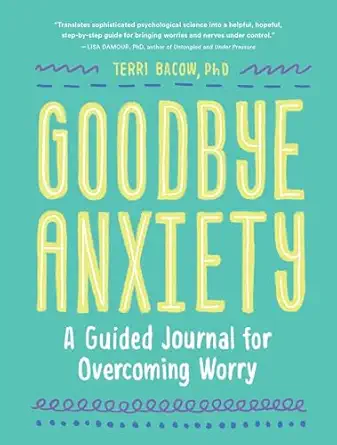
Goodbye, Anxiety: A Guided Journal for Overcoming Worry
This guided journal emphasizes CBT techniques to help users confront and manage anxiety, making it suitable for those who prefer practical, evidence-based approaches. Its prompts are designed to challenge worry patterns and promote self-care, similar to the structure found in the Clever Fox journal but with a more focused intent on overcoming anxiety. The main tradeoff is the absence of extra tools like stickers or extensive guidance, which may limit engagement for some users. This journal is best for individuals who want a straightforward, CBT-driven method to reduce anxiety but don’t require additional features or long-term planning.
Pros:- Provides effective CBT-based prompts for anxiety relief
- Encourages consistent self-care and stress reduction
- Simple, straightforward design
Cons:- No extra tools or added features for engagement
- Effectiveness depends on individual commitment and understanding of CBT
Best for: Individuals interested in practical, CBT-focused exercises to manage daily worry and anxiety.
Not ideal for: Users seeking a journal with extras like stickers or visual aids, or those looking for a long-term, multi-month plan.
- Purpose:Anxiety reduction, CBT techniques
Our verdict“This journal offers a practical, CBT-centered approach ideal for users committed to actively overcoming worry.”
Calm Collective Guided CBT Anxiety Relief Journal Kit with Pen – Mindfulness & Self Care Prompts
This guided CBT journal stands out for its comprehensive approach to anxiety relief, combining mindfulness exercises, thought monitoring, and gratitude practices within a portable, stylish vegan leather cover. Compared to the more specialized nervous system journal, it offers a broader toolkit aimed at self-guided stress management, though it may require some familiarity with CBT concepts to maximize benefits. Its compact size makes it ideal for on-the-go use, but lack of professional guidance could limit its effectiveness for some users. The inclusion of worksheets, habit trackers, and a pen makes it a versatile, all-in-one self-care companion. However, those unfamiliar with CBT may find some prompts less accessible without additional guidance.Pros:- Extensive CBT-based exercises for anxiety relief
- Portable size for use anywhere
- Elegant vegan leather cover adds durability and style
Cons:- Requires some understanding of CBT for full benefit
- Limited guidance without professional input
Best for: Individuals seeking a comprehensive, portable self-guided anxiety management tool with structured exercises.
Not ideal for: Beginners unfamiliar with CBT concepts or those needing professional supervision for anxiety therapy.
- Pages:160
- Worksheets:77
- Writing Pages:76
- Size:5-7/8″ x 8-1/4″
- Cover Material:Vegan leather
- Pen Included:Yes
- Closure:Elastic band
Our verdict“This journal is best suited for those who want a thorough, portable CBT-based tool and are comfortable with self-guided approaches.”
Overcome Your Anxiety: A 30-Day, Faith-Filled Guided Journal
This faith-centered journal offers a structured 30-day program designed to calm the mind and build resilience, making it particularly appealing for users who integrate spirituality into their mental health practices. Unlike the more neuroscience-oriented nervous system journal, it emphasizes spiritual tools and daily prompts rooted in faith, which can be powerful for those seeking comfort through religion. However, its limited scope—focused solely on faith—may not suit non-religious users or those looking for a broader mental health toolkit. The program’s structured daily approach supports gradual progress, but the lack of additional features or community support could be a drawback for some.Pros:- Provides spiritual support alongside mental health tools
- Structured 30-day program encourages consistent practice
- Daily prompts offer practical, easy-to-follow steps
Cons:- Limited information on extra features or resources
- No reviews or ratings available for current guidance
Best for: Religious individuals or spiritual seekers looking for a faith-based approach to anxiety management.
Not ideal for: Secular users or those preferring evidence-based, neuroscience-driven methods without spiritual elements.
Our verdict“This journal is ideal for those who find strength and comfort in faith-based practices and want a guided, spiritual approach to anxiety.”
Mental Health Journal for Anxiety & Nervous System Regulation Guided Prompts
This journal excels at educating users about nervous system regulation, offering nearly 100 pages of neuroscience insights and trauma-informed prompts—making it a standout for those interested in understanding the science behind anxiety. Compared to the more general mood trackers, its focus on education and regulation tools makes it suitable for users seeking a deeper, more structured approach. While the undated format offers flexibility, it may require some prior interest in neuroscience or trauma care to fully benefit. The inclusion of digital resources adds value but depends on scanning QR codes, which might not appeal to everyone. It’s a thoughtful choice for those committed to understanding their body’s responses.Pros:- Educational content on nervous system regulation
- Undated format supports flexible, guilt-free use
- Premium hardcover with thoughtful design features
Cons:- May require prior interest or knowledge in neuroscience
- Focus limited to nervous system topics
Best for: Individuals interested in neuroscience, trauma-informed care, and nervous system regulation as part of their anxiety coping strategy.
Not ideal for: Users who want a simple mood journal without educational content or who prefer digital-only solutions.
- Pages:Approximately 100
- Format:Undated
- Cover:Cloth hardcover
- Bookmarks:Two ribbon bookmarks
- Additional features:Pen loop, interior pocket, reference card
- Available colors:BlueGrey, Navy, Pink
Our verdict“This journal is best for users eager to learn about their nervous system and trauma-informed techniques for managing anxiety.”
Mental Health Journal for Anxiety, Stress & Depression, Mood & Trigger Tracker, CBT & Pattern Recognition, 84 Day Guided Daily Prompts & Reflection Journal for Men & Women
Designed by a licensed clinician, this 84-day journal emphasizes pattern recognition, mood tracking, and mindfulness—making it a solid choice for those looking to identify triggers and understand their emotional landscape. Unlike the more neuroscience-heavy nervous system journal, it offers a practical, clinician-crafted approach to managing anxiety and depression through daily reflection. However, its 84-day limit may not suit users seeking longer-term journaling, and consistent daily commitment is necessary for best results. Its straightforward design may not appeal to digital-native users, but the guided prompts foster emotional clarity and self-awareness effectively.Pros:- Clinician-crafted with neuroscience insights
- Undated format for flexible start dates
- Supports pattern recognition and emotional clarity
- Includes guided prompts for mindfulness
Cons:- Limited to 84 days, may require additional tools for ongoing use
- Requires daily dedication for best results
Best for: Adults seeking a structured, clinician-designed journal to identify patterns and gain emotional clarity over three months.
Not ideal for: Long-term journalers needing more than 84 days of support or those who prefer digital journaling tools.
- Brand:Growthedge
- Model Year:2024
- Target Audience:Adult
- Recommended Uses:Personal
- UPC:198715184419
- Unit Count:1.0
- Part Number:EO9876
- Best Sellers Rank:#73,819 in Office Products
- ASIN:B0DNLT3J7Y
- Color:Dark navy blue with gold detailing
Our verdict“This journal suits users wanting a structured, clinician-backed method to recognize patterns and clarify emotions over a manageable timeframe.”
Worry for Nothing: Guided Anxiety Journal, Cognitive Behavioral Therapy Mental Health Journal, Anxiety Relief & Self Care
This stylish, compact journal offers a discreet way to practice CBT and mindfulness techniques, making it ideal for busy individuals who want to reduce anxiety on the go. Its sleek black linen cover with gold foil feels upscale and unobtrusive, unlike larger, more conspicuous journals like the Calm Collective kit. With 60 worksheets, it provides a focused set of tools, but the limited number may require supplementing with other journaling resources for sustained use. Its portability is a significant advantage, yet consistent daily use is needed to see meaningful changes, which could be a challenge for some users. For those seeking a blend of style and substance in a small package, this is a compelling choice.Pros:- Discreet, stylish design suitable for any setting
- Backed by research and CBT techniques
- Portable size ideal for on-the-go use
- High-quality durable materials
Cons:- Limited to 60 worksheets, may require additional tools
- Requires consistent daily use for best results
Best for: Individuals who need a portable, stylish journal to practice CBT techniques daily and reduce anxiety discreetly.
Not ideal for: Those wanting a more extensive or longer-term journal, or users who prefer digital options for ongoing support.
- Size:5-7/8″ x 8-1/4″
- Pages:60 worksheets
- Paper:100 gsm
- Cover:Black linen hardcover with gold foil logo
Our verdict“This journal is perfect for busy individuals seeking a discreet, stylish way to practice CBT and manage anxiety daily.”
Guided Anxiety Journal for Women & Men – CBT & Mindfulness Prompts, Anti-Anxiety Techniques, Brain Dump
This guided journal stands out for integrating proven CBT techniques with mindfulness prompts, making it a comprehensive tool for managing anxiety. Compared with simpler options like No Worries, it offers a more structured approach with practical tools designed for daily use. Its compact design, high-quality materials, and thoughtful features like a pen loop and back pocket make it a versatile choice for those who want a durable, travel-friendly companion. However, with only 91 pages, it may require supplementing with additional resources for ongoing support, and some users might find its adult-specific focus limiting for younger users. This pick makes the most sense for adults seeking a well-rounded, portable anxiety management journal that combines therapy techniques with everyday usability.
Pros:- Incorporates proven CBT techniques and mindfulness prompts for effective anxiety management
- Compact, travel-friendly design with premium materials and elegant finish
- Includes features like pen loop, elastic closure, ribbon bookmark, and back pocket for organization
Cons:- Limited to 91 pages, which may not suffice for long-term journaling needs
- Customer reviews indicate a slightly lower rating (4.2/5), suggesting some users may find it less comprehensive
Best for: Adults who want a comprehensive, travel-friendly anxiety journal with practical CBT and mindfulness prompts
Not ideal for: Younger users or those seeking a very long-term journaling option without additional resources
- Brand:KUMEER
- Model Year:2025
- Target Audience:Adult, Teacher, Teen
- Recommended Uses:Anxiety Relief, Health & Fitness, Mental Health Journal, Overthinker Guided Journal, Therapy
- Unit Count:1
- Model Number:KM-AnxietyJournal05
- Best Sellers Rank:#29,840 in Office Products
- Color:Black
- Warranty & Support:Amazon.com Return Policy
Our verdict“This journal is ideal for adults looking for an effective, portable tool that combines therapy techniques with daily mindfulness for anxiety relief.”
No Worries: A Guided Journal to Help You Calm Anxiety, Relieve Stress, and Practice Positive Thinking
This journal offers a straightforward, daily prompt-based approach to reducing anxiety and promoting positive thinking, making it accessible for newcomers to mental wellness journaling. Unlike the more feature-rich Guided Anxiety Journal, it emphasizes simplicity, which can benefit those overwhelmed by too many options or unfamiliar with structured therapy. Its focus on manageable daily exercises helps build confidence in self-care routines, though the lack of detailed feature descriptions and absence of user reviews leave some questions about its depth and effectiveness. This choice makes the most sense for individuals new to anxiety journaling who prefer a basic, easy-to-follow guide to calm their mind and develop positive habits without complexity.
Pros:- Helps reduce anxiety and stress with clear, easy-to-follow prompts
- Encourages positive thinking through structured exercises
- Provides daily guidance that can help establish consistent self-care habits
Cons:- Limited information on specific features or content depth
- No available user reviews or ratings to gauge effectiveness or quality
- Potentially too basic for those seeking advanced or detailed mental health tools
Best for: Beginners seeking a simple, structured journal to start managing anxiety and stress
Not ideal for: Experienced journalers or those wanting an in-depth, feature-rich mental health tool with extensive prompts
Our verdict“This journal is well-suited for beginners looking for a simple, guided way to ease anxiety and foster positive routines without overwhelming complexity.”

How We Picked
We evaluated each journal based on its usability, organization, and the quality of prompts and tracking features. Performance criteria included how well the journal supports anxiety management through guided exercises, the clarity of instructions, and the overall build quality. We prioritized products with proven therapeutic value, ease of use for beginners, and versatility—whether they include mindfulness, CBT techniques, or self-reflection tools. Journals that offer a balanced mix of practical exercises and flexibility earned higher ranks, while those that felt overly complex or limited in scope were rated lower. This ranking reflects what most buyers need: a reliable, user-friendly tool to help reduce anxiety and promote well-being over time.Factors to Consider When Choosing Mental Health Journal For Anxiety
Choosing the right mental health journal for anxiety depends on several factors that align with your personal needs and goals. Beyond basic features, understanding how different prompts, tracking tools, and formats support anxiety management can help you make a more informed choice. Consider what motivates you—whether it’s guided exercises, mindfulness, or faith-based reflection—and how much structure you prefer in your journaling routine. The following factors are key to finding a journal that truly helps you cope and grow.Guided Prompts and Therapeutic Approaches
Look for journals that incorporate proven techniques like cognitive behavioral therapy (CBT), mindfulness, or self-reflection prompts. These approaches provide direction and structure, making it easier to process anxious thoughts and develop healthier coping strategies. Journals with guided prompts tend to be more effective for beginners or those new to mental health work, but they can also deepen existing routines for more experienced users. Beware of overly generic journals that lack specific techniques—these may not offer enough guidance to produce meaningful change.
Tracking and Reflection Tools
Effective anxiety journals often include mood trackers, trigger logs, and space for reflection. These tools help identify recurring patterns and pinpoint triggers that worsen anxiety. The ability to review past entries can highlight progress and motivate continued effort. However, some journals focus primarily on prompts without enough space for tracking, which might limit insight. Consider whether you prefer a journal with comprehensive tracking features or one that emphasizes reflective writing and mindfulness exercises.
Format and Usability
Ease of use is vital—look for a journal with a clear layout, quality paper, and durable binding. Some prefer compact sizes for portability; others may prioritize larger pages for more writing space. The design should encourage regular use without feeling burdensome. Avoid overly complicated formats or excessive prompts that could discourage consistent journaling. Remember, a journal that feels approachable is more likely to become part of your routine.
Price and Value
Price ranges widely from affordable paperbacks to premium guided kits. While investing in a higher-priced journal can offer more features, simpler options may suit those just starting out or on a budget. Consider whether additional features—like mindfulness exercises, guided affirmations, or faith-based content—justify the cost. Remember, the most expensive journal isn’t always the best; focus on what aligns with your needs and encourages regular use.
Personalization and Special Features
Some journals cater to specific preferences, such as faith-based reflection, mindfulness, or mood-specific prompts. Personalization can increase engagement and make journaling feel more meaningful. Look for options that resonate with your values and style, but beware of overly niche products that may lack versatility. The ideal journal should adapt to your evolving needs, not restrict you to a single approach.
Frequently Asked Questions
Can a mental health journal really help reduce anxiety?
Yes, when used consistently, a well-designed journal can be an effective tool for managing anxiety. It provides a dedicated space for reflection, tracking triggers, and practicing coping strategies, which can lead to greater self-awareness and emotional regulation. Journals grounded in therapeutic approaches like CBT or mindfulness tend to be more effective because they actively guide you through process-oriented exercises. However, they work best when combined with other support, such as therapy or relaxation techniques.
Should I choose a guided journal or a blank one?
The decision depends on your experience and preference. Guided journals offer prompts and exercises that help structure your thoughts and provide direction, making them ideal for beginners or those who want more support. Blank journals, on the other hand, give complete freedom but require more self-motivation and discipline. If you’re new to mental health work, a guided journal will likely produce better results and help establish a routine more easily.
How often should I use my mental health journal for it to be effective?
Consistency is key—aim for daily or at least several times a week to build a habit and track progress effectively. Regular use helps reinforce coping strategies, identify triggers early, and maintain self-awareness. Even short daily entries can create meaningful change over time. If daily journaling feels overwhelming, setting a manageable goal, such as three times a week, can still be beneficial.
Are digital or app-based journals better for anxiety?
Digital journals and apps offer convenience and quick access, which can encourage more frequent use. Many apps include reminders, guided exercises, and tracking features that are useful for managing anxiety actively. However, some people find pen-and-paper journaling more calming and less distracting, helping to foster mindfulness. Ultimately, choose the format that feels most natural and engaging for you, as consistency matters more than medium.
What features should I prioritize if I’m new to journaling for anxiety?
For beginners, focus on journals that include clear prompts, guided exercises, and simple tracking tools. These features help you stay motivated and prevent feeling overwhelmed by too many options. Look for a size that’s portable, with high-quality paper that’s pleasant to write on. Starting with a straightforward journal that emphasizes ease of use can build confidence and establish a regular habit, laying the foundation for more advanced techniques later on.
Conclusion
For those seeking a comprehensive, all-around solution, the You Got This! Anxiety Journal offers robust guidance and tracking to support daily anxiety management. Budget-conscious buyers or beginners may prefer the 5 Minutes a Day Mental Health Journal for its simplicity and quick daily prompts. If you value a premium experience with extra mindfulness or faith-based content, the Overcome Your Anxiety: A 30-Day Faith-Filled Journal is worth considering. Newcomers to journaling will benefit from guided prompts, while experienced users might prioritize customizable or more in-depth options. Ultimately, the best choice depends on your comfort level, specific needs, and commitment to regular journaling.