

The Group Therapy Card Deck is my best overall pick for adults who want practical tools across CBT, DBT, ACT, and positive psychology, while 108 Mindfulness Cards stand out for broad coping support and the Live Your Values Deck for focused self-reflection. The main tradeoff is breadth versus depth: a multi-approach deck can offer more entry points, while a DBT, art, or social-anxiety deck can give a narrower need more focused prompts. Format matters too, since some decks invite solo writing or drawing and others are better suited to guided sessions or groups. I compare the 15 options by purpose, usability, and who is most likely to benefit, so continue reading for the full breakdown.

Turn your wind-down time into listening time
- Thousands of audiobooks, podcasts and originals
- Listen on your phone, tablet or Echo — also offline
- Cancel anytime
Key Takeaways
- The Group Therapy Card Deck leads for range because it brings CBT, DBT, ACT, and positive psychology tools together, while the dedicated DBT Skills Card Deck is a more focused choice for emotion-balancing practice.
- 108 Mindfulness Cards and Mind Brain Emotion 52 Essential Coping Skills Cards center on coping, but the latter’s smaller set may suit buyers who prefer a tighter selection over a wider prompt pool.
- The three art-focused decks offer different levels of structure: Guided Art Therapy Card Deck emphasizes activities, while the 50-card and 42-card sets pair drawing with reflection in more compact formats.
- Specialized needs get more targeted options: The Exposure Deck addresses social anxiety, the Vagus Nerve Deck centers on nervous-system exercises, and NeuroDivergent Cards are designed for neurodivergent reflection.
- Deck size and modality are not quality markers by themselves: the best fit depends on whether a buyer wants daily coping prompts, a therapy framework, creative reflection, values work, or a structured group activity.
| Self-Exploration Card Deck – 100 Deep Questions for Self‑Discovery, Mindfulness & Emotional Healing (Journal Prompt, for Her) |  | Best for Conversation-Led Reflection | Brand: UNPACK THAT | Manufacturer: SNCGames | Number of decks: 5 | VIEW LATEST PRICE | See Our Full Breakdown |
| The Group Therapy Card Deck: CBT, DBT, ACT, and Positive Psychology Tips and Tools | 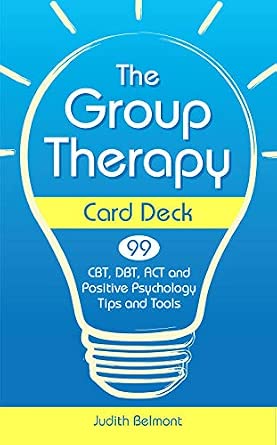 | Best for Broad Therapy-Approach Coverage | Product type: Card deck | Topics: CBT, DBT, ACT, and positive psychology | ASIN: 1683732952 | VIEW LATEST PRICE | See Our Full Breakdown |
| 108 Mindfulness Cards for Coping Skills and Emotional Insight |  | Best for Pairing Coping Skills with Emotional Reflection | Brand: Blavvennt | Model: CP01 | Total card count: 108 | VIEW LATEST PRICE | See Our Full Breakdown |
| Mind Brain Emotion 52 Essential Coping Skills Cards |  | Best for Portable, Practical Coping Tools | Brand: Mind Brain Emotion | Model number: 52Coping | Card count: 52 | VIEW LATEST PRICE | See Our Full Breakdown |
| Vagus Nerve Deck: 75 Exercises to Reset Your Nervous System |  | Best for Vagus Nerve-Focused Exercises | Product type: Exercise card deck | Number of exercises: 75 | Stated focus: Vagus nerve practices | VIEW LATEST PRICE | See Our Full Breakdown |
| Guided Art Therapy Card Deck: 75 Activities to Explore Your Feelings and Manage Your Emotional Well-Being |  | Best for Creative Emotional Exploration | Format: Card deck | Number of cards: 75 | Activity type: Guided art-therapy activities | VIEW LATEST PRICE | See Our Full Breakdown |
| Art Therapy Card Deck: 50 Guided Drawing and Journal Cards |  | Best for Short, Structured Creative Sessions | Brand: Raptor Studio, LLC | Card count: 50 | Age range: 14 years and up | VIEW LATEST PRICE | See Our Full Breakdown |
| The Dialectical Behavior Therapy Skills Card Deck: 52 Practices to Balance Your Emotions Every Day |  | Best for DBT-Focused Daily Practice | Card count: 52 | Therapeutic approach: Dialectical behavior therapy (DBT) | Stated focus: Balancing emotions in everyday life | VIEW LATEST PRICE | See Our Full Breakdown |
| The Live Your Values Deck: Sort Out, Honor, and Practice What Matters Most to You |  | Best for Values Clarification | Product format: Card deck | Primary purpose: Clarifying, prioritizing, and practicing core values | Card content: Reflection prompts and exercises | VIEW LATEST PRICE | See Our Full Breakdown |
| NeuroDivergent Cards – 75 Self-Reflection Therapy Cards for NDs, Autism & ADHD Tools for Adults, Teens, Coping Skills, Emotional Regulation, Mental Health Games & Therapist Gifts |  | Best for Neurodivergent-Affirming Prompts | Brand: yusetoyue | Card count: 75 | Target audience: Neurodivergent adults and teens, including autistic and ADHD users | VIEW LATEST PRICE | See Our Full Breakdown |
| ACT Deck: 55 Acceptance & Commitment Therapy Practices to Build Connection, Find Focus and Reduce Stress |  | Best for Quick ACT Practices | Card count: 55 | Therapy approach: Acceptance and Commitment Therapy (ACT) | Format: Portable card deck | VIEW LATEST PRICE | See Our Full Breakdown |
| The Exposure Deck: Social Anxiety Edition |  | Best for Social Anxiety Exposure Practice | Brand: ThinkPsych | Card count: 150 exposure cards | Card dimensions: 4.4 × 3.1 inches | VIEW LATEST PRICE | See Our Full Breakdown |
| Therapy Cards for Adults and Teens: 4-in-1 DBT, CBT, ACT, and MBCT Coping Skills Deck |  | Best Multi-Modality Deck | Brand: Momentum Boards | Target audience: Adults and teens | Therapy modalities: DBT, CBT, ACT, and MBCT | VIEW LATEST PRICE | See Our Full Breakdown |
| Art Therapy Cards with Guided Drawing and Reflection Prompts, 42-Card Set |  | Best for Drawing-Based Reflection | Brand: GiftNest | Card count: 42 | Card size: 4 × 6 inches | VIEW LATEST PRICE | See Our Full Breakdown |
| 32 Coping Skills Cards with 60 Strategies – Therapy Tools for Teens & Adults |  | Best Compact Coping-Skills Reference | Card count: 32 double-sided cards | Strategies included: 60 | Categories: Relaxation, social connection, mindfulness, mental clarity, and focus | VIEW LATEST PRICE | See Our Full Breakdown |
| adult therapy card deck | Card count | Brand | Material |
|---|---|---|---|
| Self-Exploration Card Deck | — | UNPACK THAT | Cardstock |
| The Group Therapy Card Deck: C | Not specified in the supplied product information | — | — |
| 108 Mindfulness Cards for Copi | — | Blavvennt | Paper |
| Mind Brain Emotion 52 Essentia | 52 | Mind Brain Emotion | Cards |
| Vagus Nerve Deck: 75 Exercises | Not specified in the supplied product information | — | Not specified in the supplied product information |
| Guided Art Therapy Card Deck: | — | — | — |
| Art Therapy Card Deck: 50 Guid | 50 | Raptor Studio, LLC | Cardstock |
| The Dialectical Behavior Thera | 52 | — | — |
| The Live Your Values Deck: Sor | — | — | — |
| NeuroDivergent Cards | 75 | yusetoyue | — |
| ACT Deck: 55 Acceptance & Comm | 55 | — | — |
| The Exposure Deck: Social Anxi | 150 exposure cards | ThinkPsych | Cardstock |
| Therapy Cards for Adults and T | — | Momentum Boards | — |
| Art Therapy Cards with Guided | 42 | GiftNest | Thick, matte-laminated cards |
| 32 Coping Skills Cards with 60 | 32 double-sided cards | — | 350 gsm premium paper cardstock |
More Details on Our Top Picks
Self-Exploration Card Deck – 100 Deep Questions for Self‑Discovery, Mindfulness & Emotional Healing (Journal Prompt, for Her)
I’d choose the UNPACK THAT Self-Exploration Card Deck when the goal is to open up a conversation, not to practice a specific therapy skill. Its five themed decks and 125 questions give couples, friends, or family members a simple way to start reflective discussions, including during a short five-minute session. That makes it more social and relationship-focused than Mind Brain Emotion 52 Essential Coping Skills Cards, which centers on individual coping exercises. The tradeoff is that questions can prompt meaningful sharing without offering a structured method for working through difficult emotions. Although the description says therapists use it as a supplemental relationship tool, it is not a replacement for professional care. I’d skip it if you want step-by-step CBT, DBT, or somatic practices.
Pros:- Five themed decks offer a range of conversation prompts.
- Designed for couples, families, and friends as well as individual reflection.
- Short sessions can fit into a date night or brief check-in.
- Card format makes it easy to start a discussion without preparing a workbook.
Cons:- Prompts encourage discussion but do not provide a defined therapeutic skills sequence.
- A conversation-based format may not suit people who prefer visual or hands-on activities.
- Not a substitute for counseling or professional mental health care.
Best for: Adults who want a low-pressure prompt deck for reflective conversations with a partner, friends, or family.
Not ideal for: Buyers seeking structured coping exercises, a guided treatment program, or a replacement for professional therapy.
- Brand:UNPACK THAT
- Manufacturer:SNCGames
- Number of decks:5
- Question count:125 questions, according to the product description
- Material:Cardstock
- Dimensions:3 x 4 in (10.16 x 7.62 cm)
- Language:English
- Players and age:2+ players; recommended for adults
- Playing time:5 minutes
Our verdict“Choose this deck for guided, relationship-centered reflection; pick Mind Brain Emotion instead if practical coping exercises are your priority.”
The Group Therapy Card Deck: CBT, DBT, ACT, and Positive Psychology Tips and Tools
I’d shortlist The Group Therapy Card Deck for readers who want a resource spanning several therapy approaches rather than a deck devoted to one kind of prompt. Its stated coverage includes CBT, DBT, ACT, and positive psychology, giving it a broader theoretical range than Vagus Nerve Deck: 75 Exercises to Reset Your Nervous System, which focuses on vagus nerve practices. That breadth may suit group facilitators or adults comparing different skills, but the available product information does not specify card count, format, instructions, or how the material is organized. I can’t judge its depth or ease of use from the supplied details alone. Buyers who need a known number of exercises or clearly described practices may find Mind Brain Emotion’s 52-card set easier to evaluate before choosing.
Pros:- Covers four named approaches: CBT, DBT, ACT, and positive psychology.
- Broad scope may work for groups exploring different kinds of skills.
- Card-deck format can support discussion or brief activities.
Cons:- Available product details do not state the number of cards or decks.
- No information is provided about card structure, instructions, or specific exercises.
- The scope may feel less focused than a deck dedicated to one practice area.
Best for: Group facilitators and adults seeking a card resource that names several therapy approaches and positive psychology.
Not ideal for: Buyers who need confirmed card counts, detailed contents, or a clearly described format before purchasing.
- Product type:Card deck
- Topics:CBT, DBT, ACT, and positive psychology
- ASIN:1683732952
- Card count:Not specified in the supplied product information
- Number of decks:Not specified in the supplied product information
- Card structure:Not specified in the supplied product information
Our verdict“Pick this if broad coverage across therapy approaches matters more than having detailed product specifications up front.”
108 Mindfulness Cards for Coping Skills and Emotional Insight
I’d favor this 108-card, two-deck set when a buyer wants both something to do and a prompt for understanding what they feel. One deck focuses on coping skills and the other on emotional insight; each card is described as offering an action, an insight, and a practice. That gives it a more explicit activity structure than UNPACK THAT’s conversation-led questions, while covering CBT, DBT, and somatic therapy rather than a single approach. It is also described for personal, family, educational, and therapy settings. The downside is that the product details do not give card dimensions or examples of individual prompts, so it is harder to know whether the content fits a particular need. Adults wanting a portable, tin-stored set may prefer Mind Brain Emotion.
Pros:- Two decks separate coping skills from emotional insight activities.
- Each card combines an action, an insight, and a practice.
- Draws on CBT, DBT, and somatic therapy approaches.
- Described for individual, family, educational, and therapy settings.
Cons:- Card dimensions and detailed card contents are not specified.
- The combined format may be more than needed for someone seeking only conversation prompts.
- Recommended age begins at 13, so it is not presented as an adult-only resource.
Best for: Adults, educators, and therapists seeking a structured mix of coping activities and emotional reflection prompts.
Not ideal for: Buyers who need sample prompts, specified card dimensions, or a compact tin for storage and travel.
- Brand:Blavvennt
- Model:CP01
- Total card count:108
- Number of decks:2
- Deck contents:54 coping skills cards and 54 emotional insight cards
- Card structure:One action, one insight, and one practice
- Therapy approaches:CBT, DBT, and somatic therapy
- Material:Paper
- Age recommendation:13 years and up
Our verdict“Choose this set if you want practical coping actions alongside reflection, rather than the mainly discussion-based prompts in UNPACK THAT.”
Mind Brain Emotion 52 Essential Coping Skills Cards
Mind Brain Emotion 52 Essential Coping Skills Cards is the clearest fit here for buyers who want exercises aimed at managing stress and emotions, rather than prompts designed mainly to spark conversation. Its mix of CBT, mindfulness, meditation, and somatic exercises is more directly skills-focused than UNPACK THAT’s self-exploration questions. The sturdy tin also gives it a practical advantage over the Blavvennt 108-card set, whose supplied details do not specify a case or card dimensions. An online coping assessment and learning library add support beyond the cards, though they may require a phone, tablet, or computer. The set is also described for teens and adults, with an age recommendation of eight years and up, so adults seeking explicitly adult-only material may prefer another option.
Pros:- Includes practical exercises drawing on CBT, mindfulness, meditation, and somatic approaches.
- A sturdy tin makes the deck easier to store and carry.
- Online coping assessment and learning library provide resources beyond the cards.
- Described for individual use, therapy, and groups.
Cons:- Online resources may require access to a phone, tablet, or computer.
- Age guidance includes children as well as teens and adults, so the material is not specified as adult-only.
- The 52-card set offers fewer cards than the Blavvennt 108-card two-deck set.
Best for: Adults who want a portable set of concrete stress-management exercises for personal, therapy, or group use.
Not ideal for: Buyers who want adult-only content, entirely offline materials, or reflective conversation prompts rather than coping exercises.
- Brand:Mind Brain Emotion
- Model number:52Coping
- Card count:52
- Approaches:CBT, mindfulness, meditation, and somatic exercises
- Included components:Cards, online coping assessment, and sturdy tin case
- Age range:Teens and adults
- Recommended age:8 years and up
- Material:Cards
Our verdict“Choose this deck for portable, skills-based coping support, especially if the tin and online learning resources are useful to you.”
Vagus Nerve Deck: 75 Exercises to Reset Your Nervous System
I’d look at the Vagus Nerve Deck if a buyer specifically wants exercises centered on vagus nerve practices. Its stated 75 exercises give it a narrower focus than The Group Therapy Card Deck, which names CBT, DBT, ACT, and positive psychology, and a different purpose from UNPACK THAT’s conversation prompts. That specialization may appeal to someone seeking a focused practice deck, but the supplied information does not explain the exercises, their format, or how they relate to therapy. By contrast, Mind Brain Emotion identifies several skill types and includes an online assessment and learning library, making its support more clearly described. I’d treat this as a targeted supplement rather than a broad adult therapy resource, especially when the details available do not establish who each exercise suits.
Pros:- The stated focus is specific to vagus nerve practices.
- Includes 75 exercises, offering multiple options within that focus.
- A dedicated deck may suit buyers who already know they want this type of practice.
Cons:- No exercise examples or instructions are provided in the supplied product details.
- Card count, dimensions, material, and intended age range are not specified.
- The narrow focus offers less approach variety than The Group Therapy Card Deck.
Best for: Adults specifically looking for a card deck centered on vagus nerve exercises rather than broad coping or conversation prompts.
Not ideal for: Buyers who want detailed exercise descriptions, a clearly stated therapeutic framework, or a broad set of coping skills.
- Product type:Exercise card deck
- Number of exercises:75
- Stated focus:Vagus nerve practices
- ASIN:059368995X
- Card count:Not specified in the supplied product information
- Material:Not specified in the supplied product information
Our verdict“Choose this only if vagus nerve exercises are your main goal; for broader coping skills, Mind Brain Emotion is more fully described.”
Guided Art Therapy Card Deck: 75 Activities to Explore Your Feelings and Manage Your Emotional Well-Being
I’d choose this deck for adults who find it easier to approach feelings through making something than through a direct question-and-answer prompt. Its 75 guided art activities give it more variety than the 50-card Art Therapy Card Deck: 50 Guided Drawing and Journal Cards, which may help when you want fresh creative starting points over repeated sessions. The activities are described as simple and usable alone or in groups, so the deck can fit personal reflection, counseling, or classroom use without a complex framework. The tradeoff is that creative prompts can still call for paper, markers, or other supplies, and drawing-based work will not suit everyone. I’d treat it as a prompt source for reflection, not as a substitute for professional care.
Pros:- 75 activities offer more prompt variety than the 50-card Art Therapy Card Deck
- Creative exercises can help users explore feelings without relying only on verbal discussion
- Suitable for solo reflection and group settings
- Designed for use without extensive materials
Cons:- Some activities may require paper, markers, or other art supplies
- Drawing-based prompts may not appeal to people who prefer conversation or written exercises
- Not a replacement for professional mental health treatment
Best for: Adults, counselors, or facilitators who want a varied set of creative prompts for individual reflection or group sessions
Not ideal for: People who prefer structured verbal exercises, want a fully self-contained activity with no extra materials, or need clinical treatment rather than a reflection tool
- Format:Card deck
- Number of cards:75
- Activity type:Guided art-therapy activities
- Primary focus:Exploring feelings and emotional well-being
- Use settings:Personal reflection, counseling sessions, and classroom use
- Use modes:Individual or group
Our verdict“Choose this deck if you want a broad, creative route into emotional reflection and are comfortable supplying basic art materials.”
Art Therapy Card Deck: 50 Guided Drawing and Journal Cards
This is the more time-bounded art option in the lineup: its 50 drawing and journaling activities are described as taking about 5–10 minutes, making it easier to fit a prompt into a brief break or counseling session. Compared with the 75-activity Guided Art Therapy Card Deck, it offers fewer prompts but a clearer short-session rhythm. The mix of drawing and journaling also gives users two ways to respond, though both still depend on being willing to make or write something. Its stated audience begins at age 14, so it can suit teens as well as adults, but it is not aimed at younger children. I’d pick it for quick, approachable creative check-ins rather than a deck promising extensive therapeutic structure.
Pros:- 50 guided activities combine drawing and journaling
- Typical 5–10-minute activities are easy to fit into a short session
- Can be used individually or alongside counseling
- Tuck box and compact listed dimensions support portability
Cons:- The 14-and-up age range excludes younger children
- Drawing and journaling will not suit every user
- Fewer cards than the 75-activity Guided Art Therapy Card Deck
Best for: Adults or older teens who want brief drawing and journaling prompts for personal reflection or to supplement counseling
Not ideal for: Younger children, people who dislike drawing and journaling, or buyers seeking a large deck with a broad therapeutic framework
- Brand:Raptor Studio, LLC
- Card count:50
- Age range:14 years and up
- Material:Cardstock
- Included components:50 exercise cards and tuck box
- Dimensions:3.5 x 2.5 x 0.1 inches
- Activity types:Guided drawing and journaling
- Typical activity duration:About 5–10 minutes
- Educational objective:Creative thinking
Our verdict“Choose this deck for concise creative check-ins, especially if you value a stated session length and both drawing and writing prompts.”
The Dialectical Behavior Therapy Skills Card Deck: 52 Practices to Balance Your Emotions Every Day
I’d place this deck ahead of the art-focused options for buyers who want a skills-based approach to everyday emotional balance, rather than prompts centered on drawing or journaling. Its 52 practices are explicitly tied to dialectical behavior therapy, giving it a more defined therapeutic lens than the values-reflection focus of The Live Your Values Deck. That focus can help users looking for a repeatable practice, but the product information provides little detail beyond the card count and DBT emphasis. Buyers cannot tell from the supplied details how the practices are organized, how much guidance each card gives, or whether the deck suits independent beginners. I’d choose it for its clear modality, while treating its limited available description as a reason to check the card format before relying on it for structured sessions.
Pros:- Clearly centers dialectical behavior therapy practices
- 52 cards provide a defined set of practices
- Targets everyday emotional balance
- Offers a skills-focused alternative to art and values-reflection decks
Cons:- Available product details do not describe the individual practices
- No supplied information on card dimensions, materials, or included components
- The limited description makes it hard to judge how accessible it is for DBT beginners
Best for: Adults seeking a DBT-oriented prompt deck for regular emotional balance practice, especially those already familiar with DBT skills
Not ideal for: Buyers who need detailed information about each practice before purchasing, or people seeking creative, values-based, or broad multi-modality prompts
- Card count:52
- Therapeutic approach:Dialectical behavior therapy (DBT)
- Stated focus:Balancing emotions in everyday life
- Format:Card deck
- Product title:The Dialectical Behavior Therapy Skills Card Deck
- ASIN:1684033985
Our verdict“Choose this deck if DBT is the approach you want to practice, but seek more detail first if you need to know how guided each card is.”
The Live Your Values Deck: Sort Out, Honor, and Practice What Matters Most to You
Where the DBT deck centers emotional skills, The Live Your Values Deck turns attention toward what a person wants their choices to stand for. Its prompts and exercises are intended to help users clarify and prioritize core values, then connect reflection with action. That makes it a distinct fit for coaching, workshops, teams, or personal development rather than an art-based emotional check-in like the Guided Art Therapy Card Deck. The tradeoff is that values work can feel repetitive if you revisit similar questions, and the supplied description does not point to an extensive framework for users who want more depth. I’d favor it when the goal is a conversation about priorities and meaningful action, not when someone needs a focused set of coping practices or detailed clinical guidance.
Pros:- Focuses directly on clarifying and prioritizing values
- Prompts connect reflection with practicing what matters
- Can support personal use, coaching, teams, and workshops
- Portable format can be used across different settings
Cons:- Repeated use may make prompts feel repetitive
- The supplied description suggests limited depth for advanced users seeking a fuller framework
- Values reflection is less suited to buyers seeking immediate coping exercises
Best for: Adults, coaches, and workshop facilitators who want a portable prompt deck for clarifying personal or shared values
Not ideal for: People seeking concrete coping-skill instructions, art activities, or an extensive values framework for advanced independent work
- Product format:Card deck
- Primary purpose:Clarifying, prioritizing, and practicing core values
- Card content:Reflection prompts and exercises
- Intended settings:Individual use, teams, and coaching sessions
- Portability:Described as portable
- ASIN:1797206125
Our verdict“Choose this deck when you want structured conversation about values and action, rather than a set of emotion-regulation techniques.”
NeuroDivergent Cards – 75 Self-Reflection Therapy Cards for NDs, Autism & ADHD Tools for Adults, Teens, Coping Skills, Emotional Regulation, Mental Health Games & Therapist Gifts
This is the most specifically tailored deck here: its prompts address neurodivergent experiences such as executive dysfunction, sensory overload, and emotional regulation, rather than offering general-purpose reflection. The 75 cards are organized around six areas—Mind, Action, Body, Feeling, Social, and Self—and pair concise “Try This” suggestions with watercolor art. That makes it more directly relevant to autistic and ADHD adults and teens than either art deck, which centers creative activities rather than neurodivergent needs. Its specificity is also its boundary: people seeking broadly applicable prompts or a detailed clinical program may prefer another option. The supplied age-range field says 18 months and up, while the target audience identifies adults and teens, so I’d rely on the adult-and-teen positioning rather than assume it is designed for toddlers.
Pros:- Tailors prompts to neurodivergent experiences including executive dysfunction and sensory overload
- 75 cards cover six named areas of self-reflection
- Concise “Try This” suggestions offer actionable starting points
- Watercolor artwork is described as soothing and the deck is positioned as affirming
Cons:- A physical deck can be misplaced or damaged
- It is not a replacement for professional therapeutic support
- The listed age range conflicts with the adult-and-teen target audience
Best for: Neurodivergent adults and teens, including autistic and ADHD users, who want concise, affirming prompts for everyday self-reflection
Not ideal for: People looking for a general therapy deck, a detailed treatment program, or an age recommendation that is unambiguous across the product data
- Brand:yusetoyue
- Card count:75
- Target audience:Neurodivergent adults and teens, including autistic and ADHD users
- Listed age range:18 months and up
- Prompt areas:Mind, Action, Body, Feeling, Social, and Self
- Prompt style:Self-reflection cards with concise “Try This” suggestions
- Artwork:Watercolor art
- Unit count:1
- Number of items:1
Our verdict“Choose this deck if you want concise, neurodivergent-focused prompts, while checking the age guidance and viewing it as a supplement to care.”
ACT Deck: 55 Acceptance & Commitment Therapy Practices to Build Connection, Find Focus and Reduce Stress
I’d choose the ACT Deck for short, focused exercises grounded in Acceptance and Commitment Therapy. Its 55 portable cards are built around connection, focus, and stress management, making it easier to bring a brief practice into a busy day or a coaching session. Compared with Therapy Cards for Adults and Teens, which draws from four modalities, this deck offers a clearer single-approach focus rather than a broad mix of coping prompts. That narrower scope may suit buyers who specifically want ACT-style practice, but it also means less variety across therapeutic frameworks. The exercises are presented as a supplement, not a replacement for individualized care; people seeking structured support for serious or complex concerns will need more than a deck can provide.
Pros:- 55 quick exercises make it practical to choose a short activity without setting aside a long session
- A dedicated ACT approach gives it a more focused framework than the four-modality Therapy Cards for Adults and Teens
- Portable format supports use at home, on the go, or in coaching sessions
- Designed for both individual practice and professional use
Cons:- Brief card exercises offer less depth than full therapy or a guided workbook
- The deck is not sufficient as standalone care for serious mental health concerns
Best for: Adults or coaches seeking portable, brief ACT-based exercises for everyday focus, connection, and stress management
Not ideal for: Buyers wanting a multi-modality deck, detailed therapeutic guidance, or standalone treatment for serious mental health concerns
- Card count:55
- Therapy approach:Acceptance and Commitment Therapy (ACT)
- Format:Portable card deck
- Exercise focus:Connection, focus, and stress management
- Intended use:Personal practice or coaching sessions
- Exercise style:Quick practices
Our verdict“Choose this deck if you want compact, ACT-focused exercises for regular practice, and skip it if you need broad modality coverage or intensive support.”
The Exposure Deck: Social Anxiety Edition
The Exposure Deck: Social Anxiety Edition is the most targeted choice here for practicing specific social situations, rather than general emotional reflection. Its 150 challenge cards cover conversations, public speaking, assertiveness, errands, and social media, with therapist and client guides to support use in sessions, homework, or self-guided practice. Compared with the ACT Deck, which offers shorter exercises across broader themes such as connection and stress, this deck puts the emphasis on gradual exposure to social challenges. That specificity can make it easier to identify a practice relevant to a real-life situation, but challenges may need adapting to a person’s needs and readiness. I’d favor it for guided or planned exposure work, not as a general-purpose coping deck.
Pros:- 150 challenges cover a wide range of everyday social situations
- Exposure-focused design distinguishes it from broader coping decks such as the ACT Deck
- Therapist instruction guide, client quick start guide, and reference card support structured use
- Can be used in sessions, as homework, or for self-guided practice
Cons:- Some challenges may need adjustment for an individual’s circumstances and readiness
- The recommended age is 14 years and up, so it is not intended for younger children
- Its focus on social anxiety makes it less useful as an all-purpose therapy deck
Best for: Adults and older teens working on social anxiety with a therapist or following a structured self-guided exposure plan
Not ideal for: Buyers seeking broad mindfulness or coping prompts, or anyone who needs challenges tailored by a clinician but lacks that support
- Brand:ThinkPsych
- Card count:150 exposure cards
- Card dimensions:4.4 × 3.1 inches
- Material:Cardstock
- Recommended age:14 years and up
- Included components:Exposure cards, therapist instruction guide, client quick start guide, and therapist reference card
- Challenge areas:Conversations, public speaking, assertiveness, errands, and social media
- Educational objectives:Cognitive skills and social skills
Our verdict“Pick this deck for structured social-anxiety exposure practice, especially with therapist guidance, rather than for general emotional wellness prompts.”
Therapy Cards for Adults and Teens: 4-in-1 DBT, CBT, ACT, and MBCT Coping Skills Deck
If I wanted one deck to draw from several therapy frameworks, I’d put Therapy Cards for Adults and Teens ahead of more specialized options. It combines DBT, CBT, ACT, and MBCT prompts for coping, mindfulness, emotion regulation, and reflection, and its A5 format with a sturdy storage box suits home use or therapist-led activities. Unlike The Exposure Deck: Social Anxiety Edition, which concentrates on social challenges, this deck offers broader modality coverage for varied practice. That range is its main advantage, but the description does not state the card count, so buyers cannot judge the prompt volume before purchase. It also may feel less focused than the ACT Deck for someone seeking a consistent, single-approach routine.
Pros:- Combines DBT, CBT, ACT, and MBCT instead of limiting prompts to one approach
- Prompts address coping skills, mindfulness, emotion regulation, and self-reflection
- A5 format and sturdy box support storage and transport
- Suitable for individual practice, journaling, or therapist-led sessions
Cons:- The product description does not specify how many cards are included
- Its broad modality mix may feel less focused than the ACT Deck for buyers seeking one approach
- The provided product details do not clarify how prompts are organized within the deck
Best for: Adults, teens, and therapists who want one portable prompt deck spanning several common therapy modalities
Not ideal for: Buyers who need a clearly stated card count, a specialized social-anxiety program, or a single consistent therapeutic framework
- Brand:Momentum Boards
- Target audience:Adults and teens
- Therapy modalities:DBT, CBT, ACT, and MBCT
- Size:A5
- Item weight:0.29 kg
- Storage:Sturdy box
- Style:Minimalist
- Number of cards:Not specified in the product description
Our verdict“Choose this deck for a broad set of therapy-inspired prompts in one package, but look elsewhere if a defined card count or focused program matters most.”
Art Therapy Cards with Guided Drawing and Reflection Prompts, 42-Card Set
Art Therapy Cards with Guided Drawing and Reflection Prompts gives buyers a creative route into emotional reflection: each card pairs a drawing activity with a journaling question, and color coding helps users find an emotion theme. Compared with the ACT Deck, which centers on brief verbal or behavioral exercises, this set is better suited to people who find it easier to express themselves through images and writing. The 42-card count keeps the selection manageable, while the larger 4 × 6-inch format offers room to read instructions. The tradeoff is that drawing-based prompts will not appeal to everyone, and the age guidance conflicts: one listing detail says 14 and up, while another says 12 and up. I’d check suitability before using it with younger participants.
Pros:- Pairs guided drawing with journaling questions for two forms of reflection
- Color-coded emotion themes help users select a prompt by topic
- 4 × 6-inch cards provide a larger reading surface than compact decks such as the ACT Deck
- Can be used for personal mindfulness, therapy sessions, or classroom activities
Cons:- Drawing activities may not suit users who prefer direct, skill-based coping exercises
- Age information conflicts between the stated recommendations of 12 and 14 years and up
- The 42-card set offers fewer prompts than the 150-card Exposure Deck
Best for: Adults and older teens who prefer drawing and journaling as a way to explore feelings in personal, therapy, or classroom settings
Not ideal for: Buyers seeking direct coping strategies rather than creative reflection, or those who need unambiguous age guidance for younger users
- Brand:GiftNest
- Card count:42
- Card size:4 × 6 inches
- Material:Thick, matte-laminated cards
- Age guidance:Product information lists 14 years and up; also states 12 years and up
- Prompt types:Guided drawing activities and journaling questions
- Organization:Color-coded by emotion
- Packaging:Sturdy gift-ready box
Our verdict“Choose this set if drawing and journaling feel like a natural route to reflection, but verify age suitability and skip it if you want direct coping drills.”
32 Coping Skills Cards with 60 Strategies – Therapy Tools for Teens & Adults
32 Coping Skills Cards with 60 Strategies is a practical reference for people who want actionable techniques grouped by need, rather than open-ended reflection prompts. The 32 double-sided cards cover 60 strategies across relaxation, social connection, mindfulness, mental clarity, and focus; a metal ring binder keeps them together and makes flipping through options straightforward in a session or at home. Compared with Therapy Cards for Adults and Teens, which spans four named modalities, this set organizes its appeal around coping categories and strategy count. That can make it easier to find a relevant skill quickly, but the small 2.7 × 4.6-inch cards offer less reading space. The stated age range is unusually broad, so adults buying for a particular child should check whether the content fits that child.
Pros:- 60 strategies span relaxation, social connection, mindfulness, mental clarity, and focus
- Double-sided cards provide more strategies than the 32-card count alone suggests
- Metal ring binder keeps the cards together while allowing quick flipping
- Compact format suits counseling, classroom, and home use
Cons:- Small card dimensions may be harder to read or handle than the larger 4 × 6-inch art therapy cards
- No digital version is included
- The stated recommended age of 18 months and up is very broad for therapy-oriented coping content
Best for: Adults, counselors, and educators who want a portable, categorized coping-skills reference for sessions or everyday practice
Not ideal for: Buyers who prefer larger cards, a digital companion, or prompts built around a named therapy modality
- Card count:32 double-sided cards
- Strategies included:60
- Categories:Relaxation, social connection, mindfulness, mental clarity, and focus
- Dimensions:2.7 × 4.6 inches (68 × 118 mm)
- Material:350 gsm premium paper cardstock
- Binder:Metal ring binder
- Recommended age:18 months and up
- Intended settings:Home, classroom, counseling, and daily life
Our verdict“Choose this set for a compact, organized menu of coping strategies, but skip it if you need large-print cards or a clearly defined therapy framework.”

How We Picked
I compared these adult therapy card decks by the clarity of their intended use, the practicality of their prompts, and how readily a buyer can tell whether a deck fits solo reflection, facilitated work, or group discussion. I also considered the range of approaches represented, the amount of structure suggested by the title and format, and whether the focus is broad or tailored to a particular need. Since card counts alone do not show how useful a deck will feel, I treated them as context rather than a ranking shortcut.
The ranking favors options that make their purpose clear and give readers a useful balance of accessibility and usable tools. Broad, multi-approach decks rank higher for general-purpose buyers; specialized decks can be a better match when the buyer already knows what they want to work on. I also weighed likely tradeoffs, including whether a deck may feel too broad, too narrow, or dependent on a therapist or group leader for context. These recommendations describe product positioning and intended use, not clinical outcomes or a substitute for professional care.
Factors to Consider When Choosing Adult Therapy Card Decks
Before choosing a deck, I’d match its format to how you plan to use it. The label “therapy cards” can describe anything from short coping prompts to guided drawing activities, so a clear goal is more useful than choosing by title or card count alone.
Choose a clear starting goal
Decide whether you want help naming feelings, practicing coping strategies, reflecting on values, or exploring a specific concern. A broad deck can support changing needs, but it may provide less depth on any one topic. A specialized deck can feel more relevant when you have a defined focus, yet less useful if your interests shift. Avoid buying several decks that all promise general self-reflection before identifying what you actually want to do with the prompts. If you are unsure, a deck with varied but clearly labeled approaches gives you room to explore without implying that every card suits every moment.
Match the deck to solo, group, or therapist-led use
A prompt that works well in a group may feel awkward or overly revealing when used alone, and a private journal activity may not translate neatly to a session. Think about whether you will draw cards independently, discuss them with a partner, or use them with a therapist or group facilitator. Group settings benefit from prompts that are easy to explain and allow people to pass or adapt a question. For personal use, check whether the activity can stand on its own or expects journaling, art materials, or follow-up conversation. Do not assume a therapy-themed deck is designed for clinical facilitation just because it names a therapeutic approach.
Check how much guidance you want
Some buyers want a direct exercise they can try immediately; others prefer an open question that leaves room for interpretation. More structure can make a deck easier to start, but highly directive prompts may not fit every person or situation. Open-ended cards can support personal meaning-making, though they may feel vague without a journal, facilitator, or clear routine. Consider how comfortable you are adapting an exercise if it does not resonate. A good match offers enough direction to get started while leaving you permission to skip or modify a card.
Choose a modality you will actually use
Words, drawing, mindfulness exercises, and body-focused practices ask for different kinds of attention. An art deck may be appealing if reflection through making feels natural, but it is a poor fit if you want a quick verbal prompt with no materials. Body-based exercises may suit someone seeking practical regulation activities, while a values deck is more about clarifying priorities than immediate coping. A common mistake is choosing a modality because it sounds appealing rather than because it fits your habits. Think about where and when you will use the cards, then favor activities that fit that setting.
Treat therapeutic labels as a guide, not a guarantee
Terms such as CBT, DBT, ACT, and mindfulness point to different approaches, but the label alone does not tell you how a card will read or whether it suits your needs. If you already work with a therapist, ask whether a deck’s exercises complement your current plan. A deck can support reflection and practice, but it is not a diagnosis, treatment plan, or replacement for professional support. For sensitive topics, look for a format that lets you pause and choose another prompt. Buyers should prioritize clarity and personal fit over impressive-sounding terminology.
Use card count as context, not a value shortcut
A larger deck may offer more variety, but it can also feel harder to navigate if the cards lack a clear structure. A smaller set can be easier to revisit and learn, though it may offer fewer prompts for repeated use. Compare what the deck is meant to do before treating a higher card count as a sign of better value. Also check whether cards seem designed for repeat practice or one-time exploration; those are different kinds of usefulness. The best purchase is the one whose prompts you can imagine returning to, not simply the one with the most cards.
Frequently Asked Questions
Can I use an adult therapy card deck without a therapist?
Many decks are intended for personal reflection or everyday coping practice, so a therapist is not always needed to use them. Start with prompts that feel manageable and skip anything that brings up more than you want to handle on your own. A card deck cannot diagnose a condition or provide individualized treatment. If a prompt triggers distress or you need help applying an exercise, pause and reach out to a qualified professional. Buyers seeking structured clinical support should treat the deck as a possible supplement, not a replacement.
Should I choose a multi-therapy deck or one focused on a single approach?
A multi-approach deck is useful when you want to sample different kinds of exercises or share one resource across varied needs. Its tradeoff is that it may not offer the depth or consistency of a deck devoted to DBT, ACT, or another specific framework. A focused deck can be easier to use when you already know what skills you want to practice. If you are learning a method with a clinician, ask whether a focused deck matches the work you are doing. If you are exploring independently, a clearly organized mixed deck may be a more approachable starting point.
Are these decks appropriate for use with a therapy group?
Some are explicitly framed around group therapy, while others focus on personal prompts or activities that may need adaptation for a group. Before bringing a deck to a session, review the questions and consider privacy, accessibility, and whether participants can pass without explanation. A facilitator should set expectations and avoid treating card responses as a diagnostic tool. Creative activities may need extra supplies or time, while discussion cards can require clear turn-taking. Ask the group leader before using a deck as part of formal therapy.
How do I choose between a coping-skills deck and an art or self-reflection deck?
Choose a coping-skills deck if your priority is practicing strategies for difficult moments or building a repeatable routine. An art deck may fit better if you prefer visual expression, while a self-reflection deck can help prompt journaling or personal questions without requiring a specific technique. These formats can overlap, but they are not interchangeable: a creative prompt may not give the direct action step you want during stress. Consider whether you want to respond to an immediate feeling or explore a broader theme. If both matter, choose the format you are most likely to use consistently.
What should I do if a card prompt feels upsetting or unsuitable?
You can set a card aside, stop the activity, or adapt the prompt; using a deck does not require completing every exercise. This matters especially for topics connected to anxiety, emotional history, or personal relationships. If you are using the deck with a therapist or group, tell the facilitator what felt uncomfortable and agree on a way to proceed. For independent use, return to a simpler or more grounding activity, and seek professional support if distress persists. A useful deck should allow choice rather than make you feel obligated to push through.
Conclusion
For a general-purpose choice, I’d start with The Group Therapy Card Deck: its mix of CBT, DBT, ACT, and positive psychology makes it the best overall fit for buyers who want several approaches in one set. For best value in everyday breadth, consider 108 Mindfulness Cards; for buyers who prefer a focused, more specialized resource, the premium pick is The Exposure Deck: Social Anxiety Edition when social anxiety is the clear priority. Beginners may find a direct coping-focused option such as Mind Brain Emotion 52 Essential Coping Skills Cards easier to approach than an open-ended reflection deck. For specific needs, choose the DBT Skills Card Deck for DBT practice, NeuroDivergent Cards for neurodivergent reflection, the Vagus Nerve Deck for nervous-system exercises, or an art deck if drawing is your preferred route. Match the deck to your intended use, and treat it as a supportive tool rather than a substitute for care.
Halloween Picks

10.5 ft Lighted Pumpkin and Ghost Halloween Inflatable Archway

Kalolary 12ft Halloween Witch Haunted House Inflatable Archway

Haunted Hill Farm Beatrix Head-Spinning Halloween Animatronic, 4.6 Ft
As an affiliate, we earn on qualifying purchases.