Waking up to harsh buzzers often leaves you feeling groggy and irritable, a sensation that sunrise alarm clocks are specifically designed to eliminate by mimicking natural dawn light. Among the dozens of options available, the Hatch Restore 3 stands out as the best overall choice for those seeking deep customization and app integration, while the Philips SmartSleep remains the gold standard for clinical-grade light therapy effectiveness. However, the market is flooded with budget-friendly alternatives that offer surprisingly robust features, forcing buyers to weigh app connectivity against simplicity and raw light intensity. This guide breaks down the top 15 models to help you determine which device fits your specific sleep cycle and aesthetic preferences.

Turn your wind-down time into listening time
- Thousands of audiobooks, podcasts and originals
- Listen on your phone, tablet or Echo — also offline
- Cancel anytime
Key Takeaways
- App-connected models like the Hatch Restore 3 offer superior control over light color temperatures, which is critical for regulating circadian rhythms compared to standalone units.
- Light intensity measured in lux is a more important metric for mood support than the number of sound options; many budget models fail to reach the 250-300 lux threshold needed for effective wake-up assistance.
- Dedicated sound machines often outperform all-in-one clocks in audio fidelity, suggesting that pairing a basic light with a separate speaker may yield better results for sensitive sleepers.
- Physical buttons and dials remain preferable for many users over touch-sensitive panels, which can be frustrating to operate in the dark or when half-asleep.
- The physical footprint of the device matters significantly for nightstand compatibility, with premium models often being larger and requiring more surface area than compact alternatives.
| JALL Sunrise Alarm Clock with White Noise, Nature Sounds, FM Radio, and Bluetooth Speaker |  | Best for Flexible Bedside Features | Sunrise duration: Adjustable from 10 to 60 minutes | Sleep sounds: 25 | Lighting effects: 17 | VIEW LATEST PRICE | See Our Full Breakdown |
| Dreamegg Sunrise 1 Alarm Clock and Sound Machine |  | Best for Phone-Free Simplicity | Sound options: 29 | Night light colors: 9 | Brightness: Adjustable | VIEW LATEST PRICE | See Our Full Breakdown |
| JBER Sunrise Alarm Clock with Dual Alarms, White Noise Machine, Night Light, and Bluetooth Speaker |  | Best for Couples with Different Schedules | Sunrise simulation: Adjustable 10–60 minutes with adjustable brightness | Alarms: 2 independent alarms | Alarm sounds and volume: 7 sounds; 32 volume levels | VIEW LATEST PRICE | See Our Full Breakdown |
| Dekala Sunrise Alarm Clock with Dual Alarms, Sunset Simulation, FM Radio, and Night Light |  | Best for a Wind-Down-to-Wake Routine | Model: ACA-002-B | Alarms: Dual alarms | Snooze: 9 minutes, up to 5 times | VIEW LATEST PRICE | See Our Full Breakdown |
| Hatch Restore 3 Sunrise Alarm Clock and Sleep Sound Machine, Putty |  | Best App-Controlled Premium Routine | Sleep sounds: 80+ | Connectivity: 2.4 GHz Wi-Fi and Bluetooth | Power: Corded | VIEW LATEST PRICE | See Our Full Breakdown |
| Sunrise Alarm Clock with Sound Machine – 30–60 Min Gradual Rise |  | Best for All-in-One Bedside Use | Sunrise simulation: 10–60 minutes | Sleep sounds: 30 options | Wake-up sounds: 10 natural sounds | VIEW LATEST PRICE | See Our Full Breakdown |
| REACHER Wood Grain Sunrise Alarm Clock with Sound Machine and Night Light |  | Best for a Simple, Bedroom-Friendly Setup | Model: R7W | Sunrise simulation: 5–60 minutes | Sleep sounds: 26 | VIEW LATEST PRICE | See Our Full Breakdown |
| Philips SmartSleep Wake-up Light, Colored Sunrise and Sunset Simulation, 5 Natural Sounds, FM Radio & Reading Lamp, Tap Snooze, HF3520/60 |  | Best for a Light-First Morning Routine | Sunrise simulation: Yes; duration not specified | Sunset simulation: Yes | Wake-up sounds: 5 natural sounds | VIEW LATEST PRICE | See Our Full Breakdown |
| Vivilumens Sunrise Alarm Clock with Sound Machine for Heavy Sleepers Adults |  | Best for Dual-Alarm Households | Sunrise simulation: Begins 10 minutes before alarm | Sound options: 10 white-noise sounds | Sound timer: 30, 60, or 90 minutes | VIEW LATEST PRICE | See Our Full Breakdown |
| Sunrise Alarm Clock White Noise Machine with 25 Nature Sleep Sounds, Fully Dimmable, 17 Light Modes, Bluetooth Speaker |  | Best for Customizable Light and Sound | Model: K6 | Sunrise simulation: 10–60 minutes | Sound options: 25: 10 white-noise sounds and 15 nature tracks | VIEW LATEST PRICE | See Our Full Breakdown |
| Odokee Sunrise Alarm Clock and White Noise Machine |  | Best for Flexible Sound and Light Choices | Sunrise duration: 5–60 minutes | Soothing sounds: 25 | Speaker output: 5W stereo | VIEW LATEST PRICE | See Our Full Breakdown |
| Sunrise Alarm Clocks Sound Machine Moon Lamp for bedrooms | 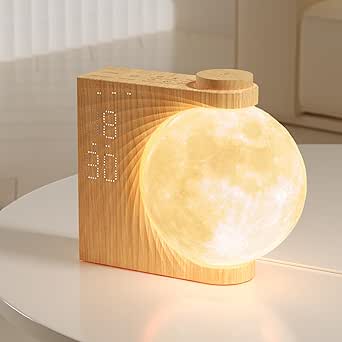 | Best for Decorative Mood Lighting | Alarm settings: 2 | Alarm tones: 15 | Nature sounds: 10 | VIEW LATEST PRICE | See Our Full Breakdown |
| JALL Full Screen Dimmer Sunrise Alarm Clock – Wake Up Light with FM Radio, 25 White Noise Sounds, Bluetooth Speaker, Dual Alarms |  | Best for Shared Wake-Up Schedules | Display: 7-inch LED full-screen display | Sunrise duration: 10–60 minutes | Alarm scheduling: Dual alarms; daily, weekday, and weekend modes | VIEW LATEST PRICE | See Our Full Breakdown |
| JALL Sunrise Alarm Clock White Noise Machine with Bluetooth, Beige Linen |  | Best for Light-Sensitive Sleepers | Sunrise duration: 0–60 minutes | Sunrise brightness: Up to approximately 400 lux | Alarm count: 1 | VIEW LATEST PRICE | See Our Full Breakdown |
| Sunrise Alarm Clock with Wake Up Light for Bedrooms Adults Kids |  | Best Simple Pick for Beginners | Sunrise duration: 30 minutes | Wake-up options: 7 | Sleep timer: 10, 30, or 60 minutes | VIEW LATEST PRICE | See Our Full Breakdown |
| sunrise alarm clocks for mood support | Dimensions |
|---|---|
| JALL Sunrise Alarm Clock with | 12.4 × 10.2 × 3.2 inches listed; item dimensions also listed as 7.2 × 7.2 inches |
| Dreamegg Sunrise 1 Alarm Clock | — |
| JBER Sunrise Alarm Clock with | — |
| Dekala Sunrise Alarm Clock wit | — |
| Hatch Restore 3 Sunrise Alarm | 2.43 in W × 5.31 in H |
| Sunrise Alarm Clock with Sound | — |
| REACHER Wood Grain Sunrise Ala | 6.7 × 2.7 × 6 inches |
| Philips SmartSleep Wake-up Lig | — |
| Vivilumens Sunrise Alarm Clock | 8.9 × 8.9 inches |
| Sunrise Alarm Clock White Nois | 7.2 × 7.2 inches |
| Odokee Sunrise Alarm Clock and | — |
| Sunrise Alarm Clocks Sound Mac | 165 × 110 × 155 mm |
| JALL Full Screen Dimmer Sunris | — |
| JALL Sunrise Alarm Clock White | 7 × 4 × 7 inches |
| Sunrise Alarm Clock with Wake | 4.09 × 4.09 inches |
More Details on Our Top Picks
JALL Sunrise Alarm Clock with White Noise, Nature Sounds, FM Radio, and Bluetooth Speaker
The JALL makes sense for someone who wants a gentle, adjustable wake-up light alongside plenty of ways to shape a bedtime environment. Its sunrise can build over 10–60 minutes, while 25 sleep sounds, FM radio, and Bluetooth audio offer more sound choices than the simpler Dreamegg Sunrise 1. Separate daily, weekday, and weekend alarms are useful when your schedule changes across the week, and a screen blackout mode helps keep the display from adding unwanted light overnight.
The tradeoff is a busy feature set that may be more than you need for a mood-support routine centered on a calm, predictable wake-up. Its listed dimensions also conflict with the separate item dimensions, so I would check the bedside space before ordering. It needs USB power, with one AA battery also required.
Pros:- Adjustable 10–60-minute sunrise lets buyers choose a slower or shorter light ramp.
- Includes 25 sleep sounds, FM radio, and Bluetooth audio for varied bedtime listening.
- Separate daily, weekday, and weekend alarms accommodate changing schedules.
- Screen blackout mode helps limit display light in a dark bedroom.
Cons:- Requires USB power and a separate AA battery.
- The listed overall dimensions and item dimensions do not match.
- Its many lighting and audio options may feel excessive for buyers seeking a simple routine.
Best for: People who want adjustable sunrise timing, flexible weekday alarms, and several audio options in one bedside device.
Not ideal for: Minimalists who want a simple light-and-sound routine, or buyers who need unambiguous size information before choosing a clock.
- Sunrise duration:Adjustable from 10 to 60 minutes
- Sleep sounds:25
- Lighting effects:17
- Alarms:Daily, weekday, or weekend settings; dual alarms listed in product details
- Audio:FM radio and Bluetooth speaker; 5 W speaker power
- Sleep timer:10–480 minutes
- Power:USB power; requires 1 AA battery
- Dimensions:12.4 × 10.2 × 3.2 inches listed; item dimensions also listed as 7.2 × 7.2 inches
Our verdict“Choose the JALL if you want a customizable sunrise alarm with extensive sound options and schedule flexibility, and can verify its fit on your nightstand.”
Dreamegg Sunrise 1 Alarm Clock and Sound Machine
The Dreamegg Sunrise 1 is the most straightforward pick here for building a soothing wake-up and bedtime routine without making a phone part of the process. On-device controls make setup accessible to buyers who would rather not manage another app, while its 29 sound options include white, brown, and pink noise. The simulated sunrise and adjustable, nine-color night light add a gentle lighting cue that can support a more settled bedroom atmosphere.
Compared with the feature-packed JALL, the Dreamegg gives up Bluetooth and FM radio in favor of a simpler, hand-sized design. That restraint may suit someone seeking fewer distractions, but the product details do not specify power options or battery life. Buyers who want to control routines from a phone, or need clear power information before purchase, may prefer another option.
Pros:- On-device controls allow setup without a phone connection.
- 29 sounds include white, brown, and pink noise.
- Simulated sunrise pairs with customizable bedtime and wake-up routines.
- Nine-color night light has adjustable brightness.
Cons:- No phone-based setup or controls for users who prefer app management.
- Power options and battery life are not specified in the provided product details.
- Does not list the FM radio or Bluetooth audio offered by the JALL.
Best for: People who want a compact-feeling, phone-free bedside routine with multiple sound types and adjustable colored light.
Not ideal for: App-focused users, buyers who want Bluetooth or FM radio, and anyone who needs stated battery-life or power details.
- Sound options:29
- Night light colors:9
- Brightness:Adjustable
- Controls:On-device; no phone connection required
- Design:Cotton-linen fabric; hand-sized diameter
- Wake-up feature:Simulated sunrise
Our verdict“Pick the Dreamegg Sunrise 1 if you want a phone-free sunrise-and-sound routine and do not need app control or clearly stated power details.”
JBER Sunrise Alarm Clock with Dual Alarms, White Noise Machine, Night Light, and Bluetooth Speaker
JBER earns its place for households that need two people to wake on different schedules without sharing the same alarm settings. Its two independent alarms allow separate times, sounds, and volumes, while a 10–60-minute sunrise gives each wake-up a gradual light cue. The 25 soothing sounds, Bluetooth speaker, and 12-color night light also provide more bedroom flexibility than the more pared-back Dreamegg Sunrise 1.
Its strongest distinction is control: 32 alarm-volume levels and five display brightness settings, including off, help tailor the bedside experience. That range may be useful for different sensitivities, but the unit still requires its supplied adapter to operate. Two AAA batteries are not included and serve only as memory backup during outages, so this is not a portable clock.
Pros:- Two alarms have independent time, sound, and volume settings.
- Adjustable 10–60-minute sunrise supports a gradual wake-up.
- 25 soothing sounds, Bluetooth, and a 12-color night light offer varied routine options.
- Five display brightness settings include an off mode.
Cons:- Requires the supplied power adapter for normal operation.
- Two AAA memory-backup batteries are not included.
- The 30–240-minute sleep timer offers a narrower range than the JALL’s listed timer.
Best for: Couples or roommates who need independent alarm times, sounds, and volumes, plus adjustable light and sound settings.
Not ideal for: People seeking a portable or battery-powered clock, or buyers who want to avoid purchasing separate backup batteries.
- Sunrise simulation:Adjustable 10–60 minutes with adjustable brightness
- Alarms:2 independent alarms
- Alarm sounds and volume:7 sounds; 32 volume levels
- Soothing sounds:25
- Night light:12 colors; 10 brightness levels
- Display:5 brightness levels, including off mode
- Bluetooth range:Up to 10 m
- Power and backup:Corded electric; 2 AAA batteries for memory backup, not included
- Sleep timer:30–240 minutes
Our verdict“Choose JBER if two sleepers need genuinely separate alarm settings and you are comfortable keeping it plugged in.”
Dekala Sunrise Alarm Clock with Dual Alarms, Sunset Simulation, FM Radio, and Night Light
Dekala is the clearest fit for buyers who want light cues at both ends of the day. It pairs an adjustable sunrise with sunset simulation, giving a bedtime routine a gradual dimming option that the JBER and Dreamegg descriptions do not list. Dual alarms, FM radio, eight sleep sounds, and a seven-color night light round out the basics without matching the JALL’s larger sound library or Bluetooth features.
The controls offer a useful range, with 20 light levels and four display levels, but the product information leaves some practical questions open. In particular, its FM frequency is listed as 76–108 Hz, a unit that may be a listing error, and battery life is not provided. I would favor this model for the sunrise-and-sunset pairing, not for buyers who need clear radio specifications or dependable runtime details before choosing.
Pros:- Sunrise and sunset simulations support gradual lighting changes for morning and bedtime.
- Dual alarms accommodate two wake-up times.
- 20 light levels and four display levels allow brightness adjustment.
- Includes eight sleep sounds, FM radio, and a seven-color night light.
Cons:- FM frequency is listed as 76–108 Hz, which may be a specification error.
- Battery life is not specified in the provided product details.
- Offers eight sleep sounds, fewer than the 25 listed for the JALL and JBER.
Best for: People building a consistent evening wind-down and morning wake-up routine who want both sunset and sunrise light cues.
Not ideal for: Buyers who need confirmed battery runtime or precise radio specifications before purchase.
- Model:ACA-002-B
- Alarms:Dual alarms
- Snooze:9 minutes, up to 5 times
- Sleep sounds:8
- FM frequency:76–108 Hz as listed
- Lighting:20 light levels; 7 night light colors
- Display brightness:4 levels
- Power:Rechargeable battery; battery life not specified
- Dimensions and weight:6.5 × 6.5 inches; 0.48 kg
Our verdict“Choose Dekala if sunset dimming matters as much as a gradual morning light, but verify the power and radio details for your needs.”
Hatch Restore 3 Sunrise Alarm Clock and Sleep Sound Machine, Putty
The Hatch Restore 3 is the most app-centered choice in this group, aimed at buyers who want to build and adjust a repeatable sleep routine from a phone. Its dimmable circadian lighting and sunrise alarm pair with 80+ sleep sounds, giving it a broader audio library than the JALL, JBER, or Dreamegg. Wi-Fi and Bluetooth connectivity support app control, which may make custom light-and-sound routines easier to manage than devices operated only from bedside buttons.
That approach is not for everyone: setup and control depend on the Hatch Sleep app, while corded power limits placement. The included Hatch+ trial lasts 30 days; continued access to subscription content is optional but carries a recurring fee. Compared with the phone-free Dreamegg, Hatch offers more app-based customization, but asks buyers to accept a connected-device routine and a subscription boundary.
Pros:- More than 80 sleep sounds provide a larger listed library than the other products in this batch.
- App control supports customizable light and audio routines.
- Combines a sunrise alarm with dimmable circadian lighting.
- Wi-Fi and Bluetooth connectivity support connected setup and use.
Cons:- App-based control may not suit buyers who want to manage settings directly on the clock.
- Requires corded power.
- Hatch+ content moves to an optional paid subscription after the 30-day trial.
Best for: Phone-comfortable sleepers who want to customize light and sound routines through an app and value a large sleep-sound library.
Not ideal for: Buyers who prefer physical, phone-free controls, need battery-powered placement, or want to avoid optional subscription content.
- Sleep sounds:80+
- Connectivity:2.4 GHz Wi-Fi and Bluetooth
- Power:Corded
- Use and mounting:Indoor; tabletop
- Color and material:Putty; plastic
- Dimensions:2.43 in W × 5.31 in H
- Warranty:1-year limited
- Hatch+ access:30-day trial; optional subscription listed as $5.99/month or $59.99/year
Our verdict“Pick the Hatch Restore 3 if app-managed routines and a large sound library matter more than phone-free controls or battery-powered flexibility.”
Sunrise Alarm Clock with Sound Machine – 30–60 Min Gradual Rise
Four bedside functions in one unit make this a flexible choice for anyone building a more soothing sleep and wake routine. Its sunrise can run from 10 to 60 minutes, while 30 sleep sounds, 10 wake-up sounds, and Bluetooth streaming let you shape the sound environment rather than rely on one fixed alarm. Compared with the Philips SmartSleep, it offers more sleep-sound choices and Bluetooth audio, but Philips adds sunset simulation and FM radio. The extra options here can support a more personalized bedtime setup, though the controls may take longer to learn than a simpler clock. I’d choose it for a shared nightstand or a bedroom where a separate lamp and sound machine would add clutter. Its travel-friendly voltage and backup memory are useful bonuses, but the many functions may feel like overkill if you only want a gradual light alarm.
Pros:- 10–60-minute sunrise gives users a broad range for a gradual wake-up routine.
- 30 sleep sounds and 10 wake-up sounds provide separate choices for bedtime and morning.
- Bluetooth streaming and four lighting and sound functions can reduce bedside-device clutter.
- 24-hour backup and global voltage compatibility support power interruptions and travel.
Cons:- The many functions may make setup and daily operation less straightforward for new users.
- Buyers seeking FM radio or sunset simulation may prefer the Philips SmartSleep.
Best for: People who want a sunrise alarm, reading light, night light, and sound machine in one bedside device, especially those who value Bluetooth audio and varied sound choices.
Not ideal for: First-time sunrise-clock buyers who want very simple controls, or anyone who only needs a basic light alarm and would not use the extra sound and lighting functions.
- Sunrise simulation:10–60 minutes
- Sleep sounds:30 options
- Wake-up sounds:10 natural sounds
- Lighting modes:9
- Functions:Wake-up light, reading lamp, night light, and white-noise machine
- Bluetooth audio:Yes
- Alarms:Dual alarms
- Backup battery:24-hour capacity
- Voltage compatibility:Global
Our verdict“Choose this if you want one adaptable bedside unit for gradual light, sleep sounds, reading, and Bluetooth audio, and are comfortable learning a busier interface.”
REACHER Wood Grain Sunrise Alarm Clock with Sound Machine and Night Light
The REACHER R7W focuses on the parts of a calmer bedroom routine many people actually use: a gradual sunrise, bedtime sounds, and an adjustable night light. Sunrise timing spans 5–60 minutes, so it starts earlier than the JALL K6’s 10-minute minimum for people who prefer a longer, gentler ramp. Its 0–100% display dimming also helps keep a bright clock from competing with a dark room. Compared with the all-in-one Sunrise Alarm Clock with Sound Machine, this model has fewer listed functions and no Bluetooth streaming, which keeps the proposition more straightforward but limits audio flexibility. The wood-grain look and compact dimensions suit a bedside table, while a corded power requirement means it is not a portable option. I’d pick it for someone who wants practical light and sound controls without extra connectivity; buyers seeking richer audio features should look elsewhere.
Pros:- 5–60-minute sunrise range allows a longer gradual brightening period than models starting at 10 minutes.
- Display brightness adjusts from 0–100% for better control over nighttime light.
- Eight night-light colors and a 5–180-minute timer support a tailored wind-down setup.
- Backup battery retains settings during power outages.
Cons:- Corded electric operation limits placement and makes it less suitable for travel.
- No Bluetooth audio streaming is listed, unlike the Sunrise Alarm Clock with Sound Machine and JALL K6.
- One-year warranty is shorter than the 36-month coverage listed for the all-in-one Sunrise Alarm Clock.
Best for: Light-sensitive sleepers who want a dimmable display, adjustable night light, and a long sunrise ramp in a compact bedside clock.
Not ideal for: Travelers who need a battery-powered clock, or buyers who want Bluetooth streaming, multiple wake-up sounds, or a wider all-in-one feature set.
- Model:R7W
- Sunrise simulation:5–60 minutes
- Sleep sounds:26
- Night-light colors:8
- Display dimming:0–100%
- Sound and night-light timer:5–180 minutes
- Dimensions:6.7 × 2.7 × 6 inches
- Power source:Corded electric
- Warranty:1 year
Our verdict“Pick the REACHER if you value a dimmable, compact light-and-sound routine more than Bluetooth or extra bedside functions.”
Philips SmartSleep Wake-up Light, Colored Sunrise and Sunset Simulation, 5 Natural Sounds, FM Radio & Reading Lamp, Tap Snooze, HF3520/60
The Philips SmartSleep is the strongest fit here for buyers who want light to lead the wake-up routine, rather than a large library of sounds or connected audio. Its sunrise and sunset simulations make it useful at both ends of the day, and the 20 brightness settings let the lamp serve as a reading light as well as an alarm. Compared with the JALL K6, Philips offers sunset simulation and FM radio, while the JALL supplies many more sound and color-light options plus Bluetooth streaming. That makes Philips the more focused choice for a structured light routine, but less adaptable for people who want to play personal audio or use varied sleep sounds. It has five natural wake-up sounds and tap snooze, with no sleep-sound library specified. I’d favor it for a buyer drawn to a dedicated sunrise-and-sunset lamp, not someone seeking an audio-centered sound machine.
Pros:- Sunrise and sunset simulations support both a gradual morning wake-up and an evening wind-down.
- Twenty brightness settings let the lamp serve different reading and ambient-light needs.
- Five natural wake-up sounds, FM radio, and tap snooze provide straightforward morning options.
- Automatic display dimming helps reduce unwanted nighttime brightness.
Cons:- Only five natural wake-up sounds are specified, with no sleep-sound library listed.
- No Bluetooth streaming is listed, limiting playback of personal audio compared with the JALL K6.
- The listed product information does not specify the sunrise duration or a backup-battery capacity.
Best for: People who want a dedicated sunrise and sunset light routine, a reading lamp, and FM radio without needing Bluetooth audio.
Not ideal for: Sound-focused sleepers who want a broad bedtime sound library or Bluetooth streaming; the JALL K6 and the four-in-one Sunrise Alarm Clock offer more audio variety.
- Sunrise simulation:Yes; duration not specified
- Sunset simulation:Yes
- Wake-up sounds:5 natural sounds
- Reading lamp:20 brightness settings
- Radio:FM
- Display:Digital with automatic dimming
- Snooze:Tap snooze
- Power source:Corded electric
- Warranty:2 years
Our verdict“Choose Philips for a light-centered sunrise-and-sunset routine with reading and radio features, but skip it if you want extensive sleep sounds or Bluetooth.”
Vivilumens Sunrise Alarm Clock with Sound Machine for Heavy Sleepers Adults
Dual alarms and snooze make the Vivilumens a practical pick for couples or households with different wake times, while its sunrise light adds a gentler lead-in than a sound-only alarm. The tradeoff is that the light begins just 10 minutes before the alarm, a shorter window than the REACHER’s adjustable 5–60-minute ramp or the JALL K6’s 10–60-minute setting. Ten white-noise sounds with selectable 30-, 60-, or 90-minute timers can help establish a repeatable bedtime routine, and the USB charging port keeps a phone or other device powered nearby. The 8.9-inch circular body may take more nightstand space than the compact REACHER. I’d consider it when multiple alarms and a straightforward sound timer matter more than deep customization. Cable placement can interfere with the sensor, so arranging cords away from the light tube may take some care.
Pros:- Dual alarms suit two people or different weekday and weekend schedules.
- Sunrise light, snooze, and adjustable alarm volume offer more than a sound-only wake-up.
- Ten sound options and 30-, 60-, or 90-minute timers support a consistent bedtime routine.
- Built-in USB port adds a convenient charging point at the bedside.
Cons:- The sunrise begins 10 minutes before the alarm, with no longer duration option listed.
- Its 8.9-inch diameter may be cumbersome on a small nightstand.
- Cables near the light tube can interfere with the sensor if positioned poorly.
Best for: Couples or households that need two alarm times, plus sleepers who want a sunrise cue, white noise, and bedside USB charging.
Not ideal for: People with small nightstands or buyers who want a long, configurable sunrise period; the REACHER offers a 5–60-minute range.
- Sunrise simulation:Begins 10 minutes before alarm
- Sound options:10 white-noise sounds
- Sound timer:30, 60, or 90 minutes
- Alarms:Dual alarms
- Additional alarm features:Snooze mode and adjustable volume
- USB connectivity:USB charging port
- Dimensions:8.9 × 8.9 inches
- Weight:1.4 pounds
- Materials:Aluminum frame and ABS
Our verdict“Choose Vivilumens if dual alarms and bedside charging matter more than a long sunrise ramp or a compact footprint.”
Sunrise Alarm Clock White Noise Machine with 25 Nature Sleep Sounds, Fully Dimmable, 17 Light Modes, Bluetooth Speaker
The JALL K6 is the most configurable choice in this group for sleepers who want to adjust both the room’s mood lighting and their audio routine. It pairs a 10–60-minute sunrise with 25 sounds, 16 volume levels, 17 light modes, and Bluetooth streaming; the option to turn the display fully dim can also help keep the clock from becoming a nighttime light source. Compared with the Philips SmartSleep, the K6 gives you more sound and color-light variety, while Philips adds sunset simulation and FM radio. Compared with the REACHER R7W, it adds Bluetooth and more listed lighting modes, but has a shorter minimum sunrise ramp. The broad feature set is useful for people who like tuning a bedroom routine, though there is no dedicated mobile app for remote control. Its USB-powered corded setup also limits placement.
Pros:- 10–60-minute sunrise gives users time to adjust the gradual wake-up period.
- Twenty-five sound options and 16 volume levels offer useful control over bedtime audio.
- Seventeen lighting modes and a fully dimmable display support different room preferences.
- Bluetooth streaming and backup memory add audio flexibility and retain settings through outages.
Cons:- No dedicated mobile app is listed for changing settings remotely.
- Corded USB power limits placement away from an outlet or power source.
- Does not list sunset simulation or FM radio, both available on the Philips SmartSleep.
Best for: People who want to tailor a bedroom routine with varied nature sounds, mood lighting, Bluetooth playback, and a fully dimmable display.
Not ideal for: Buyers who prefer app-based control, FM radio, or a sunrise ramp longer than 60 minutes; the Philips SmartSleep includes radio and sunset simulation.
- Model:K6
- Sunrise simulation:10–60 minutes
- Sound options:25: 10 white-noise sounds and 15 nature tracks
- Volume levels:16
- Light modes:17: 8 solid colors and 9 RGB gradients
- Bluetooth speaker:Yes
- Backup memory:Retains settings during power outages
- Dimensions:7.2 × 7.2 inches
- Power source:Corded electric; 5V 1A USB charging port
Our verdict“Pick the JALL K6 if you want extensive sound and lighting choices in one clock, and do not need app control or FM radio.”
Odokee Sunrise Alarm Clock and White Noise Machine
The Odokee is a strong fit if mood support means shaping both the wake-up and wind-down routines, rather than relying on sunrise light alone. Its 5–60-minute sunrise range gives more control than the fixed 30-minute ramp on the Vicsoon, while 25 soothing sounds and a sleep timer can add a calming audio cue at bedtime. Bluetooth and a 5W stereo speaker also let it serve as a bedside audio device, not just an alarm.
The tradeoff is that the supplied details do not specify a sunrise brightness level or an especially long fade setting beyond 60 minutes, so buyers seeking a slower, more gradual ramp may prefer the JALL Beige Linen model, which also offers a fully dark display. The Odokee’s 12-color light and fully dimmable display add flexibility, but its many functions may be more than someone wants from a simple clock.
Pros:- Sunrise duration adjusts from 5 to 60 minutes, accommodating different wake-up preferences.
- 25 soothing sounds and a sleep timer support a bedtime routine as well as waking.
- Bluetooth and a 5W stereo speaker add flexible audio playback.
- Display dims from 0–100%, with 12 night-light colors.
Cons:- No fully-off display mode is specified, which may matter to people sensitive to any nighttime glow.
- The listed sunrise range tops out at 60 minutes, shorter than a longer gradual-wake routine might require.
Best for: People who want a customizable sunrise paired with varied sleep sounds and Bluetooth audio in one bedside device.
Not ideal for: Buyers who need a screen that turns completely off or want a sunrise ramp longer than 60 minutes.
- Sunrise duration:5–60 minutes
- Soothing sounds:25
- Speaker output:5W stereo
- Display brightness:0–100% dimmable
- Night-light colors:12
- Alarm sounds:7
- Wake-up modes:3
- Connectivity:Bluetooth
- App required:No
Our verdict“Choose the Odokee if you want a configurable sunrise and a broad mix of sleep audio, but pick the JALL Beige Linen model if a completely dark display matters more.”
Sunrise Alarm Clocks Sound Machine Moon Lamp for bedrooms
This moon-lamp clock makes the most sense for someone who values bedroom atmosphere as much as a gentle wake-up. Its 10 color effects, three night-light brightness levels, and breathing-light option offer more decorative variety than the simpler warm-white and six-color setup on the Vicsoon. For waking, Alarm 1 gradually brightens over 10 minutes and can be set to light only, sound only, or both, giving a few ways to avoid an abrupt start.
That sunrise is less adjustable than the Odokee’s 5–60-minute ramp, and the light feature applies only to Alarm 1. The moon is plastic and does not rotate, so its appearance is more of a fixed accent than a moving lunar effect. It also needs continuous power from an adapter, with no built-in battery. I’d choose it for colorful bedside ambience and two alarm settings, not for the most customizable sunrise routine.
Pros:- Ten color effects plus a breathing light provide varied ambient lighting.
- Alarm 1 gradually brightens for 10 minutes and supports light-only waking.
- Two alarm settings and 15 alarm tones offer useful schedule and sound choices.
- Ten nature sounds and 30-, 60-, or 90-minute timers can support a nighttime routine.
Cons:- Only Alarm 1 has the wake-up light feature.
- The 10-minute ramp is fixed, offering less control than the Odokee’s 5–60-minute sunrise.
- The plastic moon cannot rotate, and the clock requires continuous adapter power.
Best for: Bedroom decorators who want a moon-shaped accent lamp, nature sounds, and a basic gradual-light alarm in one device.
Not ideal for: Buyers who want a long, adjustable sunrise ramp, a rotating moon, or a battery-powered clock.
- Alarm settings:2
- Alarm tones:15
- Nature sounds:10
- Wake-up light ramp:10 minutes; Alarm 1 only
- Sleep timer:30, 60, or 90 minutes
- Color effects:10
- Night-light brightness:3 levels
- Power:Continuous adapter power; no built-in battery
- Dimensions:165 × 110 × 155 mm
Our verdict“Pick this moon-lamp model for decorative color and a simple light-assisted alarm, but choose the Odokee for a much more adjustable sunrise.”
JALL Full Screen Dimmer Sunrise Alarm Clock – Wake Up Light with FM Radio, 25 White Noise Sounds, Bluetooth Speaker, Dual Alarms
The JALL Full Screen is the most schedule-friendly option in this group: dual alarms with daily, weekday, and weekend modes can give two sleepers separate wake times without needing separate clocks. Its 10–60-minute full-screen sunrise spreads light across a seven-inch display, while 25 built-in sounds, Bluetooth, and FM radio provide more ways to shape a calming morning or evening routine than the simpler Vicsoon.
That flexibility comes with a corded design and no app or Wi-Fi control, so changes have to be made at the device. The backup CR2032 battery is limited to backup duties rather than serving as a portable power source. The JALL Beige Linen model is a better match for people who need the clock face to go completely dark; this full-screen version instead stands out for multiple schedules and audio options. Its ABS construction is also practical rather than decorative.
Pros:- Dual alarms with daily, weekday, and weekend modes suit changing or shared schedules.
- Full-screen sunrise can be set from 10 to 60 minutes.
- FM radio, Bluetooth, and 25 built-in sounds give several audio options.
- Seventeen light colors and 20 brightness levels allow a tailored bedside atmosphere.
Cons:- Requires constant AC power, limiting placement and portability.
- No Wi-Fi or app control is listed for adjusting settings remotely.
- The single CR2032 battery is backup only, not an alternative operating power source.
Best for: Couples, roommates, or families who need separate alarm schedules and want light, radio, and sound options in one clock.
Not ideal for: Light-sensitive sleepers who need a fully-off display, or people who want app control or a portable battery-powered clock.
- Display:7-inch LED full-screen display
- Sunrise duration:10–60 minutes
- Alarm scheduling:Dual alarms; daily, weekday, and weekend modes
- Built-in sounds:25
- FM radio:76–108 MHz
- Ambient lighting:17 colors and 20 brightness levels
- Power:Corded electric
- Backup battery:1 CR2032
- Dimensions and weight:7.3 × 7.3 inches; 15.2 ounces
Our verdict“Choose this JALL for shared schedules and varied audio, but favor the JALL Beige Linen model if a fully dark clock display is your priority.”
JALL Sunrise Alarm Clock White Noise Machine with Bluetooth, Beige Linen
The standout mood-support feature here is not simply the sunrise; it’s the option to keep the sound machine running while turning the clock display fully off. That makes this JALL a more considered choice for light-sensitive sleepers than the JALL Full Screen model, whose listed details do not specify a zero-light display setting. Its 0–60-minute, full-panel sunrise and up to approximately 400 lux give the wake-up light a broad, gradual presence, while 25 sounds and a timer that reaches eight hours can support a longer wind-down routine.
There is one alarm and seven wake-up sounds, so it is less suited to couples than the dual-alarm JALL Full Screen. Bluetooth time sync and setting memory can reduce setup hassle after a power interruption, but this remains a corded device rather than a portable clock. I’d put it ahead of the Odokee for screen darkness and a longer sleep timer, but not for alarm flexibility.
Pros:- L0 mode turns the clock display fully off while sound and night-light functions can continue.
- Full-panel sunrise adjusts from 0 to 60 minutes and reaches approximately 400 lux.
- Twenty-five calming sounds and a timer of up to eight hours support an extended wind-down.
- Setting memory and Bluetooth time sync can simplify setup and recovery after power interruptions.
Cons:- One alarm and seven wake-up sounds offer less scheduling flexibility than the dual-alarm JALL Full Screen.
- Corded power limits use away from an outlet.
- Bluetooth time sync requires a phone connection and does not provide app-based remote control.
Best for: Light-sensitive sleepers who want a fully dark bedroom display without giving up sleep sounds, a night light, or a gradual sunrise.
Not ideal for: Couples needing separate alarms, or buyers who want multiple wake-up schedules or cordless operation.
- Sunrise duration:0–60 minutes
- Sunrise brightness:Up to approximately 400 lux
- Alarm count:1
- Wake-up sounds:7
- Sleep sounds:25
- Sleep timer:10 minutes to 8 hours
- Light modes:17
- Display:5 brightness settings, including fully off (L0)
- Dimensions:7 × 4 × 7 inches
Our verdict“Choose the JALL Beige Linen if a truly dark display is central to your sleep routine; pick the JALL Full Screen instead for dual alarms.”
Sunrise Alarm Clock with Wake Up Light for Bedrooms Adults Kids
The Vicsoon is the easiest fit for someone who wants a basic, approachable sunrise routine without sorting through a long list of sound or scheduling features. Its 30-minute sunrise is fixed, and its seven wake-up options include birdsong, rain, ocean waves, light-only, and sound-only modes. That gives a new user a few meaningful ways to soften waking without the broad configuration of the Odokee, whose sunrise can be set anywhere from 5 to 60 minutes and whose audio library is much larger.
The simpler setup also means fewer choices: there is no stated FM radio, Bluetooth speaker, or separate alarm schedule. Three warm-white brightness levels and six RGB colors cover bedside use, while a 10-, 30-, or 60-minute sleep timer adds a straightforward wind-down feature. I’d choose this compact clock for a simple routine, but not for multiple sleepers or someone seeking extensive sound customization.
Pros:- A fixed 30-minute sunrise offers a simple starting point for a gentler wake-up routine.
- Seven wake-up options include light-only and sound-only modes.
- Sleep timer offers 10-, 30-, and 60-minute settings.
- Compact, lightweight design combines warm-white light with six RGB colors.
Cons:- Sunrise duration is fixed at 30 minutes, unlike the adjustable Odokee.
- No Bluetooth speaker, FM radio, or broad built-in sound library is listed.
- The listed light levels and colors offer less fine-grained control than the JALL Full Screen.
Best for: First-time sunrise-clock buyers, including families, who want straightforward light and sound choices without extra connectivity features.
Not ideal for: Couples needing separate alarms, or buyers who want Bluetooth audio, a longer adjustable sunrise, or a large sound library.
- Sunrise duration:30 minutes
- Wake-up options:7
- Sleep timer:10, 30, or 60 minutes
- Warm-white brightness:3 levels
- RGB night-light colors:6
- Display:LED
- Power:AC adapter; wired
- Dimensions:4.09 × 4.09 inches
- Weight:9.92 ounces
Our verdict“Pick the Vicsoon for a compact, uncomplicated first sunrise clock, but choose the Odokee if you want a wider sound selection and adjustable ramp time.”
How We Picked
I evaluated these devices based on their ability to simulate a natural sunrise, focusing heavily on light spectrum accuracy and gradual intensity increase. A clock that jumps from black to bright white is useless for mood support; the transition from red to orange to yellow must be smooth and timed correctly to stimulate cortisol production naturally. I also prioritized light intensity, ensuring that top picks reach sufficient lux levels to penetrate eyelids and signal wakefulness to the brain. Sound quality was assessed not just by variety, but by clarity and volume range, as harsh or tinny audio can ruin the calming effect of the light.
Another major factor was usability and interface design. For a device meant to be used in a semi-conscious state, the controls must be intuitive. I penalized models with overly complex menu systems or touch interfaces that fail to register inputs reliably. Finally, I considered build quality and aesthetics, recognizing that these clocks sit prominently in the bedroom. A device that looks cheap or emits distracting standby lights can detract from the sleep environment, so I favored units with dimmable displays and solid construction materials.
Factors to Consider When Choosing Sunrise Alarm Clocks For Mood Support
Choosing the right sunrise alarm clock requires looking beyond marketing buzzwords to understand how light therapy actually interacts with your biology. The following factors will help you filter through the noise and select a device that genuinely supports your mood and sleep hygiene.
Light Intensity and Spectrum Accuracy
Not all LEDs are created equal. For a sunrise alarm to effectively support mood, it must emit a specific spectrum of light that mimics the sun’s natural progression. Early morning light is rich in red and orange wavelengths, which gently stimulate the body without triggering a harsh stress response. Low-quality clocks often use blue-white LEDs that are too bright too soon, causing eye strain and disrupting melatonin production instead of supporting it. Look for models that explicitly state their lux rating, with 250-300 lux being a common benchmark for effective wake-up assistance. If a product doesn’t list this spec, it likely lacks the power to make a meaningful physiological difference. The transition duration is equally vital; a 30-minute rise is standard, but the ability to adjust this allows you to match your natural sleep inertia.
Control Interface: App vs. Physical Buttons
This is the most polarizing feature in the category. App-controlled devices like the Hatch Restore 3 offer incredible flexibility, allowing you to schedule different light and sound combinations for weekdays versus weekends. However, they require Wi-Fi setup and smartphone reliance, which can be a barrier for those seeking a digital detox in the bedroom. Physical button models are simpler and more reliable for users who want to set an alarm without fumbling for a phone. The tradeoff is less customization; you are limited to the presets stored on the device. If you value ease of use and reliability, choose physical controls. If you want granular control over color temperature and scheduling complexity, an app is worth the initial setup hassle.
Sound Quality and Audio Integration
Many sunrise clocks double as white noise machines or Bluetooth speakers, but audio quality varies wildly. Cheap speakers often distort at higher volumes or lack bass, making nature sounds like rain or ocean waves sound artificial and tinny. For mood support, the audio should be immersive and calming, not a distraction. Bluetooth connectivity is useful if you plan to play your own playlists or podcasts, but it adds complexity to the setup process. Consider whether you need a built-in FM radio or if a separate high-quality speaker would serve you better. Some users find that a dedicated sound machine paired with a simple light provides a superior audio experience compared to all-in-one units.
Display Visibility and Sleep Environment Impact
A sunrise alarm clock sits on your nightstand, often inches from your face. A bright, blue-tinted digital display can suppress melatonin and disrupt sleep, defeating the purpose of the device. Top-tier models feature dimmable displays that automatically adjust to room light or can be turned off completely during sleep. Cheaper units often have fixed-brightness LEDs that glow annoyingly in the dark. Check reviews for mentions of “light bleed” or “distracting glow.” If you are a light sleeper, prioritize models with a fully dimmable or off-capable display. Additionally, consider the noise of the device itself; some clocks emit a faint electronic hum or fan noise from their internal electronics, which can be irritating in a quiet room.
Aesthetics and Nightstand Footprint
These devices are functional art pieces in your bedroom. Bulky, plastic-heavy designs can clutter a small nightstand and create visual noise that hinders relaxation. Premium models often use fabric finishes, wood grains, or sleek minimalist shapes that blend into bedroom decor. Measure your nightstand space before purchasing; some sunrise lamps are significantly wider than they are tall. A device that looks pleasing to you may also psychologically prime you for a better morning. If you share a bed, consider the direction of the light; some models project light upward or outward, which might disturb a partner if not properly angled or shielded.
Frequently Asked Questions
How many lux do I actually need for mood support?
Research on Seasonal Affective Disorder and general circadian rhythm disruption suggests that light intensities between 2,500 and 10,000 lux are effective for therapeutic light boxes used during the day. However, sunrise alarm clocks operate differently; they simulate the gradual approach of dawn rather than blasting you with full daylight immediately. For wake-up support, 250 to 300 lux at the bedside is generally considered sufficient to signal the brain to stop producing melatonin and start producing cortisol. Devices claiming lower lux levels may not be effective for heavy sleepers or those with significant mood disturbances. If you are using the device specifically for SAD treatment, you may need a dedicated light therapy lamp in addition to a sunrise clock, as most bedside units do not reach therapeutic daytime levels.
Do sunrise alarm clocks actually help with Seasonal Affective Disorder (SAD)?
Sunrise alarm clocks can be a helpful adjunctive tool for managing SAD symptoms, particularly the difficulty in waking up and morning grogginess associated with winter months. By providing a consistent, bright stimulus at the same time every morning, they help anchor your circadian rhythm, which often drifts during periods of reduced natural light. However, they are not a replacement for clinical light therapy lamps, which deliver much higher intensity light for longer durations. For mild seasonal mood dips, a sunrise clock may be enough to improve morning energy levels. For diagnosed SAD or severe depression, consult a healthcare provider; you will likely need a combination of higher-intensity light therapy, medication, or counseling alongside a sunrise alarm clock for comprehensive support.
Is an app-connected sunrise clock worth the hassle?
App connectivity offers granular customization that physical buttons cannot match. You can set different light colors for different days, adjust the exact duration of the sunrise simulation, and even integrate the clock with other smart home devices like blinds or thermostats. This is ideal for users who want to optimize every aspect of their wake-up routine. However, this comes with reliance on Wi-Fi and smartphone batteries. If your internet goes down or you forget to charge your phone, you might lose access to your settings. For many people, the simplicity of a standalone device with physical dials is preferable. If you are not tech-savvy or dislike managing multiple apps, a standalone model is the better choice. If you enjoy data tracking and precise scheduling, the app is worth the setup effort.
Can I use a sunrise alarm clock for napping?
Most sunrise alarm clocks are designed specifically for morning wake-ups and may not have optimal settings for napping. The light intensity is calibrated to stimulate wakefulness, which is counterproductive if you want to fall back asleep or relax during the day. However, many modern models include a “sunset” mode or dimmable night light feature that can create a calming atmosphere for short rests. If you plan to use the device for naps, look for one with a “dim” or “night light” mode that emits red or amber light, which is less disruptive to melatonin production. Avoid using the full sunrise simulation for naps, as the bright blue-white light at the end of the cycle can leave you feeling alert and unable to rest. A dedicated sleep aid with softer light options is generally better for daytime rest.
What is the difference between a sunrise alarm clock and a smart bulb?
A sunrise alarm clock is a dedicated device with specialized LEDs designed to mimic the sun’s spectrum and intensity progression. Smart bulbs can be programmed to change color and brightness, but they often lack the specific lux levels and gradual transition curves required for effective biological signaling. Smart bulbs are also typically installed in ceiling fixtures or lamps, which may not be positioned correctly relative to your eyes to be effective. Sunrise clocks are engineered to sit at bedside level, directing light toward your closed eyelids at the precise angle needed to penetrate them without waking you up abruptly. While smart bulbs are versatile for general lighting, a dedicated sunrise clock is far more effective for the specific goal of improving wake-up quality and mood regulation.
Conclusion
Selecting the right sunrise alarm clock for mood support depends largely on your tolerance for technology and your specific sleep challenges. If you want the most comprehensive control over your light and sound environment, the Hatch Restore 3 is the superior choice, offering unmatched customization through its app. For those who prioritize clinical-grade light therapy and reliability without the need for a smartphone, the Philips SmartSleep remains the industry benchmark for effective wake-up assistance. Budget-conscious buyers should look at the JALL Sunrise Alarm Clock, which packs a surprising number of features, including Bluetooth and multiple sounds, into an affordable package. If you are a beginner unsure if this technology works for you, the Dreamegg Sunrise 1 provides a simple, no-frills entry point to test whether light-based waking improves your mornings. Ultimately, the best device is the one you will use consistently, so prioritize ease of use and design that fits your bedroom aesthetic.