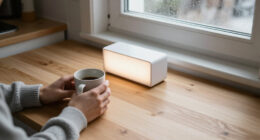
Choosing a biofeedback device for stress relief starts with deciding what you want to observe and how you want to practice. Reflect Orb pairs heart rate and skin conductance signals with simple light feedback, while Moksha O₁ turns breathing practice into guided, haptic sessions with a large iOS exercise library. For PC users who want HRV games, Stone Biofeedback Home takes a more structured, screen-based approach.

Turn your wind-down time into listening time
- Thousands of audiobooks, podcasts and originals
- Listen on your phone, tablet or Echo — also offline
- Cancel anytime
Those differences matter more than a long feature list. A breathing sensor can cue the next breath without asking you to interpret data; an HRV or EEG device can make physiological signals more visible, but may require more patience or a compatible setup. Ongoing app access, smartphone compatibility, and willingness to practice regularly also shape the fit. I rank these options by how directly their feedback supports a repeatable stress-relief routine, then weigh access, guidance, and practical limitations. These are consumer wellness tools, not substitutes for professional care.
Key Takeaways
- Reflect Orb is the most flexible starting point for many buyers because it reads heart rate and skin conductance, works with iPhone and Android, and retains its light biofeedback after the included premium year.
- Moksha O₁ offers the broadest guided breathing experience here, with more than 1,000 exercises and haptic feedback, but both listed O₁ versions are iOS-only.
- Stone Biofeedback Home is the lineup’s PC-based HRV option, using four responsive games to make breathing and relaxation practice interactive; it is not a medical device.
- The EEG headband tracks alpha, beta, and theta activity and has no subscription requirement, but forehead EEG is a different kind of feedback from breathing or heart-based cues and requires consistent sessions.
- The best choice depends on the feedback you will actually use: simple light cues, guided breathwork, PC games, or brainwave monitoring.
| Reflect Orb Smart Biofeedback Device for Stress Relief and Mindfulness |  | Best Overall | Tracking: Heart rate and skin conductance | Feedback: Real-time light biofeedback | App compatibility: iPhone and Android | VIEW LATEST PRICE | See Our Full Breakdown |
| Moksha O₁ Smart Breathwork and Meditation Device for iOS |  | Best for Guided Breathwork | App compatibility: iOS only | Breathing exercises: More than 1,000 | Feedback: Real-time sensor tracking and haptics | VIEW LATEST PRICE | See Our Full Breakdown |
| Stone Biofeedback Home HRV Training Device with 4 Games for PC |  | Best for PC-Based HRV Practice | Feedback type: Real-time heart rate variability | Included games: Four | Connection: USB | VIEW LATEST PRICE | See Our Full Breakdown |
| EEG Neurofeedback Headband for Meditation & Brainwave Monitoring |  | Best for Brainwave Feedback Without a Subscription | Connectivity: Bluetooth | Sensors: Flexible hydrogel EEG sensors | Brainwaves tracked: Alpha, beta, and theta | VIEW LATEST PRICE | See Our Full Breakdown |
| Moksha O₁ Smart Meditation Device for Stress & Anxiety Relief |  | Best for Gamified Meditation | Compatibility: iOS only | Color: Moon | Battery: Rechargeable | VIEW LATEST PRICE | See Our Full Breakdown |
More Details on Our Top Picks
Reflect Orb Smart Biofeedback Device for Stress Relief and Mindfulness
Reflect Orb earns the top spot for balance: it tracks heart rate and skin conductance, then uses light feedback to guide a relaxation session. That gives a newcomer a visible cue without requiring them to study a dashboard or understand brainwave labels. Its iPhone and Android compatibility also gives it a broader starting audience than either Moksha O₁ listing, both of which are iOS-only.
The Orb’s practical advantage is that its core biofeedback light continues to work after setup without renewing the included premium membership. The first year also supplies guided breathing, meditation, and session insights, so a buyer can begin with more structure and later decide whether the paid content is worth retaining. That differs from the Moksha devices, whose appeal leans on a rich app library and haptic breath guidance, and from Stone, which is built around PC-based HRV games.
The tradeoff is ongoing app content: premium material requires a paid membership after the included year, and battery life varies with use even though it can reach two weeks per charge. Buyers who want no subscription at all may prefer the EEG headband’s stated app model, though that device tracks a different signal and does not offer the Orb’s simple light cue. The Orb makes the most sense for someone who wants a flexible, low-friction way to practice, rather than a detailed training setup.
Pros:- Tracks both heart rate and skin conductance
- Uses real-time light cues that are easy to follow during breathing
- Works with iPhone and Android
- Core biofeedback light remains usable without renewing premium access
Cons:- Premium app content requires a paid membership after the included year
- Battery life depends on how the device is used
Best for: People who want guided relaxation with body-signal light feedback and need compatibility with either iPhone or Android.
Not ideal for: Buyers who want all app content to remain included indefinitely, or who prefer breathing haptics, PC games, or EEG readings.
- Tracking:Heart rate and skin conductance
- Feedback:Real-time light biofeedback
- App compatibility:iPhone and Android
- Included membership:One year of premium app access
- Battery life:Up to two weeks per charge, depending on use
- Independent use:Biofeedback light works after setup without membership renewal
Our verdict“I recommend Reflect Orb as the most adaptable first choice for guided stress-relief practice, provided you are comfortable with the app membership changing after year one.”
Moksha O₁ Smart Breathwork and Meditation Device for iOS
Moksha O₁ is the strongest fit for buyers who want breathing to be the center of the session. Its sensor feedback and haptic guidance give the user an in-the-moment cue, while the companion iOS app offers more than 1,000 exercises, games, playlists, and soundscapes. Compared with Reflect Orb’s light-led body-signal feedback, the O₁ focuses the experience more tightly on following and shaping a breathing pattern.
That guided approach can make a routine feel less abstract: a user follows a cue instead of trying to infer what a number means. The rechargeable case and portable device support short sessions away from a desk, unlike Stone Biofeedback Home, which is designed for PC use. The wide activity library also gives this pick more variety than the four games offered with Stone, although buyers who prefer simple, minimal prompts may find the choice of content excessive.
The decisive limitation is iOS-only access. Android users cannot use the app, which makes the more platform-flexible Reflect Orb a safer choice for a mixed-device household. The O₁ also depends on smartphone connectivity for its full experience, so it is less self-contained than the Orb’s standalone light biofeedback after setup. I rank it second because its breathing guidance is especially direct, but access to that strength depends on owning a compatible Apple device.
Pros:- Provides real-time sensor feedback and haptic guidance during breathing
- Includes more than 1,000 breathwork exercises
- Adds games, guided playlists, and soundscapes
- Portable device includes a rechargeable case
Cons:- The companion app is iOS-only
- Full functionality requires smartphone connectivity
Best for: iPhone users who want a portable breathwork routine with haptic cues, varied exercises, and interactive sessions.
Not ideal for: Android users, people who want a device that works fully without a phone, or buyers seeking HRV or EEG-specific tracking.
- App compatibility:iOS only
- Breathing exercises:More than 1,000
- Feedback:Real-time sensor tracking and haptics
- App content:Breath games, guided playlists, and soundscapes
- Included items:Smart device, rechargeable case, and access to iOS app
- Portability:Portable design for sessions in different settings
Our verdict“For an iPhone owner who wants a varied, guided breathing practice, Moksha O₁ is a more focused breathwork choice than Reflect Orb or Stone.”
Stone Biofeedback Home HRV Training Device with 4 Games for PC
Stone Biofeedback Home makes HRV practice feel like an activity rather than a passive meditation track. It provides real-time heart rate variability feedback through four PC games designed around focus, calm, and inner stillness. That format gives a user a goal to follow while breathing or relaxing, which sets it apart from the quieter light cues of Reflect Orb and the haptic breathwork direction of Moksha O₁.
The games and practice tracking suit someone who likes repeating sessions and seeing how practice develops over time. A PC setup can also make the experience feel anchored to a dedicated routine at home, rather than an exercise squeezed into a phone-based moment. In exchange, it gives up the convenience of a pocketable tool: the device connects by USB and is designed for PC use. The EEG headband is also aimed at structured feedback, but its signal is brainwave activity rather than HRV, so the choice comes down to what kind of data the buyer wants to engage with.
Its limitations are clear. This is not a medical device, and its games are not a diagnostic tool or a promise of stress reduction. PC compatibility narrows where and how it can be used, while buyers who want guided mobile meditations may find Reflect Orb or Moksha O₁ easier to fit into daily life. Stone is a distinctive choice for a home user who enjoys interactive training and is willing to sit down at a computer for practice.
Pros:- Provides real-time heart rate variability feedback
- Includes four HRV-responsive games
- Supports breathing, relaxation, and focus practice
- Allows users to track practice over time
Cons:- Designed for PC use and connects by USB
- Explicitly a consumer wellness accessory, not a medical device
Best for: PC users who want HRV feedback, game-based breathing practice, and a way to track sessions at home.
Not ideal for: People who need mobile portability, do not use a PC, or expect a medical monitoring device.
- Feedback type:Real-time heart rate variability
- Included games:Four
- Connection:USB
- Compatible platform:PC
- Intended use:Relaxation, breathing practice, and focus training
- Medical status:Consumer wellness accessory; not a medical device
Our verdict“Stone is the most suitable pick for PC-based, game-led HRV practice, but it is less convenient for quick sessions than the mobile options.”
EEG Neurofeedback Headband for Meditation & Brainwave Monitoring
This headband suits buyers curious about brainwave feedback rather than a direct breathing cue. Its flexible hydrogel sensors sit against the forehead and track alpha, beta, and theta activity during meditation, focus sessions, or preparation for sleep. The app adds guided meditation and neurofeedback exercises, with session history and free data downloads. That gives more visibility into EEG signals than Reflect Orb, which tracks heart rate and skin conductance, or Stone, which focuses on HRV.
The stated lack of subscription fees is a meaningful difference in this lineup. A buyer who wants to review sessions and export data can do so without the Orb’s change to paid premium app content after the first year. The tradeoff is a more specialized setup: the user must wear a headband and work with forehead-based readings, instead of following a simple light or haptic cue. Brainwave labels can also take more effort to interpret than the straightforward breathing prompts from Moksha O₁.
Regular practice is part of the proposition. The product description says consistent use is needed to see neurofeedback training benefits, so this is not the best match for someone seeking an occasional quick reset. It is also limited to the signal captured at the forehead, which is only one window into a session. I place it below the more immediately approachable options, while still recommending it for a buyer who values EEG monitoring, data access, and an app without a subscription requirement.
Pros:- Tracks alpha, beta, and theta brainwave activity in real time
- Companion app includes guided meditation and neurofeedback exercises without a subscription
- Hydrogel sensors are designed for comfortable forehead contact
- Offers session history and free data downloads
Cons:- Training benefits require consistent use
- Sensing is limited to forehead-based EEG
Best for: People who specifically want forehead EEG feedback, session records, data downloads, and app access without a subscription.
Not ideal for: Buyers who want simple breathing cues, dislike wearing a headband, or do not expect to practice consistently.
- Connectivity:Bluetooth
- Sensors:Flexible hydrogel EEG sensors
- Brainwaves tracked:Alpha, beta, and theta
- App:Guided meditation and neurofeedback exercises
- Subscription:No subscription required
- Data:Session tracking and free data download
- Portability:Lightweight design
Our verdict“Choose this headband when EEG data and subscription-free tracking matter more to you than the simpler relaxation cues of the other picks.”
Moksha O₁ Smart Meditation Device for Stress & Anxiety Relief
This second Moksha O₁ listing offers the same broad appeal as the breathwork-focused version: an iOS-connected device with biofeedback, haptic guidance, and interactive breath games. It is aimed at making meditation more engaging for someone who finds stillness alone hard to sustain. More than 1,000 exercises give it considerably more variety than Stone’s four PC games, while the haptics provide a physical prompt that differs from the Reflect Orb’s light feedback.
The listing describes a Moon color device with rechargeable power, a case, and app access. Its stress and anxiety framing emphasizes guided breathing and the body’s calming response, but I would treat that as the product’s intended wellness use, not as a guaranteed result. For a buyer who likes game mechanics and wants frequent prompts, the format may feel more approachable than interpreting the EEG headband’s alpha, beta, and theta data. Those who want to inspect physiological signals in a more explicit way may instead prefer the Orb, Stone, or EEG options.
This is a separate listing, not a clearly different category of device. Its described functions substantially overlap with the other Moksha O₁, so I rank it lower to make the comparison useful: the first listing emphasizes the exercise and soundscape library, while this one highlights games and haptic meditation. Both remain restricted to iOS and rely on a smartphone for the full experience. Buyers should compare the listing details and included package carefully, and skip both if Android compatibility is required.
Pros:- Combines biofeedback with haptic guidance
- Uses interactive games to support meditation practice
- Includes access to more than 1,000 exercises
- Portable and rechargeable with a case included
Cons:- Limited to iOS devices
- Full functionality requires smartphone connectivity
- Overlaps substantially with the other Moksha O₁ listing
Best for: iPhone users who are motivated by gamified meditation and want haptic breathing prompts in a portable device.
Not ideal for: Android users, people seeking a distinct device from the other Moksha O₁ listing, or buyers who want phone-free operation.
- Compatibility:iOS only
- Color:Moon
- Battery:Rechargeable
- Features:Biofeedback, haptic guidance, and breath games
- Exercises:More than 1,000
- Included items:Smart device, rechargeable case, and app access
- Phone requirement:Smartphone connectivity needed for full functionality
Our verdict“This listing makes sense for an iPhone user drawn to gamified, haptic meditation, though the overlapping O₁ option should be compared before choosing.”

How We Picked
I compared each product against the same buyer question: how well does its feedback help someone build a practical stress-relief routine? I looked at the signal it tracks, how feedback is delivered during a session, how much guidance is included, and what devices or platforms are required. A device that provides a clear cue while breathing may be easier to use casually; detailed readings or games can suit someone who wants a more involved practice.
I also considered the ongoing experience. App access can affect the value of guided sessions after an included membership ends, while platform limits may rule out an otherwise appealing pick. Portability, independent operation, session history, and the need for regular use help distinguish a device for occasional resets from one aimed at structured training. I gave more weight to features that have a direct, understandable role in relaxation than to broad wellness claims.
The ranking reflects those differences rather than treating every feature as equally useful. Reflect Orb leads for its combination of two body signals, straightforward light feedback, and support for both major mobile platforms. Moksha O₁ follows for depth of guided breathwork, with an iOS restriction. Stone ranks as a focused PC option, and the EEG headband serves buyers specifically seeking brainwave feedback. The two Moksha listings describe closely related devices, so I treat them as separate purchase listings with overlapping strengths rather than inventing a major functional distinction. None of these products is presented as a medical device or as a guaranteed treatment for stress or anxiety.
Factors to Consider When Choosing Biofeedback Devices For Stress Relief
I would start by matching the device’s feedback style to the kind of practice you can see yourself repeating. These products track different signals and ask for different levels of attention.Choose a signal you can use
Breathing feedback is direct: Moksha O₁ uses sensor feedback and haptics to guide a breathing session. Heart rate and skin conductance, as on Reflect Orb, offer a broader view of body responses alongside a simple light cue. Stone focuses on HRV, while the headband monitors alpha, beta, and theta brainwave activity. More data is not automatically more useful; choose the signal whose feedback you are most likely to follow.
Match the guidance to your routine
If you want to follow prompts without studying readings, the Orb’s light and the O₁’s haptics are the most immediate formats. The O₁ adds a large exercise library, games, playlists, and soundscapes; the Orb includes guided content and session insights during its included premium year. Stone’s four games suit a person who prefers a focused activity at a PC. The EEG headband offers guided meditation too, but its feedback is more specialized.
Check your phone or computer first
Platform fit can decide the shortlist. Both Moksha listings are iOS-only, and the full O₁ experience needs smartphone connectivity. Reflect Orb supports iPhone and Android. Stone is designed for PC and uses USB, making it a poor match for mobile sessions. The EEG headband connects by Bluetooth and uses a companion app; check that the app works with your device before buying.
Account for access over time
Reflect Orb includes one year of premium app access; after that, premium content requires paid membership, although its biofeedback light works without renewal after setup. The EEG headband’s app is described as having no subscription requirement and includes free data downloads. The supplied descriptions do not specify a recurring fee for the Moksha apps or Stone, so review the current listing and app terms before purchase rather than assuming every feature is permanently included.
Be realistic about practice and claims
Stress-relief routines tend to depend on repetition, and the EEG listing explicitly says consistent use is needed for neurofeedback benefits. Games or a large exercise library can help some people return to practice, but neither guarantees a particular outcome. Stone is explicitly a consumer wellness accessory, not a medical device, and these products should be judged as practice aids rather than diagnostic or treatment tools.
Frequently Asked Questions
What kind of biofeedback is most useful for stress relief?
It depends on whether you want a prompt to guide an action or a signal to observe. Haptic breathing cues from Moksha O₁ and light cues from Reflect Orb are comparatively direct during a relaxation session. Stone offers HRV feedback through PC games, while the EEG headband tracks brainwave activity. I would choose the format that feels understandable and easy to repeat, rather than assuming one measurement is best for everyone.
Which device works with Android?
Reflect Orb is listed as compatible with both iPhone and Android. Both Moksha O₁ products are iOS-only, so they are not a fit for Android users. Stone Biofeedback Home is designed for PC use, and the EEG headband connects by Bluetooth to its companion app; confirm the app’s current device requirements before choosing that model.
Do any of these devices work without an ongoing membership?
Reflect Orb’s biofeedback light remains available after setup without renewing membership, though premium app content requires a paid membership after the included year. The EEG headband listing specifies a companion app with no subscription requirement. The supplied details do not establish the long-term access terms for Moksha O₁ or Stone, so check their current app and product information if continued content access is a deciding factor.
Are these devices medical tools for anxiety or stress?
These are presented as consumer wellness or meditation products, not as replacements for diagnosis or care from a qualified professional. Stone is explicitly identified as not being a medical device. Product descriptions that mention stress or anxiety relief explain the intended practice, but do not establish a guaranteed result for an individual. Anyone needing support for persistent or severe symptoms should seek appropriate professional guidance.
Why are there two Moksha O₁ products in this roundup?
The supplied product information describes two separate listings with substantial overlap: both are portable, iOS-only O₁ devices with more than 1,000 exercises and real-time breathing feedback. One listing foregrounds guided playlists and soundscapes, while the other highlights haptic guidance and breath games. Since the information does not establish a major functional difference, compare their included package details rather than treating them as entirely different device types.
Conclusion
For a first biofeedback device, I would choose Reflect Orb if you want a low-friction light cue, both major mobile platforms, and the option to keep using core feedback after premium access ends. Pick Moksha O₁ if you own an iPhone and want a deeper guided breathing library with haptics and games. For a home PC routine built around HRV-responsive activities, Stone is the focused choice; for EEG readings, no subscription requirement, and data downloads, the headband fits a more specialized practice. The second Moksha listing is worth comparing for its package and game-led framing, though it overlaps heavily with the other O₁. Across all five, I would prioritize the feedback style and platform you will return to regularly.
Fall Picks
fall essentials
As an affiliate, we earn on qualifying purchases.