

This checklist is for anyone looking for a journal or companion tool to support reflection between therapy sessions or during personal mental health work. Choose items that feel manageable and relevant to your needs; a product can support reflection, but it does not replace care from a mental health professional. Your own pace matters more than completing every page or prompt.

Turn your wind-down time into listening time
- Thousands of audiobooks, podcasts and originals
- Listen on your phone, tablet or Echo — also offline
- Cancel anytime
The checklist is organized by the role each item can play: guided reflection, mood tracking, emotional vocabulary, structured thought work, and a creative mindfulness activity. The final section offers advice on self-compassion affirmation cards without naming a product. Each slot includes practical points to consider before choosing its listed pick.
Use the list as a menu, not a required set. Start with the format you are most likely to use, then consider whether another tool fills a distinct need. Check the product’s description for details such as layout, materials, and instructions before buying, and bring questions about therapeutic exercises to your clinician. Consistency can be small: a brief check-in may fit better than a long routine.
Guided therapy journal
A guided journal can give reflection a starting point when a blank page feels difficult. The listed pick, “Guided Journal for Self-Discovery with 180 Undated Prompts,” suggests a prompt-led format with undated entries. Prompts can help you notice themes or prepare topics to discuss in therapy, while undated pages can suit an uneven routine. Low-pressure structure is the point: the journal should invite honest reflection without making you feel behind.
A common mistake is choosing a journal because its prompt count sounds extensive, then feeling obligated to keep up. Consider whether the prompts appear relevant to what you want to explore and whether you prefer short answers or more open-ended writing. Check the listing for page layout and any guidance about using the prompts. If writing brings up difficult feelings, you can pause, skip a prompt, or discuss it with your therapist. Fit the practice to your capacity and care plan rather than treating completion as a goal.
What to look for:
- Prompts that match the topics you want to reflect on
- Undated pages if you prefer a flexible schedule
- A writing space that suits your typical response length
- Clear guidance about how prompts are intended to be used
- A format you feel comfortable returning to
Guided Journal for Self-Discovery with 180 Undated Prompts

A hardcover guided journal with 180 prompts across six themes: intention, healing, gratitude, presence, purpose, and growth. Its undated pages support reflection at your own pace, and features include premium vegan leather, gold details, a ribbon bookmark, lay-flat binding, and bleed-resistant paper.
Pros:
- 180 prompts across six personal growth themes
- Undated format allows flexible use
- Lay-flat binding and ribbon bookmark
- Bleed-proof paper
Cons:
- Availability can vary
Best for: People who want prompts to help begin self-reflection
Not ideal for: People who prefer completely unstructured journaling
Bottom line: Choose it if its prompts and writing format feel approachable for the kind of reflection you want to do.
Mood tracking notebook
A mood tracker can help you record how you feel over time and notice patterns you may want to discuss with a clinician. The listed pick is “Mood Tracker Undated Planner.” Its title points to mood tracking in an undated planner format, which may suit someone who wants a flexible record rather than a dated daily commitment. Usable tracking depends on keeping the process simple enough to revisit.
Before choosing, check how the notebook asks you to record mood and whether its layout makes room for context. A feeling can be influenced by many things, so avoid treating a tracker as a diagnosis or a complete explanation of your mental health. Common pitfalls include using a scale inconsistently, recording more detail than you can sustain, or interpreting a short stretch of entries as a firm pattern. Confirm the page structure and instructions in the product listing, and ask your therapist how to use tracking in a way that supports your goals. Keep the record practical, and skip entries when tracking feels unhelpful.
What to look for:
- A layout that makes entries easy to complete
- Undated pages for flexible use
- Space for context alongside mood notes
- Instructions that explain the tracking format
- A structure you can maintain without pressure
Mood Tracker Undated Planner

This undated mood tracker planner helps you understand your emotional patterns, create healthier mindsets, and unlock a happier you. It includes habit tracking, weekly calendars, and stickers to support your mental wellness journey.
Pros:
- Helps track emotional patterns and habits
- Includes stickers for personalization
- Undated format allows flexible use
Cons:
- No specific features or size details provided
- Limited information on page layout or paper quality
Best for: People who want an undated place to record mood
Not ideal for: People who find frequent mood monitoring stressful
Bottom line: Check that the tracking layout is clear and comfortable before making it part of your routine.
Emotional regulation cards
Emotion cards can offer a concrete way to name or discuss feelings when the right words are hard to find. The listed pick, “Emotional Intelligence Card Deck – 156 Emotion Cards and 37 Micro-Mind,” names a set of emotion cards and micro-mind items. Consider whether a card-based activity suits how you prefer to reflect: selecting a card may feel more accessible than starting with a blank page. Emotional vocabulary can be useful for personal reflection or conversation.
Do not assume that a deck’s quantity or title tells you exactly how its activities work. Read the product description to understand what the cards contain, how the micro-mind items are used, and whether any instructions are included. A common mistake is expecting cards to regulate an emotion automatically; they are prompts or tools, not a guaranteed outcome. Consider where and with whom you plan to use them, and whether the format feels comfortable for solo use or discussion. If an activity brings up distress, set it aside and seek support as appropriate. Match the format to your setting and needs.
What to look for:
- A clear explanation of the cards and micro-mind items
- Instructions for using the deck
- Emotion language that feels understandable to you
- A format suited to solo reflection or conversation
- A comfortable way to pause or skip an activity
Emotional Intelligence Card Deck – 156 Emotion Cards and 37 Micro-Mindfulness Te
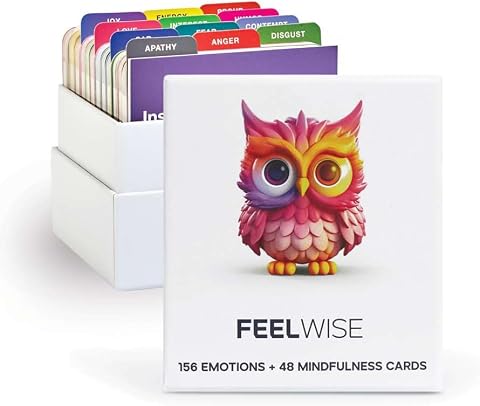
The FeelWise Card Deck is a comprehensive tool designed to enhance emotional intelligence, resilience, and self-awareness. It includes 156 emotion cards for understanding feelings and 37 micro-mindfulness techniques to promote calm and focus, suitable for personal, family, or professional use.
Pros:
- Provides a comprehensive set of emotion and mindfulness cards for emotional growth
- Versatile for personal, family, or professional use
- Includes practical techniques to foster calm and resilience
Cons:
- May require time to learn and incorporate all techniques
- No digital or app integration mentioned
- Potentially overwhelming for beginners due to the number of cards
Best for: People who like using cards to explore emotions
Not ideal for: People who prefer written exercises or no prompts
Bottom line: Review how the deck is meant to be used and whether its card format fits your reflection style.
CBT thought record workbook
A structured workbook may help organize reflection around thoughts, feelings, and responses. The listed pick is “CBT, DBT & ACT – The Complete 3-in-1 Workbook: 12 Weeks Program in Cog.” Its title identifies three therapy approaches and a 12-week program, but the listing should be checked for the actual exercises and intended audience. Clear structure can help you work through material step by step.
A common buying mistake is assuming that a workbook’s title makes it equivalent to treatment or that every exercise will suit every reader. Check the contents, how the program is organized, and whether it explains the approach in language you can follow. Consider whether you want a guided sequence or only selected exercises, and whether the time commitment fits your schedule. If you are working with a therapist, ask whether the workbook aligns with your goals before using it as part of therapy. Stop or seek guidance if an exercise feels overwhelming. Choose for usability, not for the number of approaches named on the cover.
What to look for:
- A contents list that shows the exercises included
- Explanations of the approaches named in the title
- A sequence and time commitment that fit your routine
- Readable instructions and space to respond
- Compatibility with goals you have discussed with a clinician
CBT, DBT & ACT – The Complete 3-in-1 Workbook: 12 Weeks Program in Cognitive, Be

This comprehensive workbook offers a 12-week program combining Cognitive Behavioral Therapy (CBT), Dialectical Behavior Therapy (DBT), and Acceptance and Commitment Therapy (ACT). It aims to help individuals overcome anxiety, depression, and build mental resilience through practical exercises and strategies.
Pros:
- Integrates three proven therapeutic approaches in one workbook
- Structured 12-week program for gradual progress
- Practical exercises to improve mental resilience
Cons:
- No specific details on included materials or format
- May require prior knowledge of therapy concepts for full benefit
Best for: People seeking a workbook with a defined program
Not ideal for: People who want a brief or open-ended journal
Bottom line: Read the workbook details closely and consider whether its structure suits your goals and capacity.
Mindfulness coloring book
A coloring book can provide a hands-on activity for quiet focus and creative expression. The listed pick is “The Layer Beneath: Luxury Figurative Art Coloring Book for Adults.” The title identifies an adult coloring book with figurative art; review the listing to see the actual illustrations and page details. Creative downtime may appeal if you want an activity that does not ask for written reflection.
One common mistake is assuming a coloring book will automatically feel relaxing or suit every preference. Look at the available images, line detail, and page format in the product information. Consider whether you prefer intricate designs or simpler areas to color, and what materials you plan to use; check whether the pages are suitable for those materials. Also confirm whether images are printed on one side or both if that matters to you. There is no need to treat coloring as a performance task: stop when it stops feeling useful. Choose artwork you enjoy and a format that feels comfortable to use.
What to look for:
- Preview images that match your art preferences
- A level of detail that feels manageable
- Page format suited to your coloring materials
- Printing details that meet your preferences
- An activity you can set aside or return to easily
The Layer Beneath: Luxury Figurative Art Coloring Book for Adults

This coloring book features luxury figurative art designed for adults, promoting mindfulness and stress relief. It serves as an inspirational gift for women and anyone seeking creative relaxation and empowerment.
Pros:
- Beautiful luxury figurative art designs
- Promotes mindfulness and stress relief
- Inspirational gift for women and adults
Cons:
- No specific content details provided
- No price or rating available
Best for: Adults who enjoy figurative art and coloring
Not ideal for: People seeking written prompts or structured therapy exercises
Bottom line: Preview the artwork and page details to make sure the book suits your preferred coloring style.
Self-compassion affirmation cards
Self-compassion affirmation cards are an advice-only slot in this checklist, with no specific product pick. A card can offer a short phrase to reflect on during a difficult moment or use as a gentle reminder. The useful question is whether the wording feels credible and supportive to you. Personal resonance matters more than a polished-sounding message.
When considering a deck, read sample statements and check whether the language leaves room for complicated feelings. A common mismatch is choosing affirmations that feel too absolute or dismissive of what you are experiencing. Look at the deck’s instructions and consider whether you want to draw a card, choose one intentionally, or use the statements in another way. If a phrase does not fit, you can set it aside; you do not have to force yourself to believe it. Gentle and believable language is often easier to work with than wording that feels prescriptive. Ask your therapist for suggestions if you want affirmations connected to specific goals.
What to look for:
- Sample statements that feel believable and kind
- Language that acknowledges difficult emotions
- Instructions that fit how you want to use the cards
- A deck you can browse before choosing a statement
- The option to skip phrases that do not resonate
If you are choosing gradually, start with the item that addresses your clearest need: prompts for reflection, a simple mood record, emotional vocabulary, structured exercises, or a creative activity. Consider how often you expect to use it and whether the format feels manageable. Add another tool only when it serves a distinct purpose. Start with one that fits your routine, and check product details before deciding.
There is no single correct way to support reflection, and a checklist does not need to become a set of obligations. You can adapt, pause, or change tools as your needs shift. If you are in therapy, your clinician can help you decide which exercises fit your work together. Keep what helps, and let the rest go.
Fall Picks
fall essentials
As an affiliate, we earn on qualifying purchases.