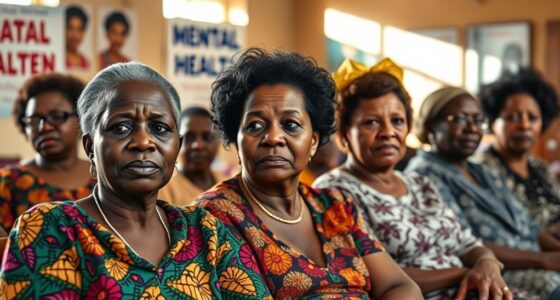
Media heavily influences how you see your body, often creating distorted ideals that can lead to eating disorders. Women typically face pressures to be thin, increasing risks like anorexia or bulimia, while men often feel the pressure to achieve muscularity, risking issues like muscle dysmorphia. Recognizing these gender-specific influences can help you understand how societal standards shape self-image. Keep exploring to discover ways to foster healthier attitudes toward your body and confidence.

Turn your wind-down time into listening time
- Thousands of audiobooks, podcasts and originals
- Listen on your phone, tablet or Echo — also offline
- Cancel anytime
Key Takeaways
- Women often develop eating disorders like anorexia and bulimia due to societal pressure to be thin.
- Men may experience muscle dysmorphia or binge eating related to the desire for muscularity.
- Media emphasizes thinness for women and muscularity for men, influencing gender-specific body dissatisfaction.
- Gender norms shape how media pressures affect self-esteem and disordered eating behaviors differently across genders.
- Promoting body diversity and challenging stereotypes can help address gender-specific impacts on body image.
Eating disorders are complex mental health conditions that often stem from distorted perceptions of body image. As you navigate how you see yourself, you may find that media influence plays a significant role in shaping your ideals and expectations. Society constantly bombards you with images of what’s considered “perfect,” often portraying an unrealistic and narrow standard of beauty. This relentless exposure can cause you to develop self-esteem issues, making you feel inadequate or dissatisfied with your own body. It’s common to internalize these messages, believing that your worth depends on fitting into these narrow standards. Over time, this distorted perception can lead to behaviors aimed at controlling your body or weight, which are characteristic of eating disorders.
Eating disorders often originate from distorted body image influenced by relentless media standards.
You might notice that media representations tend to emphasize thinness or muscularity as markers of attractiveness, especially for women and men respectively. These portrayals can skew your perception of what’s normal or desirable and, in turn, erode your confidence. When you constantly compare yourself to these idealized images, your self-esteem can plummet, leading to feelings of shame, anxiety, or even depression. This cycle makes it difficult to appreciate your unique body and can push you toward unhealthy dieting, excessive exercising, or other disordered eating behaviors. The media’s portrayal of beauty often overlooks diversity, making it harder for you to accept your natural body shape and size.
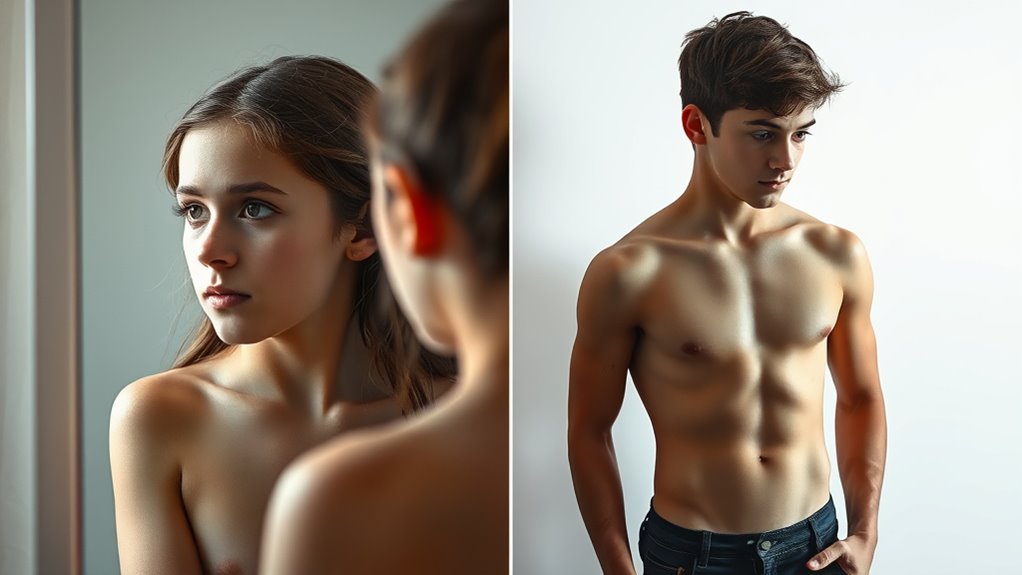
Gender differences also influence how media impacts your body image. For women, the pressure to be thin is often intensified by advertisements and social media posts that equate beauty with slimness. This can heighten self-esteem issues and increase the risk of developing eating disorders like anorexia or bulimia. Men, on the other hand, may face pressure to attain a muscular physique, which can lead to disorders like muscle dysmorphia or binge eating. The ways media influence your perception are shaped by gender norms, making it more challenging for you to develop a healthy body image if you don’t meet these societal expectations. Recognizing these gender-specific pressures is essential for understanding how eating disorders develop differently across genders.
Ultimately, understanding the connection between media influence, self-esteem issues, and body image can help you become more aware of the factors that contribute to eating disorders. By critically examining the messages you receive and challenging unrealistic standards, you can begin to foster a healthier relationship with your body. Remember, your worth isn’t defined by how closely you match a media-created ideal but by accepting and appreciating your unique self.
As an affiliate, we earn on qualifying purchases.
Frequently Asked Questions
How Do Cultural Influences Shape Gender Differences in Body Image?
Cultural influences shape gender differences in body image by reinforcing specific beauty standards through cultural norms. You might find that society emphasizes slenderness for women and muscularity for men, impacting how you perceive your body. These beauty standards are deeply rooted in cultural expectations, leading you to compare yourself against these ideals. Recognizing how cultural norms influence your perception can help you develop a healthier, more realistic view of your body.
Are There Specific Eating Disorder Symptoms Unique to Each Gender?
You might think symptoms are the same across genders, but gender-specific symptomatology exists. For example, hormonal influences affect how eating disorders manifest in each gender, leading to distinct signs. Women may show more restrictive eating patterns, while men might focus on muscle gain. Recognizing these differences helps you identify symptoms early and seek tailored treatment, making recovery more effective and personalized.
How Do Societal Expectations Impact Male and Female Body Image Perceptions?
Societal expectations shape your body satisfaction by emphasizing certain ideals for men and women. You may feel peer pressure to conform to these standards, leading to dissatisfaction with your appearance. For women, this often means endeavoring for thinness or curves, while men might aim for muscularity. These pressures influence how you perceive your body, creating stress and sometimes contributing to unhealthy behaviors. Recognizing this impact helps you challenge unrealistic standards and boost self-acceptance.
What Role Do Media Representations Play in Gender-Specific Eating Disorders?
You might think media influence is minor, but it profoundly shapes gender-specific eating disorders by reinforcing social stereotypes. Media representations often idealize male and female bodies differently, promoting unrealistic standards. For men, it’s about muscularity; for women, thinness. These portrayals deepen insecurities and pressure, leading to disordered eating behaviors. Recognizing how media perpetuates these stereotypes helps you understand the roots of gendered body image issues and encourages healthier perspectives.
How Can Treatment Approaches Be Tailored to Address Gender Differences?
You can tailor treatment approaches by incorporating personalized therapy that considers individual gender experiences. Use gender-sensitive interventions to address unique societal pressures and body image concerns faced by different genders. This approach helps you create a supportive environment, encouraging open communication and understanding. By recognizing and respecting gender differences, you maximize the effectiveness of treatment, fostering recovery and resilience tailored specifically to each person’s needs.
muscle dysmorphia treatment supplements
As an affiliate, we earn on qualifying purchases.
As an affiliate, we earn on qualifying purchases.
Conclusion
Understanding gender differences in eating disorders and body image helps you see the full picture. Recognizing these nuances allows you to approach others with empathy and awareness, rather than assumptions. Remember, everyone is fighting their own battle behind the scenes. By being open and supportive, you can help break down stereotypes and foster a healthier mindset. Don’t forget, sometimes a little compassion can open doors that others might think are forever closed.
As an affiliate, we earn on qualifying purchases.
As an affiliate, we earn on qualifying purchases.
Halloween Picks
halloween
As an affiliate, we earn on qualifying purchases.