
Before building a home sauna, you need to plan carefully around safety, regulations, and placement. Make certain your space has proper ventilation, moisture barriers, and fits local building codes. Choose durable, safe materials, and consider the noise and accessibility for everyone. Budget wisely, including wiring, insulation, and permits, while considering long-term costs. Focusing on these aspects guarantees a safe, enjoyable sauna experience for you and your partner—keep exploring to learn more about creating your perfect home spa.
Key Takeaways
- Ensure proper ventilation and moisture barriers to prevent mold and water damage.
- Comply with local building codes and safety standards for electrical and structural safety.
- Choose durable, safe materials that balance safety, budget, and long-term investment.
- Strategically locate the sauna for accessibility, ventilation, and minimal noise disturbance.
- Budget for installation, insulation, wiring, finishes, and potential future expansions.
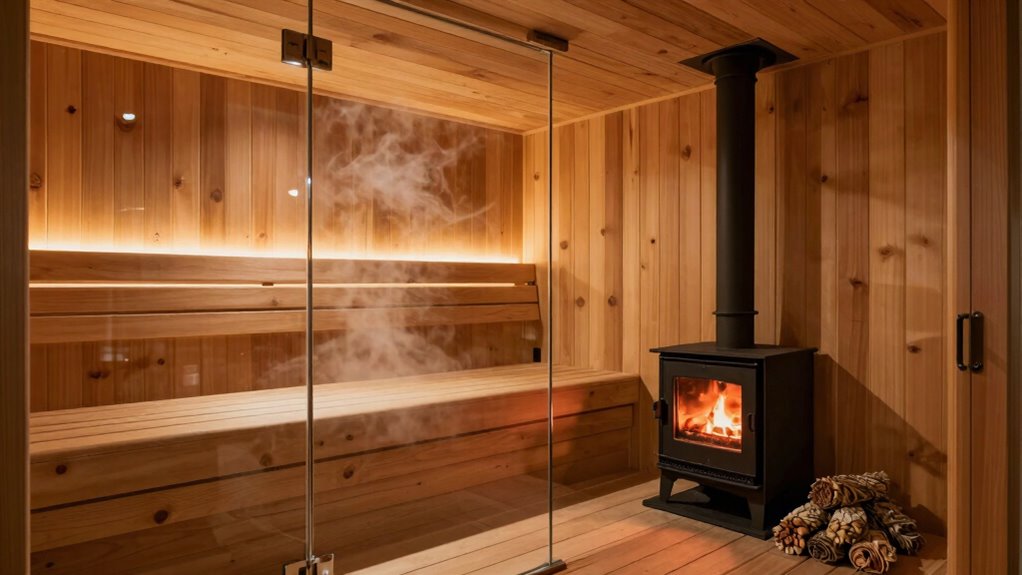
Building a home sauna can be a fantastic way to unwind and bond, but before diving into construction, it’s vital to understand what’s involved. One of the most important considerations is sauna safety. You want to guarantee that your sauna is built with proper ventilation, appropriate electrical wiring, and the right materials to prevent any hazards. Always prioritize safety standards, especially if you’re planning to install heaters or other electrical components. It’s a good idea to consult with professionals to make sure your design complies with local building codes and safety regulations. Doing so reduces the risk of fires, electrical issues, or health hazards down the line. Additionally, think about the placement of your sauna. It should be easily accessible, well-ventilated, and located in a spot that minimizes noise disturbance for others in the house. Proper insulation and moisture barriers are also essential to prevent mold and water damage, which can compromise safety and longevity. Understanding building safety standards is crucial to ensure your sauna remains a safe and durable addition to your home. Considering material selection carefully can also make a significant difference in durability and safety.
Budget planning is another vital aspect you shouldn’t overlook. Building a home sauna can vary greatly in cost depending on the size, materials, and features you choose. Setting a realistic budget early on helps you prioritize what’s essential versus what can wait. Do your research on the costs of different heating options, such as electric versus wood-fired heaters, and factor in expenses for insulation, wiring, and interior finishes. Remember to include costs for permits, professional labor if needed, and ongoing maintenance. It’s easy to underestimate how much the project will actually cost, so always add a buffer to your budget for unexpected expenses that might crop up during construction.
When planning your budget, also consider the long-term savings and benefits. A well-built sauna can boost your home’s value and offer health benefits that justify the investment. If you’re on a tight budget, start with a smaller, simpler design and expand later. Keep in mind that the initial investment in quality materials and safe construction practices can save you money and hassle in the future. By carefully balancing your safety considerations and budget planning, you’ll set a solid foundation for a sauna that’s safe, enjoyable, and sustainable. Building your own sauna isn’t just about the end result; it’s about making smart choices along the way to guarantee it’s a space you and your partner will love for years to come.

Veemoon Wood Sauna Vent Panel, Adjustable Air Ventilation Panel + Grille
Sauna vent kit — adjustable wooden air ventilation panel replaces jammed sliders. solid beige wood ensures smooth airflow…
As an affiliate, we earn on qualifying purchases.
As an affiliate, we earn on qualifying purchases.
Frequently Asked Questions
How Much Does a Home Sauna Typically Cost to Build?
A home sauna typically costs between $3,000 and $8,000 to build, depending on size and materials. You’ll need to budget for sauna insulation to guarantee energy efficiency and proper temperature control. Electrical wiring is also essential for heating elements and lighting, so plan for professional installation to meet safety standards. Higher-end models with custom finishes can push costs upward, but basic setups are more affordable and still provide a relaxing experience.
What Are the Best Locations in the House for a Sauna?
Imagine a cozy retreat within your home, nestled away where tranquility reigns. The best spots for your sauna are often near a bathroom or utility room, where sauna ventilation is easier and indoor humidity can be managed. Choose a dry, private corner with good airflow, and guarantee proper ventilation to prevent moisture buildup. This creates a relaxing oasis that’s both comfortable and easy to maintain.
How Long Does It Take to Build a Home Sauna?
Building a home sauna typically takes about 4 to 6 weeks, depending on your project’s complexity. You’ll need to focus on proper sauna insulation to maintain heat efficiently and guarantee you meet ventilation requirements for safety and comfort. During construction, you’ll install insulation, framing, and ventilation systems, so plan for sufficient time to ensure everything’s correctly set up, providing a safe and relaxing experience once complete.
Are There Any Safety Concerns With Home Saunas?
Yes, there are safety concerns with home saunas. You should prioritize electrical safety by ensuring all wiring meets code standards and is installed correctly to prevent fire hazards. Ventilation is also essential to avoid excess humidity, mold, and poor air quality. Regularly check ventilation systems and keep the space well-ventilated. Proper maintenance and adherence to safety guidelines help you enjoy your sauna safely and comfortably.
What Maintenance Is Required for a Home Sauna?
You need to regularly clean your sauna and inspect the sauna insulation to make certain it stays in good condition. Keep ventilation requirements in mind; proper airflow prevents moisture buildup and mold. Change air filters and clean heating elements as needed. Also, check the door seals and wood surfaces for signs of wear. Consistent maintenance helps your sauna stay safe, efficient, and enjoyable for years to come.

1500W Portable Dry Hot Air Heater for Sauna Tent, Electric Dry Steam-Free Sauna Heater with Adjustable Temp & Timer, Fast Heating Hot Air Generator for Home Personal Spa Therapy (120V) UL Standards
【Advanced Dry Heat Technology】 Experience the benefits of pure dry heat therapy without the mess of steam or…
As an affiliate, we earn on qualifying purchases.
As an affiliate, we earn on qualifying purchases.
Conclusion
Building a home sauna can be a rewarding experience, but it’s essential to plan carefully and communicate openly with your partner. Remember, a house divided against itself cannot stand—so work together to create a relaxing retreat that benefits both of you. With patience and teamwork, you’ll turn your sauna space into a sanctuary where both of you can unwind and reconnect. After all, a well-built sauna is more than just a room; it’s a shared haven.

ZXQDRE Sauna Foil Vapor Barrier, 250 sqft Aluminum Insulation Roll Heavy-Duty Non-Perforated Reflective Thermal Barrier for Energy Efficient Sauna, Attic, Garage and Crawl Space (4FT x 62.5FT)
Ultimate Sauna Performance: Our premium radiant barrier foil reflects up to 96% of radiant heat, ensuring your sauna…
As an affiliate, we earn on qualifying purchases.
As an affiliate, we earn on qualifying purchases.
ZXQDRE Sauna Foil Vapor Barrier, 250 sqft Aluminum Insulation Roll Heavy-Duty Non-Perforated Reflective Thermal Barrier for Energy Efficient Sauna, Attic, Garage and Crawl Space (4FT x 62.5FT)
Ultimate Sauna Performance: Our premium radiant barrier foil reflects up to 96% of radiant heat, ensuring your sauna…
As an affiliate, we earn on qualifying purchases.
As an affiliate, we earn on qualifying purchases.