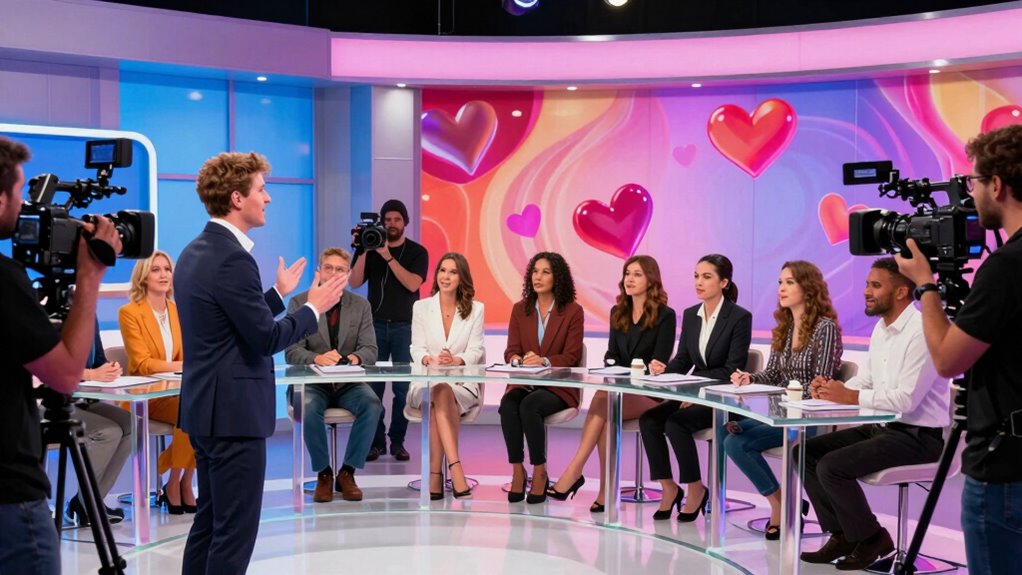

When relationship advice becomes entertainment first, you start to see love stories more as spectacle than genuine guidance. Media blurs reality, making you believe conflicts and drama are normal or even essential to passion. This shifts your focus from building healthy, lasting connections to chasing sensational stories. Over time, it’s harder to differentiate real advice from fluff, and unrealistic expectations take hold. Keep exploring how media influences relationships, and you’ll find ways to see through the illusion.

Turn your wind-down time into listening time
- Thousands of audiobooks, podcasts and originals
- Listen on your phone, tablet or Echo — also offline
- Cancel anytime
Key Takeaways
- Genuine relationship guidance is replaced by sensational stories that prioritize entertainment over accuracy.
- Media-driven narratives distort perceptions, making drama seem essential to love and relationship success.
- People mistake gossip and celebrity scandals for credible advice, leading to unrealistic relationship expectations.
- Focus shifts from building healthy communication to chasing sensationalism and superficial relationship stories.
- Critical awareness of media influence helps distinguish authentic advice from entertainment-driven misinformation.

In today’s digital age, relationship advice has transformed from private conversations into a form of entertainment that captures our attention and sparks debate. Instead of seeking genuine guidance, many of us find ourselves tuning into stories about celebrities and their love lives, often mistaking gossip for real insight. Celebrity gossip dominates social media feeds, blurring the line between reality and spectacle. As a result, what once was private—romantic struggles, personal growth, and relationship advice—becomes a spectacle for entertainment. You might scroll through headlines about celebrity breakups or makeups, subconsciously absorbing these narratives as if they hold some truth about what works in your own relationships. This obsession with high-profile romances feeds into existing relationship myths, reinforcing the idea that love is always dramatic, tumultuous, or based on instant chemistry.
When relationship advice becomes entertainment first, it loses its credibility. Instead of helping you build healthy, lasting connections, it often perpetuates stereotypes and misconceptions. You’re fed quick fixes, overly simplified solutions, or sensationalized stories that don’t reflect the complexity of real relationships. For example, many believe that jealousy or possessiveness are signs of love, a myth fueled more by celebrity gossip than by psychological reality. These distorted ideas get repeated, making it harder to distinguish genuine advice from entertainment fluff. You might start to think that drama is an essential part of passion, or that if a relationship isn’t constantly exciting, it’s doomed. These misconceptions can lead you to chase unhealthy dynamics or dismiss stability and communication as boring. Recognizing that much of the sensationalized content is driven by market incentives can help you approach relationship advice more critically.
Additionally, understanding how the media landscape influences perceptions of love can empower you to filter out superficial narratives. Being aware of how media influences shape our ideas about romance can help you maintain a healthier perspective. Moreover, the rise of digital content has led to an abundance of advice that often prioritizes sensationalism over authenticity. Ultimately, when relationship advice is treated as entertainment first, it often detracts from genuine understanding, leaving you more confused rather than equipped to nurture a healthy relationship. This cycle can be further perpetuated when we internalize relationship myths without questioning their validity, leading to unrealistic expectations.
relationship advice book for healthy communication
As an affiliate, we earn on qualifying purchases.
As an affiliate, we earn on qualifying purchases.
Frequently Asked Questions
How Does Entertainment Influence Genuine Relationship Advice?
Entertainment heavily influences genuine relationship advice through media sensationalism and celebrity influence. You might find advice distorted to attract attention, making it less practical. Celebrities sharing personal stories often blur the lines between entertainment and real guidance, leading you to prioritize sensational tips over authentic, evidence-based support. This can distort your understanding of healthy relationships, causing you to focus on entertainment rather than meaningful, effective advice.
Are Viewers Impacted by Unrealistic Relationship Portrayals?
Yes, viewers are often impacted by unrealistic relationship portrayals. These portrayals feed into relationship stereotypes, creating false expectations. While some shows promote healthy love, others use emotional manipulation for drama, skewing perceptions. You might find yourself comparing real relationships to these exaggerated depictions, leading to disappointment or confusion. Remember, entertainment often distorts reality, making it essential to critically evaluate what you see and resist falling for misleading stereotypes.
Can Entertainment-Based Advice Lead to Better Relationship Outcomes?
Entertainment-based advice can sometimes improve your relationship outcomes if it’s humor-driven and relatable, making lessons easier to remember. However, celebrity endorsements might skew your expectations or lead you to try advice that’s not personalized. While humor can lighten difficult topics, balance it with genuine, evidence-based guidance. Be cautious, and don’t rely solely on entertainment; seek advice tailored to your unique relationship for real improvement.
What Ethical Concerns Arise From Turning Relationship Advice Into Entertainment?
When relationship advice becomes entertainment, ethical dilemmas and privacy concerns emerge. You might worry about sensationalizing sensitive issues, which can distort advice and harm viewers. Privacy violations can occur if personal stories are shared without consent, risking emotional damage. As an audience member, you should question whether entertainment prioritizes shock value over genuine support, and be mindful of how this trend can compromise the integrity and confidentiality essential to healthy relationship guidance.
How Do Celebrities Shape Public Perceptions of Relationships?
Celebrity influence shapes your perceptions of relationships more than you realize. Media narratives often paint their romances as perfect or disastrous, creating idealized or skewed images. These stories hook you in, blurring reality and fueling fantasies or judgments. As you consume this entertainment, you may start to believe these portrayals reflect true relationship dynamics, which can distort your expectations and understanding of what real love and commitment look like.
As an affiliate, we earn on qualifying purchases.
Conclusion
So, next time you tune in for relationship advice, remember—you’re not just getting tips, you’re binge-watching a soap opera. The drama sells, after all. Who needs genuine connection when you’ve got scandal and soundbites? Just don’t be surprised if your own love life starts feeling more scripted than real life. After all, when entertainment takes center stage, authenticity takes the backseat. Enjoy the show—just don’t forget it’s all for your entertainment, not your relationship’s growth.
media literacy for relationships
As an affiliate, we earn on qualifying purchases.
As an affiliate, we earn on qualifying purchases.
As an affiliate, we earn on qualifying purchases.
Halloween Picks
halloween
As an affiliate, we earn on qualifying purchases.