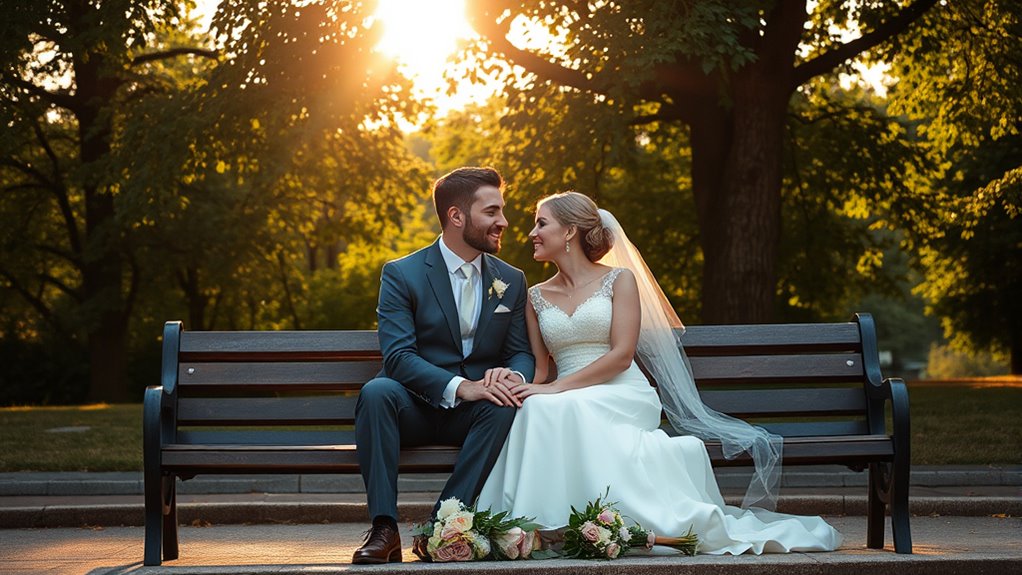

Feeling the post-wedding blues is normal, and you’re not alone. After the excitement fades, you might experience sadness, frustration, or loneliness. To beat it, focus on honest communication, celebrate small milestones, and create new traditions together. Prioritize self-care and plan future adventures to keep your connection strong. By embracing these steps, you can turn these feelings into positive growth. Keep exploring to discover more ways to strengthen your marriage during this changeover.
Key Takeaways
- Acknowledge and openly discuss feelings of sadness or disappointment with your partner to foster understanding and support.
- Establish new routines and traditions together to create a sense of stability and shared purpose post-wedding.
- Focus on future goals and plans to rebuild excitement and reinforce your bond as a married couple.
- Practice gratitude and engage in shared hobbies to reconnect emotionally and strengthen your relationship.
- Seek support from friends, family, or professionals if feelings of blues persist or impact your well-being.

The Couple's Gratitude Journal: 5 Minutes to Create a Stronger and More Fulfilling Relationship
As an affiliate, we earn on qualifying purchases.
As an affiliate, we earn on qualifying purchases.
Understanding the Causes Behind the Post-Wedding Blues

After the excitement and planning of your wedding day, it’s common to feel a sudden dip in happiness—what many call the post-wedding blues. One reason is the shift in marriage expectations. You might have envisioned a perfect day, but real life often brings surprises or challenges that don’t match those idealized visions. Social pressure can also contribute, as you may feel overwhelmed by others’ opinions or societal standards about what your marriage should look like. This can make you question if you’re meeting those expectations or if you’re doing enough. Recognizing that these feelings are normal helps you understand why you might be experiencing a sense of loss or disappointment after the celebration. It’s a natural part of adjusting to married life.

The First-Time Mum Coupon Book: 52 Practical Vouchers for Sleep, Chores, and Self-Care: The Ultimate Postpartum Survival Token Booklet for a Mum-to-Be | Funny Baby Shower and Maternity Leave Gift
As an affiliate, we earn on qualifying purchases.
As an affiliate, we earn on qualifying purchases.
Recognizing the Signs and Emotions You Might Experience

You might notice feelings of loss as your wedding day fades into the past, leaving a sense of emptiness. Mood swings can appear suddenly, making you feel overwhelmed or irritable without warning. Additionally, the excitement you once felt may start to fade, leaving you unsure of your emotions. Incorporating detoxifying juices such as lemon or cucumber juice can help restore balance and clarity during this transitional period.
Feelings of Loss
Feeling a sense of loss can catch you off guard, even when you expected the wedding to be a joyful milestone. It’s normal to feel a twinge of sadness as you adjust to this new chapter. You might miss the excitement leading up to the big day or the attention from friends and family. These feelings often stem from a shift, not a failure. To cope, try gratitude journaling to focus on positive aspects of your marriage. Reconnecting with shared hobbies can also reinforce your bond and create new, happy memories. Recognizing these feelings without judgment is key. Remember, experiencing loss doesn’t mean your relationship is failing—it’s part of the adjustment process. With patience and support, these emotions will become easier to manage. Incorporating self-sufficiency skills like maintaining your emotional health can further strengthen your resilience during this transition.
Mood Swings Appear
Mood swings often surface unexpectedly during the post-wedding period, catching you off guard. You might notice emotional fluctuations that seem to come out of nowhere, making you feel joyful one moment and irritable the next. These mood shifts are common as you and your partner navigate relationship adjustments after the big day. Recognizing these signs helps you understand that what you’re experiencing is normal. Additionally, just like how eye patches can provide temporary relief and hydration for the skin, acknowledging your emotional state can serve as a quick mental refresh during stressful moments.
Loss of Excitement
Have you noticed a dwindling sense of excitement following your wedding? It’s common to feel this way as the initial thrill fades. You might find yourself less passionate about future plans or feeling disconnected from the joy you once felt. This loss of excitement often stems from unmet relationship expectations or the pressure to appear perfect. Social pressures, like comparing your marriage to others or feeling judged, can also dampen your enthusiasm. Recognizing these emotions is essential; you might feel indifferent or even overwhelmed by the idea of starting your new life. Remember, it’s normal to experience these ups and downs. By acknowledging these feelings, you can work together to reignite your connection and shift focus back to what made you fall in love in the first place. Incorporating well-being tips such as shared relaxation activities or open communication can help rebuild your emotional intimacy and renew your excitement.

Diartpaint Marriage Milestone Wine Bottle Tags with Bow Ribbon Decor Set, Confetti Themed Wedding Firsts Wine Basket Ideas, Wine Champagne Bottle Labels Hanging Signs Bridal Shower Supplies
Package Included: You will get 1 large wine bottle tags, 12 small wine bottle tags, 13 white bow,…
As an affiliate, we earn on qualifying purchases.
As an affiliate, we earn on qualifying purchases.
Communicating Openly to Strengthen Your Bond

Open and honest communication is essential for rebuilding and strengthening your bond after the wedding. Sharing your feelings and listening actively helps you understand each other better. Focus on discussing shared goals to align your future plans and values, fostering closeness. Use honest feedback to address concerns without judgment, creating a safe space for both of you. Prioritizing emotional intelligence can further enhance your ability to connect and navigate relationship challenges effectively.

The Seven Principles for Making Marriage Work: A Practical Guide from the Country's Foremost Relationship Expert
As an affiliate, we earn on qualifying purchases.
As an affiliate, we earn on qualifying purchases.
Creating New Rituals and Traditions as a Couple

Building on your efforts to communicate openly, creating new rituals and traditions can strengthen your connection and make your relationship more meaningful. Start by exploring creative date ideas that reflect both of your interests, like monthly themed nights or outdoor adventures. Personalizing couple rituals, such as a weekly coffee date or a sunset walk, helps establish a sense of stability and shared joy. These traditions don’t need to be grand; even small, intentional acts can deepen your bond. Regularly practicing changing gears on a gravel bike can serve as a metaphor for adapting together to new routines and challenges, reinforcing your partnership. Consistently celebrating milestones or creating new holiday customs keeps your relationship vibrant and fresh. Over time, these rituals become a comforting routine, helping you both navigate post-wedding adjustments while reinforcing your commitment and love.
Prioritizing Self-Care and Emotional Wellness

As you navigate the post-wedding period, prioritizing self-care and emotional wellness becomes essential for maintaining balance and resilience. Setting personal boundaries helps protect your energy and ensures you don’t neglect your needs. Practicing regular self-care activities—like exercise, journaling, or quiet time—strengthens emotional resilience. Remember, it’s okay to say no and carve out time for yourself. Use this table to identify key self-care strategies:
| Self-Care Activity | Benefits | Tips |
|---|---|---|
| Meditation | Reduces stress | Start with 5 minutes daily |
| Physical Activity | Boosts mood | Find activities you enjoy |
| Social Connection | Provides support | Schedule regular catch-ups |
In addition, incorporating vacuum cleaner routines can help create a clean environment that supports your mental well-being, reducing clutter-induced stress. Prioritizing these helps you stay emotionally balanced and ready to face challenges together.
Planning Your Next Adventures Together

After focusing on self-care and emotional wellness, it’s a great time to start planning your next adventures together. Travel planning can give you both exciting goals to look forward to, whether it’s exploring a new city or relaxing on a beach. Use this time to research destinations that excite you, creating a shared itinerary that reflects your interests. Additionally, hobby exploration can bring fresh energy to your relationship; try picking a new activity or sport to learn together. This not only deepens your connection but also creates lasting memories. Making plans for future adventures keeps your relationship dynamic and optimistic, helping you move past the post-wedding blues. Embrace the excitement of discovering new places and hobbies as a team. Incorporating innovative portable restroom solutions into your event or travel plans can also enhance your experience, ensuring comfort and convenience wherever your adventures take you.
Frequently Asked Questions
How Long Do Post-Wedding Blues Typically Last?
Post-wedding blues usually last a few days to a few weeks, as you go through marriage adjustment and recover from the honeymoon aftermath. During this time, you might feel let down or overwhelmed, but it’s normal. To speed up your emotional recovery, focus on spending quality time together, setting new goals, and embracing your new life. Remember, these feelings tend to fade as you settle into married life.
Can Post-Wedding Depression Affect Your Physical Health?
Like a shadow following the sun, post-wedding depression can impact your physical health. When your mental health and emotional well-being suffer, you might experience fatigue, changes in appetite, or even aches and pains. These physical symptoms are your body’s way of signaling imbalance. To protect yourself, prioritize self-care, stay connected with loved ones, and seek professional help if needed. Your emotional health directly influences your physical health—nurture both.
Are There Specific Activities That Help Prevent Post-Wedding Sadness?
You can prevent post-wedding sadness by engaging in activities like planning fun date night ideas or trying shared hobbies together. These activities help you reconnect and create positive memories, easing feelings of emptiness. Make time for regular outings or joint projects to strengthen your bond and keep your relationship lively. Staying active and involved in each other’s lives helps combat post-wedding blues and keeps the happiness flowing.
How Can Family and Friends Support a Newlywed Experiencing the Blues?
Supportive communication, social engagement, and genuine understanding can make all the difference when a newlywed experiences the blues. You can listen without judgment, offer reassurance, and check in regularly to show you care. Inviting them to social activities, sharing happy moments, and reminding them they’re not alone fosters connection. Your consistent support helps lift their spirits, making them feel valued, loved, and supported during this vulnerable time.
Is Therapy Effective in Managing Post-Wedding Emotional Challenges?
Therapy can be highly effective in managing post-wedding emotional challenges. Marital counseling provides a safe space for you to explore feelings, improve communication, and build emotional resilience together. It helps you identify underlying issues and develop coping strategies, easing feelings of sadness or anxiety. By actively engaging in therapy, you strengthen your bond, enhance mutual understanding, and navigate the post-wedding progression more confidently and supportively.
Conclusion
While the wedding marked a joyful milestone, the post-wedding blues remind you that happiness isn’t constant. Embrace these feelings as part of your journey, balancing the euphoria of your special day with the quiet moments of reflection and growth. Together, you can turn any lingering sadness into new beginnings, proving that even in moments of doubt, love’s true strength lies in your shared resilience and commitment.