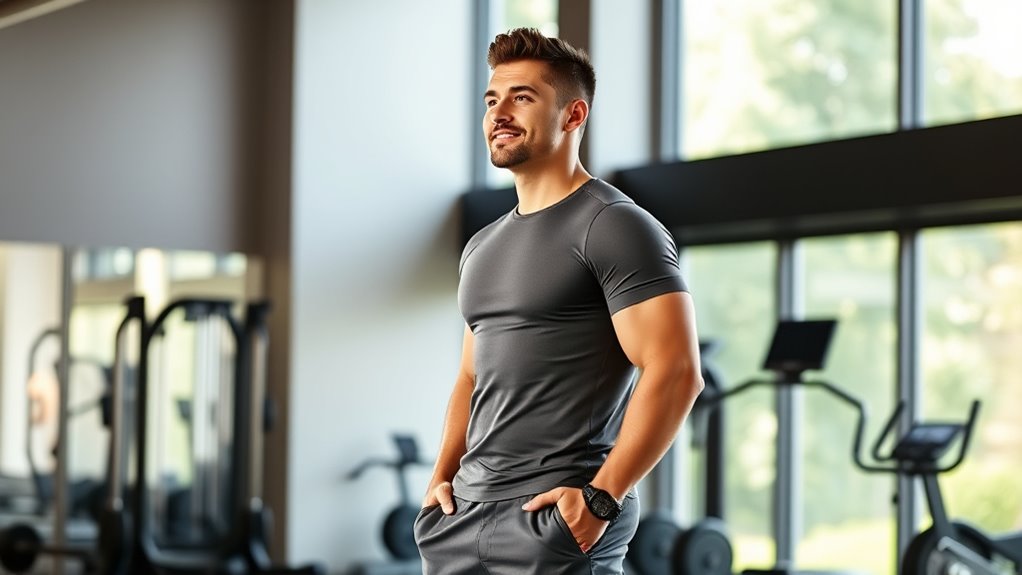

To instantly boost your male confidence, adopt power poses like standing tall with open shoulders for just two minutes, which can raise testosterone and lower stress hormones. Practice focused breathing to calm your nerves, and use confident body language by maintaining good posture and eye contact. Smiling genuinely helps build rapport and elevate your mood. Incorporating self-affirmation and visualization can reinforce your mindset. Keep exploring these science-backed strategies for a true confidence boost.
Key Takeaways
- Adopt a power pose for two minutes to boost testosterone and reduce cortisol, enhancing confidence instantly.
- Practice focused breathing and mindfulness to activate relaxation responses and manage stress effectively.
- Maintain good posture and open body language to project confidence and positively influence self-perception.
- Use steady eye contact and genuine smiling to build rapport, trust, and project warmth and confidence.
- Engage in self-affirmation and visualization techniques to reinforce self-esteem and mentally prepare for success.
The Power of Power Poses

While confidence might seem like an innate trait, research shows that adopting certain body positions can actually boost your self-assurance. One effective method is practicing a power pose, which involves standing tall with your chest open and shoulders back. Holding a power pose for just two minutes can lead to a noticeable confidence boost, making you feel more assertive and in control. These poses send positive signals to your brain, increasing testosterone and decreasing cortisol levels—hormones linked to confidence and stress. By simply adopting a dominant stance, you can influence how you perceive yourself and how others perceive you. Incorporating power poses into your routine is a straightforward yet powerful way to enhance your confidence quickly and effectively. Vibrational energy plays a role in how these poses can influence your overall sense of self.
Breathing Techniques to Reduce Anxiety

Breathing techniques are a simple yet powerful way to reduce anxiety and gain control over stressful situations. By focusing on your breath, you can activate your body’s relaxation response. Practices like mindfulness meditation help you stay present, slowing your breath and calming your mind. Combining this with progressive muscle relaxation allows you to tense and release muscle groups, easing physical tension that often accompanies anxiety. When you breathe deeply and intentionally, you interrupt the cycle of stress hormones flooding your system. Incorporating breath awareness into your routine can enhance the effectiveness of these techniques. Incorporate these techniques into your routine to quickly lower anxiety levels, boost confidence, and improve your overall mental clarity. With consistent practice, you’ll find it easier to stay composed and authoritative in high-pressure moments.
The Impact of Posture and Body Language

Your posture and body language have a direct influence on how confident you appear and feel. When you’re aware of your posture, you send powerful body signals that can boost your self‑assurance instantly. Standing tall, shoulders back, and maintaining open gestures project confidence and can even improve your mindset. Conversely, slouching or avoiding eye contact sends signals of insecurity. Practicing posture awareness can help you control these signals, transforming your confidence from the inside out.
The Role of Eye Contact and Smiling

Eye contact and smiling are powerful tools that amplify the confidence conveyed through your posture. Making steady eye contact shows you’re engaged, trustworthy, and self-assured, which offers clear eye contact benefits like building rapport and reducing social anxiety. Smiling psychology reveals that genuine smiles release feel-good chemicals, instantly elevating your mood and making others view you as approachable. When you combine eye contact with a confident smile, you project warmth and confidence simultaneously, making interactions smoother and more impactful. These non-verbal cues not only influence how others perceive you but also reinforce your own sense of self-assurance. Practicing intentional eye contact and smiling regularly can quickly boost your confidence, helping you feel more in control and comfortable in social situations. Incorporating non-verbal communication strategies like these can further enhance your self-presentation and social effectiveness.
The Influence of Self-Aaffirmation and Visualization

Have you ever wondered how simply reaffirming your strengths can boost your confidence? Self-affirmation and visualization directly enhance your self-esteem and mental resilience. When you focus on positive qualities and picture success, you reinforce belief in yourself, making setbacks easier to handle. This mental practice shifts your mindset from doubt to confidence, improving overall performance. By regularly affirming your abilities and visualizing favorable outcomes, you create a mental environment conducive to growth. This routine rewires your brain, making confidence more automatic and resilient. Here’s a quick overview:
| Self-Affirmation | Visualization |
|---|---|
| Reinforces self-esteem | Builds mental resilience |
| Focuses on strengths | Fosters positive outlooks |
| Boosts confidence | Prepares you for success |
| Reduces self-doubt | Enhances motivation |
| Creates lasting change | Strengthens belief in yourself |
Additionally, incorporating attention management into your routine can further amplify these effects by ensuring full engagement during your practices.
Frequently Asked Questions
How Long Does It Take to See Confidence Improvements Using These Routines?
When you start these routines, timing expectations vary, but many notice immediate effects within minutes. Some may experience a confidence boost right away, while others might see gradual improvements over a few days. Consistency enhances results, so keep practicing daily. Typically, the most noticeable changes happen quickly, but sustained effort guarantees long-term confidence gains. Stay committed, and you’ll likely feel more assured sooner than you think.
Can These Techniques Work for Social Anxiety or Only Everyday Confidence?
Did you know that 60% of people with social anxiety benefit from therapy integration combined with confidence routines? These techniques can definitely work for social anxiety, as they help build emotional resilience and challenge negative thoughts. By consistently applying them, you’ll strengthen your mental foundation, making social interactions less intimidating. Keep in mind, combining routines with professional support accelerates progress, so don’t hesitate to seek additional help for lasting confidence.
Are There Age Limitations for Effectively Applying These Methods?
You might wonder about age restrictions for these confidence-boosting methods. The good news is, they’re designed for lifelong applicability, so you can start at any age. While younger individuals may see quicker results, adults and seniors can still benefit greatly. These techniques adapt well across different age groups, helping you boost confidence regardless of your stage in life. So, there’s no need to worry—age restrictions don’t limit your success.
How Do These Routines Interact With Underlying Self-Esteem Issues?
Think of routines as the scaffolding supporting your self-esteem foundations. If underlying self-esteem issues exist, these routines act like a boost, temporarily elevating confidence. However, true emotional resilience requires addressing core beliefs and feelings. By consistently reinforcing positive habits, you strengthen your inner structure, making confidence more stable and lasting. In this way, routines help bridge the gap between surface confidence and deep-seated self-worth.
Can These Practices Be Combined With Other Confidence-Boosting Strategies?
You can definitely combine these confidence-boosting practices with other strategies through habit stacking, making them part of your daily routine. Complementary practices like positive affirmations, visualization, or physical activity work well alongside this routine. By integrating these habits seamlessly, you reinforce your confidence constantly. Just guarantee your methods align and don’t overwhelm you—consistency is key to building lasting self-assurance through a well-rounded approach.
Conclusion
By incorporating these science-backed strategies, you can instantly boost your confidence and make a strong impression. Power poses, mindful breathing, confident body language, eye contact, and self-affirmation work together like a well-oiled machine. Remember, confidence is a skill you can build—don’t leave it to chance. Keep practicing, and you’ll find that success favors the bold. After all, fortune favors the bold, so take charge and show the world your best self.