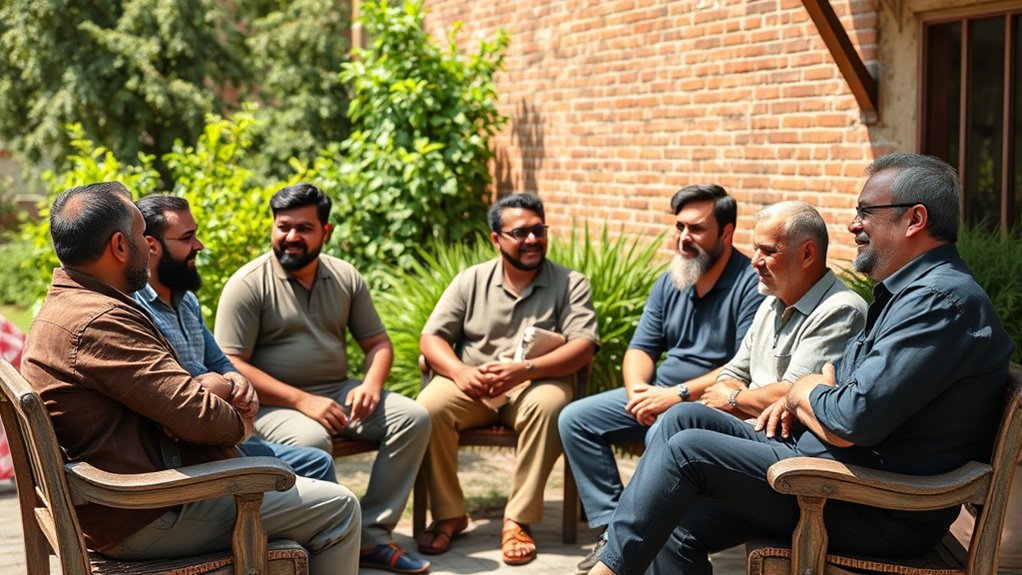

Building support networks with friends, family, and your community is key to strengthening your mental resilience and emotional well-being. By fostering genuine friendships, maintaining open communication with loved ones, and engaging in local activities or groups, you create a safe space to share feelings and gain encouragement. These connections help you handle stress and setbacks more effectively. Keep exploring how these relationships can become your greatest strength and provide lasting support in tough times.
Key Takeaways
- Cultivate genuine friendships that offer a safe space for emotional sharing and support.
- Maintain open communication with family to strengthen trust and emotional resilience.
- Engage actively in community groups or interest clubs to foster belonging and mutual support.
- Recognize building support networks as a sign of strength and proactive mental health management.
- Regularly connect with friends, family, and community to develop reciprocal bonds and emotional stability.

Have you ever wondered where men can turn when they need support? Building a strong support network is essential for maintaining mental health and developing emotional resilience. It’s easy to feel isolated, especially when societal expectations often suggest that men should handle problems on their own. But in reality, no one is meant to face life’s challenges alone. Having trusted friends, supportive family, and a sense of community can make all the difference in how you cope with stress, setbacks, or emotional struggles.
Building a support network is key for men’s mental health and emotional strength.
Start by nurturing your friendships. Genuine friends provide a safe space where you can share your feelings without fear of judgment. These relationships aren’t just about having fun; they’re about creating bonds that foster emotional openness. When you confide in friends, you not only lighten your emotional load but also strengthen your mental health. It’s important to choose friends who listen, understand, and support your growth. Regularly connecting with these individuals helps you build emotional resilience, enabling you to bounce back from difficulties more effectively. Remember, vulnerability isn’t a weakness—it’s a sign of strength that helps deepen your connections and improve your mental well-being.
Family plays a fundamental role too. Whether it’s your parents, siblings, or extended relatives, having a reliable family network provides a foundation of stability and trust. Open communication within your family can help you process emotions, gain perspective, and feel less alone in your struggles. If you’re feeling overwhelmed, reaching out to a family member for support can be a key step toward improving your mental health. Family members often know you best and can offer encouragement and comfort when you need it most. Cultivating these relationships takes effort, but the emotional resilience you develop from leaning on family can help you face future challenges with greater confidence.
Community support is another indispensable element. Engaging in local groups, sports teams, or interest-based clubs allows you to connect with others who share your values and experiences. These communities can provide a sense of belonging and purpose, which are key to mental health. Participating in community activities offers opportunities for shared experiences, emotional expression, and mutual support. By building relationships in these settings, you reinforce your emotional resilience, making it easier to navigate life’s ups and downs. Additionally, recognizing the importance of family dynamics and understanding cultural heritage can deepen these connections and foster greater support. Remember, support networks are about more than just receiving help—they’re about creating reciprocal bonds that uplift everyone involved.
In the end, cultivating a support network isn’t a sign of weakness; it’s a proactive step toward a healthier mind and a more resilient emotional outlook. When you open yourself to friends, family, and community, you give yourself the tools to handle life’s inevitable challenges more effectively.

The Widower's Journey: Helping Men Rebuild After Their Loss
As an affiliate, we earn on qualifying purchases.
As an affiliate, we earn on qualifying purchases.
Frequently Asked Questions
How Can Men Effectively Ask for Help From Their Support Networks?
To effectively ask for help, you should practice vulnerability expression, openly sharing your feelings without fear of judgment. Overcome communication barriers by being clear and direct, explaining what you need and why. Remember, your support network is there for you, so don’t hesitate to reach out honestly. Taking those steps builds trust, making it easier to seek help whenever you face challenges, strengthening your connections.
What Are Signs That a Man Needs to Strengthen His Support System?
If you notice emotional expression becoming difficult or social withdrawal increasing, it’s a sign you need to strengthen your support system. When you’re avoiding conversations or pulling away from friends and family, it indicates you’re not sharing your feelings or seeking help. Recognizing these signs means you should reach out more, reconnect with your community, and build stronger relationships to support your mental and emotional well-being.
How Do Cultural Differences Impact Men’s Support Networks?
Cultural differences can deeply dictate how men build bonds and bolster support networks. Cultural expectations often shape how openly men express emotions or seek help, influencing their support systems. Support diversity is essential, as it broadens perspectives and encourages acceptance across cultures. By understanding and respecting diverse cultural cues, you can foster stronger, more inclusive support networks, helping men feel more comfortable sharing struggles and seeking connection within their unique cultural contexts.
Can Online Communities Provide the Same Support as In-Person Networks?
Online communities can provide meaningful support through virtual connections, but they often lack the depth of emotional intimacy found in in-person networks. While you can share experiences and find understanding online, face-to-face interactions tend to foster stronger bonds and trust. Nonetheless, if you actively engage and open up, online platforms can supplement your support system, helping you feel less isolated and more connected.
What Are Common Barriers Men Face in Building Support Networks?
You might find that stigma and vulnerability often hold men back from building support networks, with studies showing men are less likely to seek help. This leads to social isolation, making it harder to connect deeply with others. Fear of appearing weak or vulnerable creates barriers, preventing you from forming meaningful friendships and community ties. Overcoming these obstacles requires recognizing that vulnerability can strengthen, not weaken, your support system.

Mind Brain Emotion 52 Essential Coping Skills Cards – Self Care Exercises for Stress and Social Anxiety Relief – Resilience, Emotional Agility, Confidence Therapy Games for Teens, Adults
Build skills, reduce stress: Powerful CBT, meditation, and somatic exercises to become organized, focused, confident. Overcome anxiety, anger,…
As an affiliate, we earn on qualifying purchases.
As an affiliate, we earn on qualifying purchases.
Conclusion
Building strong support networks is essential for men’s well-being. Remember, having just one close friend can markedly lower your risk of depression and anxiety. Did you know that men with strong social connections are 50% less likely to experience mental health issues? So, reach out, nurture your relationships, and don’t hesitate to lean on your community. Building these bonds can truly transform your life and keep you resilient through life’s challenges.

Coping Skills Cards for Anxiety & Stress Relief – Mindfulness, Meditation & Self-Care Tools for Trauma, BPD, DID, PTSD | Mental Health Therapy Gift for Adults & Teens
Helps Manage Emotional Distress and Crisis: Specifically designed to alleviate panic attacks, flashbacks, trauma recollections, anxiety, stress, dissociation,…
As an affiliate, we earn on qualifying purchases.
As an affiliate, we earn on qualifying purchases.
Community Engagement Step-By-Step Action Kit 2nd Edition
As an affiliate, we earn on qualifying purchases.
As an affiliate, we earn on qualifying purchases.