
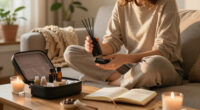
Choosing a mental health self-care kit is less about finding a box of comforting objects than deciding how much preparation you want to do. A DIY kit lets you select familiar, useful tools and build around your routines; a premade kit arrives assembled, with convenience and presentation in exchange for less control over its contents. Both can support everyday coping, but neither is a substitute for professional care during a crisis or for treatment when symptoms need it.

Turn your wind-down time into listening time
- Thousands of audiobooks, podcasts and originals
- Listen on your phone, tablet or Echo — also offline
- Cancel anytime

100 Daily Mindfulness and Meditation Cards
- ✔ Card count: 100
- ✔ Categories: 7
- ✔ Exercise themes: Breathing techniques, mindfulness basics, mindful living, loving-kindness, Stoicism, Zen, and The Idea Space

64 Positive Affirmations in a Bottle for Self-Care
- ✔ Affirmation messages: 60+ pre-written messages
- ✔ Included card: Self-care card listing 6 practices
- ✔ Daily reminder: Wallet-sized reminder on the back of the card

CHESACE Self-Care Gift Basket for Women
- ✔ Brand: CHESACE
- ✔ Included items: Plush blanket, 12 oz thermos cup, scented candle, handmade soap, bath bomb, plush socks, silk eye mask, gua sha tool, jade roller, self-care card, and gift box
- ✔ Blanket material: Microfiber polyester
The main tradeoff is personalization versus convenience. DIY kits tend to suit people who know what helps them, want to control spending, or have specific sensory or accessibility needs. Premade kits make more sense for someone who wants a simple starting point, a ready-to-give gift, or less work choosing items. The comparisons below focus on practical fit, usefulness, and value rather than treating either format as a treatment.
At a Glance
| Criteria | DIY Mental Health Self-Care Kits | Premade Mental Health Self-Care Kits | Winner |
|---|---|---|---|
| Personalization | Choose each tool, prompt, and comfort item around individual preferences and routines. | Contents are selected by the maker; some kits offer limited themes or customization. | A |
| Convenience and setup | Requires time to select, gather, and organize the items. | Ready to use on arrival, with little or no preparation. | B |
| Cost control and value | Set a budget and buy only what is useful; costs can rise if purchases are unplanned. | One upfront price is easy to see, but bundled items may not all be worthwhile. | Depends |
| Practical usefulness | Can prioritize tools the user already knows how to use. | Useful as a prompt or starting point, though some contents may go unused. | Depends |
| Sensory and accessibility fit | Can avoid unwanted scents, textures, or formats and account for access needs. | Must check descriptions carefully; bundled contents may not suit sensitivities or access needs. | A |
| Giftability and presentation | Presentation depends on how much time goes into assembling and packaging it. | Usually arrives neatly packaged and can be convenient as a gift. | B |
| Maintenance and replenishment | Replace only used or expired items and update the kit as needs change. | May require replacing specific bundled items or buying another kit if contents do not fit. | A |
100 Daily Mindfulness and Meditation Cards
When we want a kit to help turn self-care into something we can actually do, this deck makes the clearest case. Its 100 exercises across seven categories offer more direction than a general reminder to slow down: we can choose breathing, mindful living, loving-kindness, Stoicism, Zen, or another topic depending on the moment. That range is why it earns our overall spot. Compared with the affirmation bottle, it asks us to participate in a practice rather than simply read encouragement.The variety also creates a real tradeoff. New users may appreciate having approachable exercises, but a large menu can make choosing a card feel like another task. Experienced meditators may find the beginner-oriented organization too introductory, while anyone who wants a polished, tactile keepsake has limited information about card size and materials. The included bag suggests storage and carrying are considered, but it does not resolve those unknowns. For a flexible routine that can happen by day or night, this is the strongest all-around fit; for fast reassurance or physical relaxation, the other kits are more direct.
Pros:
- 100 exercises provide a substantial set of prompts.
- Seven categories cover several styles of mindfulness and reflection.
- Designed for daytime or nighttime routines.
- Graphic-rich cards and an included bag support display or carrying.
Cons:
- Card dimensions and materials are not specified.
- Beginner-oriented organization may feel basic to experienced practitioners.
- Choosing from a large deck may be less immediate than using a single affirmation.
Best for: People who want guided mindfulness prompts with enough variety to adapt a short practice to different moods or times of day.
Not ideal for: Experienced meditators seeking advanced instruction, or buyers who need specified card dimensions and materials before choosing.
Bottom line: For a repeatable, adaptable self-care practice, this deck offers the strongest balance of guidance and variety in the lineup.
“For a repeatable, adaptable self-care practice, this deck offers the strongest balance of guidance and variety in the lineup.”
64 Positive Affirmations in a Bottle for Self-Care
This kit is built for the days when we want a small nudge, not a full guided session. It includes more than 60 pre-written affirmations, a self-care card with six practices, and a wallet-sized reminder on the card’s back. That makes it the most compact-feeling concept in this group: we can read a message, take one reminder with us, and move on. Compared with the mindfulness deck, it asks for less selection and less time, which may help a simple check-in feel manageable.Its convenience comes with less depth. The messages are pre-written rather than customizable, so they may not match every person’s language or circumstances. The six suggested practices add some direction, but the listing does not describe them in detail, and this kit does not offer the breadth of exercises found in the deck. Unlike the CHESACE basket, it also does not create a sensory relaxation setup with bath or comfort items. We’d choose it for brief encouragement and a portable reminder, while skipping it if we want structured meditation, personal prompts, or a more substantial physical ritual.
Pros:
- More than 60 pre-written messages provide a ready prompt.
- Self-care card lists six practices.
- Wallet-sized daily reminder is easy to carry.
- Its simple format may suit brief check-ins better than a multi-step routine.
Cons:
- Messages are not customizable.
- The details of the six listed practices are not provided.
- Offers less guided practice variety than the mindfulness deck.
Best for: Someone who wants brief, ready-made encouragement and a reminder they can carry without setting aside much time.
Not ideal for: Buyers who prefer to write their own affirmations, want detailed guided exercises, or expect a kit of physical relaxation items.
Bottom line: Choose this bottle for a low-effort daily nudge when carrying a brief reminder matters more than building a deeper practice.
“Choose this bottle for a low-effort daily nudge when carrying a brief reminder matters more than building a deeper practice.”
CHESACE Self-Care Gift Basket for Women
Where the other picks ask us to read or practice, this set makes self-care more physical: a plush blanket, socks, eye mask, candle, bath products, and jade skincare tools create the ingredients for an at-home wind-down. It is the most gift-ready choice, arriving in a box with 11 listed items, and its insulated cup adds a practical element alongside the pampering pieces. Compared with the affirmation bottle, it offers a fuller environment for relaxation; compared with the mindfulness deck, it provides less direct guidance for reflection or meditation.That distinction matters when we’re choosing through a mental health self-care lens. Comfort can help make a restorative pause inviting, but the set is primarily about pampering, not a structured mental wellness routine. Most of its use assumes we are at home and have time to bathe, rest, or do skincare. The listing also leaves the blanket dimensions unspecified, and the cup is 12 oz, which may feel small to some buyers. We’d select it for someone who values tactile comfort and a ready-to-give presentation; for portable encouragement or repeatable mindfulness exercises, the other two are more focused.
Pros:
- Combines bath, skincare, and comfort items in one set.
- Blanket, socks, and eye mask support a cozy wind-down.
- Cup uses double-wall vacuum insulation for hot or cold drinks.
- Presented in a ready-to-gift box.
Cons:
- The set emphasizes at-home pampering over guided self-care practice.
- Blanket dimensions are not specified.
- The 12 oz cup capacity may be smaller than some buyers prefer.
Best for: A gift recipient who enjoys home-based relaxation, bath rituals, skincare accessories, and soft comfort items.
Not ideal for: Someone seeking portable mental health prompts, structured meditation guidance, or a compact kit for use away from home.
Bottom line: This is the most complete comfort gift in the lineup, provided the recipient wants pampering more than guided reflection.
“This is the most complete comfort gift in the lineup, provided the recipient wants pampering more than guided reflection.”
As an Amazon Associate we earn from qualifying purchases.
Key Differences
The clearest difference is who makes the choices. A DIY kit puts the user’s preferences, budget, and existing coping habits first. That can make it more relevant and reduce waste, especially for people who are sensitive to certain materials or already know which prompts and activities they will use. Its cost is planning: selecting a manageable set of items takes time, and buying too much can erase the savings.
A premade kit shifts that work to the maker. It is faster to obtain and often arrives looking gift-ready, which is useful when convenience is the priority or the buyer wants a structured starting point. The tradeoff is less control: a bundle may include objects, scents, or exercises that do not fit the recipient. Read the contents and instructions before buying, and treat the kit as optional support rather than a replacement for professional help.
For value, the deciding question is not simply which format has the lower price. It is whether the items will be used. DIY is usually the stronger choice for people who can identify a few useful tools and want to stay within a set budget. Paying more for a premade kit can make sense when its contents fit the recipient and the ready-made format saves effort that would otherwise prevent them from starting.
Detailed Comparison
Personalization (DIY Mental Health Self-Care Kits wins — major)
DIY wins by a major margin when a person already knows which activities or objects feel supportive. Someone might include a grounding exercise they have practiced, a preferred notebook, and a familiar sensory item. A premade kit can offer a coherent theme, but the buyer generally accepts the maker’s choices. This matters most when generic suggestions have not worked or when the kit needs to reflect a specific routine.
Convenience and setup (Premade Mental Health Self-Care Kits wins — major)
Premade wins by a major margin on immediate convenience: it is assembled and ready without a shopping list or planning session. DIY takes time to choose items and gather them, although that work can be spread over time or done from things already at home. Choose premade when getting started quickly matters more than tailoring every component.
Cost control and value (moderate difference)
This is a close, use-dependent comparison. DIY offers better cost control because you can set a limit and avoid paying for items you do not want. A premade kit has a clear upfront price and may be worthwhile if its contents are all useful and the convenience saves meaningful time. Compare the included items with what you would actually buy or use; a lower price is poor value if most of the bundle stays untouched.
Practical usefulness (moderate difference)
Neither format wins for everyone. DIY has a moderate advantage for someone who can name specific helpful tools, since the kit can reinforce established habits. Premade kits can help a person who feels stuck choosing a first step, but their prompts and objects are only useful if the recipient understands how to use them. A kit works best as a reminder or collection of coping resources, not as a promise of relief.
Sensory and accessibility fit (DIY Mental Health Self-Care Kits wins — moderate)
DIY wins by a moderate margin because the person can avoid fragrances, uncomfortable textures, small print, or objects that are difficult to handle. Premade kits vary, so buyers need to inspect each product description and ask about unknown contents. For strong sensory preferences, allergies, mobility needs, or visual access requirements, selecting items individually reduces the chance of paying for something unsuitable.
Giftability and presentation (Premade Mental Health Self-Care Kits wins — moderate)
Premade wins by a moderate margin for an easy, polished gift: packaging is usually arranged already, and the buyer need not guess how to assemble it. A DIY kit can feel more personal when the giver knows the recipient’s preferences, but it asks for more effort and judgment. For a recipient whose needs are not well known, avoid assuming which self-care items will feel supportive.
Maintenance and replenishment (DIY Mental Health Self-Care Kits wins — minor)
DIY has a minor advantage because it is straightforward to replace one used item or revise the kit as routines change. A premade kit may contain components with different lifespans, and replacing a specific item can require finding it separately. In practice, either format needs occasional review: remove anything expired or no longer welcome, and keep the contents easy to find.
DIY Mental Health Self-Care Kits: Pros and Cons
Pros:
- Personalized around known preferences and coping routines.
- Lets you set a budget and use items already on hand.
- Easier to avoid unwanted scents, textures, or formats.
- Simple to update one item at a time.
Cons:
- Takes time to plan, gather, and organize.
- Can become costly if too many items are added.
- May feel difficult to assemble when energy or motivation is low.
Premade Mental Health Self-Care Kits: Pros and Cons
Pros:
- Ready to use with little setup.
- Can offer a useful starting point when choosing tools feels difficult.
- Often packaged attractively and convenient to give.
- Upfront price is easy to identify.
Cons:
- Contents may not match the user’s preferences or needs.
- Bundled items may go unused, reducing value.
- Less control over sensory details and accessibility.
Who Should Choose What
Choose DIY Mental Health Self-Care Kits if:
- You already know which coping tools or comforts you use.
- You want to keep spending within a specific budget.
- You have sensory, allergy, or accessibility preferences that require careful selection.
- You prefer to build gradually from items you already own.
Choose Premade Mental Health Self-Care Kits if:
- You want a ready-made starting point with minimal planning.
- You are buying a gift and the recipient’s preferences are reasonably clear.
- The kit’s listed contents all seem useful and its convenience justifies the bundled price.
- You would be less likely to assemble and use a kit if you had to gather it yourself.
Skip both if: Neither format is a substitute for care when symptoms are severe, persistent, or make daily life difficult. Seek support from a qualified mental health professional; use emergency or crisis services if there is immediate danger.
Value for Money
DIY is usually the better value when you can choose a few items you already trust, set a spending limit, and reuse things at home. You pay for what you intend to use, though the time required to assemble the kit has value too. A premade kit is worth paying more for when its contents are a good match and having everything ready makes it more likely you will use it. Pay extra for a bundle because it fits your needs or saves meaningful effort, not just because it looks complete.
Final Verdict
Choose a DIY mental health self-care kit if you know what helps, care about sensory or access details, or want firm control over spending. Choose a premade kit if convenience is the deciding factor, you want a low-effort starting point, or you need a presentable gift with contents that suit the recipient. For most people who already have a few reliable coping habits, DIY offers the better fit and value. For someone who would otherwise never assemble a kit, a well-matched premade option earns its higher price through convenience. If neither provides the support you need, reach out to a mental health professional rather than expecting a kit to do the work of care.
Frequently Asked Questions
Are mental health self-care kits effective?
They can make familiar coping activities easier to remember and access, but there is no guarantee a particular kit will improve mental health. Use items that fit your needs and seek professional support when symptoms persist or disrupt daily life.
Is a DIY kit cheaper than a premade one?
Often, because you can use things you own and buy only selected items. The total depends on what you choose and the time you spend assembling it. A premade kit can be fair value when you will use its contents and the ready-to-go format matters to you.
What should go in a self-care kit?
Choose a small set of things you already find useful, such as a notebook, a practiced grounding prompt, or a comforting sensory item. The best contents depend on the person; avoid adding products that may trigger sensitivities or create pressure to follow a particular routine.
Can I give a mental health kit as a gift?
Yes, especially if you know what the recipient likes and the kit is offered without implying that it will fix their mental health. A premade kit is easier to present; a personal DIY kit can be thoughtful when its contents reflect the recipient’s stated preferences.