
TL;DR

Turn your wind-down time into listening time
- Thousands of audiobooks, podcasts and originals
- Listen on your phone, tablet or Echo — also offline
- Cancel anytime
Researchers at the University of Helsinki identified five patterns of brain connectivity among 263 people diagnosed with major depressive disorder. The profiles were associated with different symptom combinations, but the findings do not establish five separate diagnoses or a clinical test.
Researchers at the University of Helsinki identified five patterns of brain connectivity among 263 people diagnosed with major depressive disorder, finding that different profiles were associated with different symptom combinations. The study, reported by ScienceDaily, suggests that depression may involve varied patterns of brain activity, but it does not establish five new diagnoses or a tool for choosing treatment.
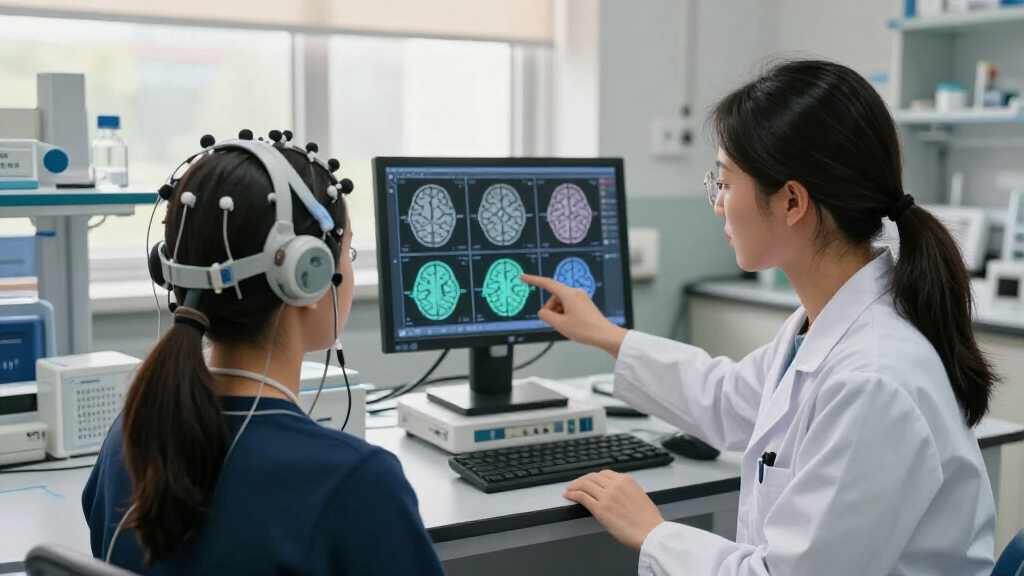
The researchers compared brain activity from 263 participants with major depressive disorder and 75 healthy participants. They used magnetoencephalography, or MEG, which detects faint magnetic fields generated by electrical activity in the brain. The analysis grouped participants according to functional connectivity: how closely activity in different brain regions was coordinated, including the frequencies at which signals synchronized.
The five groups differed in both the strength and distribution of those connections. One profile combined relatively strong connectivity with more severe depression, anxiety, rumination and difficulty functioning. Another, marked by weaker connectivity, was associated with milder symptoms. A group with widespread weaker connections showed more prominent post-traumatic stress symptoms, while a mixed-connectivity profile was linked with more severe depression, substance-use problems and lower well-being.
The fifth group had the strongest connectivity of the five and more prominent substance-use problems, with trauma-related symptoms less pronounced than in the other groups. These are associations reported by the study, not evidence that a connectivity pattern causes a symptom. Stronger connectivity also does not automatically mean better brain function, the report cautions.
Why Depression Profiles Matter
The findings offer one possible explanation for why brain-imaging studies of depression have not always produced the same results. If people with the same diagnosis have different connectivity patterns, studies that include different mixes of participants may detect different signals. The Helsinki team’s results support the idea that major depression may not have one consistent brain-activity signature.
That possibility matters for research because separating participants by biological patterns and symptoms could help researchers frame more precise studies. It may also inform future work on whether particular profiles relate to treatment response. But the source report does not show that these profiles can currently guide care, predict an individual’s outcome or improve treatment. The findings are a research result, not a change to clinical diagnosis or advice.
light therapy lamps for seasonal depression
As an affiliate, we earn on qualifying purchases.
As an affiliate, we earn on qualifying purchases.
How Researchers Mapped Connectivity
The study focused on functional connectivity, a measure of how coordinated activity is between brain regions. It is not a direct measure of whether those regions are working well, and the same overall diagnosis can include different symptom experiences. The report describes differences in which regions were involved as well as in connection strength and synchronized frequencies.
The team used MEG recordings to follow electrical brain activity at millisecond precision, according to ScienceDaily. The report contrasts this timing with methods that track slower changes related to brain activity. It says the researchers classified participants using these recordings, but the supplied account does not provide the study’s publication details, the exact analysis procedures or the thresholds used to assign people to groups.
“What was particularly interesting was the contrasting patterns of brain activity found under the umbrella of the same depression diagnoses. In some individuals, the functional connectivity between brain regions was stronger than usual, while in others it was weaker.”
— Satu Palva, director of the Neuroscience Center at the University of Helsinki
magnetoencephalography (MEG) brain scan device
As an affiliate, we earn on qualifying purchases.
As an affiliate, we earn on qualifying purchases.
Limits of the Five Profiles
The report does not establish whether the five profiles will appear in other groups of people with depression or remain stable over time. It also does not say whether the patterns can predict symptoms, treatment response or recovery. The association between a profile and symptoms such as substance use or trauma does not show that one causes the other.
Details needed to judge how widely the findings apply are not included in the supplied account, including participant demographics, the study’s full methods and whether the grouping was independently replicated. It is also unclear whether the categories can be identified reliably in an individual clinical setting. For now, the results should be understood as research classifications, not confirmed subtypes for diagnosis.
depression symptom tracking journal
As an affiliate, we earn on qualifying purchases.
As an affiliate, we earn on qualifying purchases.
What Future Research Must Test
The next step is to see whether other studies can reproduce the five patterns in independent participant groups and determine how consistent they are over time. Researchers would also need to test whether the profiles are meaningfully linked to clinical outcomes, including differences in symptoms or response to treatment.
The source report does not announce a follow-up study, timeline or planned clinical application. Until further evidence is available, the findings add to research on biological variation in depression but do not change how an individual diagnosis or treatment decision should be made.
As an affiliate, we earn on qualifying purchases.
Key Questions
What did the researchers identify?
They identified five functional-connectivity profiles among 263 people with major depressive disorder, based on how activity across brain regions was coordinated.
Does this mean there are five new types of depression?
No. The study grouped participants by brain-activity patterns and associated symptoms. The report does not establish five separate clinical diagnoses.
What is MEG?
Magnetoencephalography detects faint magnetic fields produced by electrical activity in the brain. The study used it to record brain activity with millisecond precision.
Can the findings guide treatment now?
The report does not show that the profiles can select treatment or predict an individual’s response. They remain research findings, and the source does not describe a clinical test.
What remains to be confirmed?
Researchers still need to test whether the profiles can be replicated in other groups, remain stable over time and relate reliably to clinical outcomes.
Source: rss
Columbus Day / Indigenous Peoples' Day Picks
long weekend sales
As an affiliate, we earn on qualifying purchases.