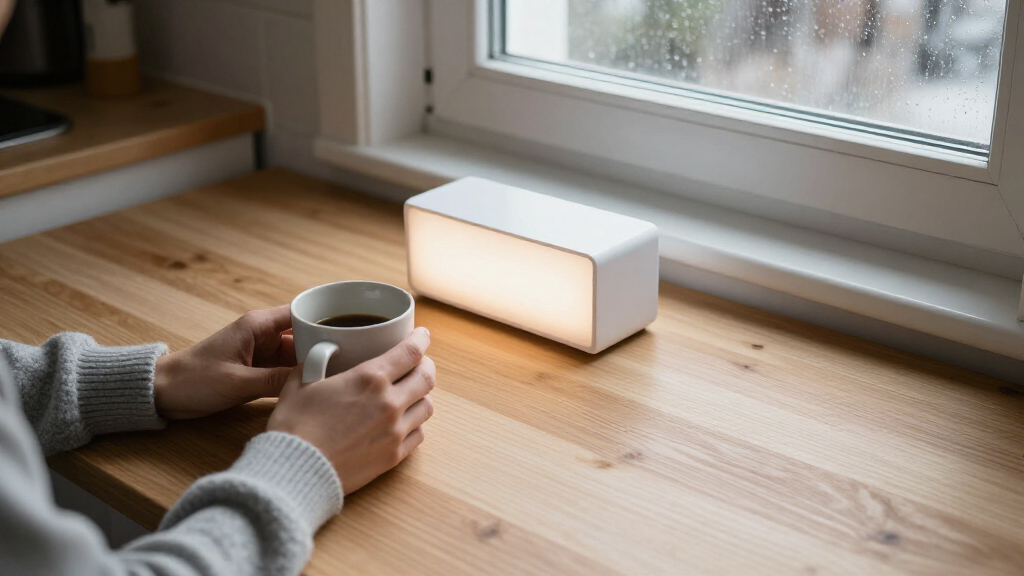

Therapy light boxes for winter blues work by delivering bright, UV-free light that helps regulate your body clock during the darker months, and the right one depends mostly on how and where you’ll use it. Carex Day-Light Classic Plus earns my best overall pick because its large clinical-style panel, adjustable height, and proven 10,000 lux output make it the closest thing to what light therapy researchers actually use. Luminette 3 wearable glasses stand out for anyone who can’t sit still for a 30-minute session, while VOLISUN’s floor lamp doubles as real living-room lighting rather than a gadget you hide after use. The main tradeoffs in this category come down to panel size versus portability, fixed versus adjustable angles, and whether extra features like alarms and remotes genuinely help or just add cost. Keep reading for the full breakdown of all 15 models and who each one suits best.

Turn your wind-down time into listening time
- Thousands of audiobooks, podcasts and originals
- Listen on your phone, tablet or Echo — also offline
- Cancel anytime
Key Takeaways
- The Carex Day-Light Classic Plus and DayBright solid-wood lamp outperformed the rest on light surface area — a bigger panel means you can shift your gaze, read, or eat breakfast without losing the therapeutic benefit.
- Three budget lamps in this lineup (both Doraubia models and the Wobrikosee) prove that 10,000 lux output alone doesn’t guarantee good results; filter quality, stand stability, and angle adjustment separated them from the leaders.
- Wearable glasses (Luminette 3) solved the biggest compliance problem in light therapy — sitting still — making them the strongest choice for commuters and parents, despite the highest cost per session in the roundup.
- Convergence lamps like the TheraLite Aura Qi and VOLISUN floor lamp succeed when they replace furniture you already own, but they backfire if light therapy is the only job you need done.
- Blue-light-only options like the SMY lamp work at lower intensity but split experts on comfort and efficacy, which is why they rank lower than full-spectrum-style white light boxes for winter blues.
| Luminette 3 Wearable Light Therapy Glasses |  | Best Hands-Free Pick | Light intensities: 500, 1000, and 1500 lux | Weight: 1.86 ounces | Profile: 1.2 inches | VIEW LATEST PRICE | See Our Full Breakdown |
| TheraLite Aura Qi UV-Free Light Therapy Lamp with Alarm Clock and Phone Charger |  | Best Multitasker | Light output: 10,000 lux | Light source: 168 LED lights | Light settings: 4 | VIEW LATEST PRICE | See Our Full Breakdown |
| SUXIO Light Therapy Lamp, 10,000 Lux |  | Best Value Pick | Brightness modes: 4,000, 7,000, and 10,000 lux | Timer settings: 30, 60, and 90 minutes | LEDs: 100 flicker-free | VIEW LATEST PRICE | See Our Full Breakdown |
| Doraubia 10,000 Lux Light Therapy Moon Lamp with Remote |  | Best for Bedside Ambience | Brightness: 10,000 lux | Light type: UV-free, full-spectrum | Color temperatures: 3 options | VIEW LATEST PRICE | See Our Full Breakdown |
| Theralite Aura Bright 10,000 Lux Light Therapy Lamp |  | Best for Beginners | Brightness: 10,000 lux | Light source: 168 LEDs | Light settings: 4 | VIEW LATEST PRICE | See Our Full Breakdown |
| Carex Day-Light Classic Plus LED Light Therapy Lamp |  | Best Overall | Light output: 10,000 lux at 12 inches | Light type: LED bright white light | Light settings: 2 | VIEW LATEST PRICE | See Our Full Breakdown |
| Circadian Optics Lumine 10,000 Lux Light Therapy Lamp |  | Best Compact Design | Brightness: 10,000 lux | Color temperature: 5500K | Light: Full-spectrum, UV-free | VIEW LATEST PRICE | See Our Full Breakdown |
| SUXIO Light Therapy Lamp with Remote |  | Best for Hands-Free Sessions | Maximum illuminance: 12,000 lux | UV-free: Yes | Brightness levels: 4 | VIEW LATEST PRICE | See Our Full Breakdown |
| Doraubia Light Therapy Lamp with Remote Control |  | Best Dual-Purpose Pick | Brightness: Up to 10,000 lux | Color temperatures: 3 adjustable levels | Brightness levels: 4 | VIEW LATEST PRICE | See Our Full Breakdown |
| Homedics UV-Free Light Therapy Lamp, 10,000 Lux | 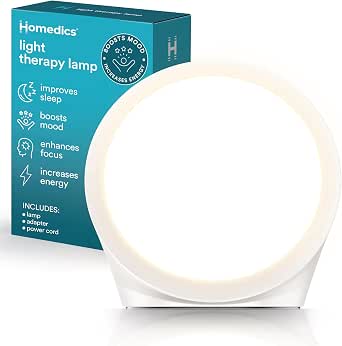 | Best for Frequent Travelers | Illuminance: 10,000 lux | Light source: Full-spectrum white LEDs | UV-free: Yes | VIEW LATEST PRICE | See Our Full Breakdown |
| SUXIO Rechargeable Light Therapy Lamp, 10,000 Lux |  | Best Cordless Pick | Brightness levels: 4,000, 7,000, and 10,000 lux | Battery life: 3–8.5 hours | Charging: 5V/2A; approximately 4 hours | VIEW LATEST PRICE | See Our Full Breakdown |
| DayBright Full-Size Light Therapy Lamp, 10,000 Lux, UV-Free, Adjustable, Solid Wood |  | Best Statement Design | Brightness: 5,000 to over 10,000 lux | Light type: Full-spectrum, UV-free LED | Size: Full-size panel | VIEW LATEST PRICE | See Our Full Breakdown |
| VOLISUN 10,000 Lux Light Therapy Floor Lamp with Magnetic Remote and Foot Switch |  | Best Floor Lamp Format | Illuminance: Up to 10,000 lux at 8–12 inches | Brightness: 1,500 lumens, 5 levels (20–100%) | Color temperatures: 2700K, 4000K, 6000K | VIEW LATEST PRICE | See Our Full Breakdown |
| SMY Lighting Blue Light Therapy Lamp |  | Best Gentle-Entry Option | Light source: UV-free blue LED | Brightness levels: 50% and 100% | Timer settings: 10, 20, and 30 minutes | VIEW LATEST PRICE | See Our Full Breakdown |
| Wobrikosee UV-Free 10,000 Lux Light Therapy Lamp |  | Best Slim Traveler | Light intensity: 10,000 lux, UV-free | Brightness: Adjustable from 25% to 100% | Lighting modes: 2 | VIEW LATEST PRICE | See Our Full Breakdown |
More Details on Our Top Picks
Luminette 3 Wearable Light Therapy Glasses
Most light boxes anchor you to a desk for 20–30 minutes; the Luminette 3 flips that model entirely by putting the light on your face. At 1.86 ounces, these glasses deliver blue-enriched white light at 500, 1,000, or 1,500 lux while you make coffee, commute, or answer email — which matters because consistency is the single biggest predictor of whether light therapy actually lifts winter mood. Compared with the TheraLite Aura Qi, you trade raw 10,000-lux output for freedom of movement, and the lower lux is offset by the light sitting millimeters from your eyes. The tradeoffs are real: a USB-C charge only covers 5–10 sessions, and it’s useless as ambient or task lighting once winter ends, unlike the dual-purpose TheraLite lamps.
Pros:- Fully portable therapy during normal daily activities
- Three intensity levels to ease into treatment
- Featherweight design that fits over eyeglasses or contacts
- IEC 62471 photobiological safety certification
Cons:- Battery limits you to 5–10 sessions between charges
- No secondary use as room or task lighting
Best for: Busy people who can’t sit still for a 30-minute morning light session and travelers who need therapy on the road
Not ideal for: Anyone wanting a single device that doubles as a desk or task lamp — this is a dedicated therapy tool only
- Light intensities:500, 1000, and 1500 lux
- Weight:1.86 ounces
- Profile:1.2 inches
- Charging:USB-C
- Sessions per charge:5–10
- Compatibility:Wearable with eyeglasses or contact lenses
- Safety certification:IEC 62471 photobiological safety
Our verdict“If sitting in front of a box every morning is the reason you’d quit light therapy, this wearable removes that excuse entirely.”
TheraLite Aura Qi UV-Free Light Therapy Lamp with Alarm Clock and Phone Charger
The TheraLite Aura Qi earns its spot by refusing to be just a therapy device. Alongside a clinical-grade 10,000 lux of glare-free, UV-free white light from 168 LEDs, it packs an alarm clock and a phone-charging base — so the lamp that wakes you with bright light also tops up your battery overnight. Where the SUXIO 10,000 Lux keeps things barebones (and skips the USB adapter), the Aura Qi goes the opposite direction, with height and angle adjustment that lets it pull double duty as task lighting on a desk. The catch is that TheraLite doesn’t publish dimensions, weight, or session timing details, so buyers with tight desks or specific morning routines are shopping partially blind.
Pros:- Full 10,000 lux clinical-strength output with four settings
- Height and angle adjust for therapy or task lighting
- Integrated alarm clock and phone charging add daily utility
- Glare-free, UV-free white light from 168 LEDs
Cons:- No published dimensions or weight make placement planning a guess
- Light-setting session durations aren’t specified
Best for: Bedside-table owners who want a dawn-style wake-up light, phone charger, and therapy lamp in one footprint
Not ideal for: Minimalists who just want a no-frills 10,000-lux box — the extras add cost and bulk without improving therapy itself
- Light output:10,000 lux
- Light source:168 LED lights
- Light settings:4
- Adjustability:Height and angle adjustable
- UV-free:Yes
- Additional features:Alarm clock, phone charger, USB port
- Color:White
Our verdict“The pick that justifies its desk space every hour of the day, not just during your 20-minute morning session.”
SUXIO Light Therapy Lamp, 10,000 Lux
For a straightforward, budget-conscious entry into light therapy, the SUXIO 10,000 Lux covers the essentials better than pricier rivals. You get three brightness steps (4,000, 7,000, 10,000 lux), three timer settings with a memory function that recalls yesterday’s session, and 100 flicker-free LEDs at a natural 5,500K color temperature. Compared with the TheraLite Aura Bright, the SUXIO’s timers and memory function make unattended morning sessions far more practical — you press one button and walk away. The adjustable stand and slim body travel easily too, something the bulkier Carex Day-Light Classic Plus can’t claim. The obvious compromise: there’s no USB adapter in the box, so factor that in, and the plastic build feels more utilitarian than premium.
Pros:- Three brightness levels and 30/60/90-minute timers
- Memory function recalls your last session settings
- Slim, portable body with adjustable stand
- Flicker-free LEDs rated for roughly 50,000 hours
Cons:- USB wall adapter not included
- Utilitarian design won’t suit style-conscious spaces
Best for: First-time buyers who want full 10,000-lux capability and set-and-forget timers without paying for extras
Not ideal for: Buyers who expect everything in the box — you’ll need to supply your own USB wall adapter before the first session
- Brightness modes:4,000, 7,000, and 10,000 lux
- Timer settings:30, 60, and 90 minutes
- LEDs:100 flicker-free
- Color temperature:5,500K
- Power:USB (adapter not included, 59-inch cable)
- Stand:Adjustable
- Lamp life:Approximately 50,000 hours
- Warranty:2 years, 90-day refund period
Our verdict“The most complete therapy-per-dollar package here, provided you already own a USB adapter.”
Doraubia 10,000 Lux Light Therapy Moon Lamp with Remote
Most therapy boxes look like medical equipment; the Doraubia Moon Lamp looks like decor. Its 3D-printed full-moon face delivers UV-free, full-spectrum 10,000-lux light with three color temperatures, touch controls, a remote, and flexible 10/30/60/90-minute timers. Compared with the clinical-looking TheraLite Aura Bright, this model fits naturally on a nightstand or living-room shelf — a real advantage if visible “medical” gear would bother you daily. The four timer options actually beat the SUXIO’s three, and the memory function spares you reprogramming each morning. But buyers should temper expectations: Doraubia publishes no dimensions or power-source details, and the therapy claims come without clinical backing, so this is best treated as a lifestyle choice rather than a treatment-first tool.
Pros:- Distinctive moon design that reads as decor, not medical gear
- Remote control plus touch operation with four timer options
- Adjustable brightness across three color temperatures
- Memory function keeps your preferred setting
Cons:- No published dimensions or power-source specifications
- Light therapy claims lack clinical documentation
Best for: Buyers who want a therapy-adjacent lamp that doubles as attractive bedroom or office decor
Not ideal for: Anyone treating diagnosable seasonal low mood who needs clinically validated equipment — look to TheraLite or Carex instead
- Brightness:10,000 lux
- Light type:UV-free, full-spectrum
- Color temperatures:3 options
- Controls:Touch and remote control
- Timer settings:10, 30, 60, and 90 minutes
- Memory function:Remembers previous brightness setting
- Design:3D-printed full moon shape
Our verdict“Choose it when how the lamp looks on your shelf matters as much as the light it emits.”
Theralite Aura Bright 10,000 Lux Light Therapy Lamp
The Theralite Aura Bright is the least complicated path into light therapy in this lineup. It delivers a clinically tested, UV-free 10,000 lux from 168 glare-free LEDs across four simple settings, with an adjustable angle that works as well on a breakfast table as a desk. Unlike the feature-loaded TheraLite Aura Qi (its alarm-clock sibling), this version strips away the extras, which keeps setup to plug-in-and-switch-on — exactly what a newcomer at 6 a.m. in January wants. And unlike the Doraubia Moon Lamp, its clinical-testing claim gives first-timers more confidence they’re following an established protocol. The honest downside: it lacks timers and a memory function, so you’ll track session length yourself, and TheraLite again omits dimensions and weight.
Pros:- Clinically tested for timed light therapy sessions
- Glare-free, UV-free 10,000-lux output from 168 LEDs
- Four light settings with adjustable angle
- Doubles as an everyday desk lamp
Cons:- No timer or memory function — you manage session length manually
- Dimensions and weight not published, complicating placement
Best for: Light-therapy newcomers who want a clinically tested, fuss-free lamp for their first winter season
Not ideal for: Experienced users who want programmable timers and saved settings — the SUXIO covers that better
- Brightness:10,000 lux
- Light source:168 LEDs
- Light settings:4
- UV-free:Yes
- Adjustable angle:Yes
- Clinical testing:Tested for timed light therapy
- Color:White
Our verdict“The simplest, most protocol-friendly starting point for anyone beginning light therapy this winter.”
Carex Day-Light Classic Plus LED Light Therapy Lamp
When a buyer asks for the lamp that most closely replicates what clinicians actually use, this is where the conversation starts. The Carex Day-Light Classic Plus delivers the clinical gold standard of 10,000 lux at 12 inches, and its glare-free screen blocking 99.3% of rays addresses the eye-strain complaints that push people to abandon therapy lamps after a few weeks. Compared with the Circadian Optics Lumine, the adjustable angle and height stand gives far more flexibility for positioning during breakfast or at a desk, while the two-setting design keeps sessions simple rather than fussy. The five-year warranty also outlasts nearly everything else in this roundup, including the Homedics at one year. The tradeoff: this is a full-size unit, so desk-space-limited buyers should look elsewhere.
Pros:- Delivers the clinically studied 10,000 lux intensity at a comfortable 12-inch distance
- Glare-free screen blocks 99.3% of rays, reducing eye strain during long sessions
- Adjustable stand allows precise angling toward the face for effective sessions
- Five-year warranty signals long-term durability
Cons:- Only two light settings, fewer granular choices than remote-controlled rivals like the SUXIO
- Large footprint makes it awkward for shared workspaces or travel
Best for: Buyers who want a clinically-oriented, clinic-style lamp they can set up once and rely on for years
Not ideal for: Anyone with a cramped desk or small apartment — the full-size adjustable stand takes up real estate that compact models like the Lumine don’t
- Light output:10,000 lux at 12 inches
- Light type:LED bright white light
- Light settings:2
- Stand:Adjustable angle and height
- Ray blocking:99.3%
- Warranty:5 years
Our verdict“This is the pick for anyone who wants a no-compromise, clinic-style light box and has the desk space to use it properly.”
Circadian Optics Lumine 10,000 Lux Light Therapy Lamp
The Lumine solves the problem that sinks most light therapy routines: the lamp is actually small enough to live on a crowded desk permanently. At roughly 6.5 inches across, it occupies a fraction of the space of the Carex Day-Light Classic Plus, yet still manages a large light panel relative to its footprint and a full 10,000 lux output. The full-spectrum 5500K light and 50,000-hour LED lifespan mean this is effectively a buy-once device, and the four-year warranty backs that up. Compared with the Homedics, the Lumine trades color adjustability for a cleaner, simpler one-touch experience with three brightness levels. The fixed base is the real compromise — you’ll need to reposition yourself or the lamp rather than tilting it toward your face.
Pros:- Genuinely compact footprint that fits any desk while maintaining a large light panel
- Full-spectrum, UV-free 5500K light supports circadian rhythm alignment
- LEDs rated for 50,000 hours with a four-year replacement warranty
- Simple one-touch control with three brightness levels
Cons:- Fixed base prevents any angle or height adjustment
- No color temperature adjustment compared with the Homedics or Doraubia
Best for: Desk workers and students with limited surface space who still want full-strength 10,000 lux therapy
Not ideal for: Buyers who want to angle the light precisely toward their eyes — the fixed base offers no tilt or height adjustment, unlike the Carex or SUXIO models
- Brightness:10,000 lux
- Color temperature:5500K
- Light:Full-spectrum, UV-free
- Brightness levels:3
- LED lifespan:50,000 hours
- Dimensions:6.5 × 6.25 × 4 inches
- Base:Fixed
- Warranty:4 years
Our verdict“The Lumine makes the most sense for small-space dwellers who prioritize a compact design over positioning flexibility.”
SUXIO Light Therapy Lamp with Remote
This SUXIO model stands out for one thing it does better than most of the lineup: session management. The magnetic remote means you can start a 30-, 60-, or 90-minute session from across the room without interrupting your morning routine — a genuine quality-of-life advantage over the touch-only Circadian Optics Lumine. With up to 12,000 lux, four brightness levels, and an adjustable-angle stand, it covers the flexibility spectrum from gentle ambient light to full-intensity therapy. The tradeoff is transparency: the manufacturer doesn’t publish dimensions, which makes planning desk placement a guessing game, and the extra intensity above 10,000 lux isn’t something most protocols call for. Compared with the Homedics, you get fewer timer presets but stronger output and a remote.
Pros:- Magnetic remote allows control from a distance mid-session
- Four brightness levels plus three timer settings for structured sessions
- Up to 12,000 lux output exceeds the standard 10,000 lux benchmark
- Adjustable-angle stand supports flexible positioning
Cons:- No published dimensions, making it hard to judge desk fit before buying
- Health-benefit claims are not substantiated in the product details
- Intensity above 10,000 lux offers no documented advantage over standard lamps like the Carex
Best for: Multitaskers who want to run timed sessions while reading, eating, or working without reaching for the lamp
Not ideal for: Buyers who want verified dimensions and footprint details before purchasing — the missing specs make placement planning difficult
- Maximum illuminance:12,000 lux
- UV-free:Yes
- Brightness levels:4
- Timer settings:30, 60, and 90 minutes
- Controls:Touch control and magnetic remote
- Stand:Adjustable angle
Our verdict“This option suits buyers who value remote control and timer automation more than spec transparency.”
Doraubia Light Therapy Lamp with Remote Control
Not everyone wants a clinical white slab on their nightstand. The Doraubia takes a different approach entirely — a 3D-printed moon design that doubles as a desk lamp and calming night light, while still hitting up to 10,000 lux when you need therapy mode. The three adjustable color temperatures give it a flexibility the fixed-5500K Circadian Optics Lumine can’t match, letting you shift from bright morning light to warm evening glow. Touch and remote controls plus timer and memory functions round out a surprisingly complete feature set. But the dual identity cuts both ways: the spherical design spreads light in all directions rather than directing it at your face like the Carex Classic Plus, which can make effective 10,000-lux positioning harder to achieve. Missing dimensions and power details add uncertainty.
Pros:- Three color temperatures allow warm evening light and bright morning light from one device
- 3D moon design doubles as decor and a calming night light
- Touch and remote controls with timer and memory functions
- Four brightness levels provide flexibility across use cases
Cons:- Omnidirectional sphere design is less efficient at directing full intensity toward the eyes
- No dimensions or power source details published
- Sleep and jet lag benefit claims are unsubstantiated
Best for: Buyers who want one device that handles both light therapy and ambient bedroom lighting without looking medical
Not ideal for: Buyers focused purely on therapy efficacy — the omnidirectional moon design is harder to position for a direct 10,000-lux session than a flat panel
- Brightness:Up to 10,000 lux
- Color temperatures:3 adjustable levels
- Brightness levels:4
- Controls:Touch control and remote
- Design:3D printed moon
- Functions:Timer and memory
Our verdict“This model is better suited to buyers who value versatility and aesthetics over maximum therapy performance.”
Homedics UV-Free Light Therapy Lamp, 10,000 Lux
The Homedics earns its spot as the most portable full-featured option in this batch. Unlike the desktop-bound Carex Classic Plus, this compact unit packs into a bag easily, and it doesn’t skimp on customization — six timer settings is more than any other lamp here, including the three offered by the SUXIO with Remote. Adjustable color temperature is another differentiator the Circadian Optics Lumine lacks, letting you tune the light from crisp and energizing to softer tones. Full-spectrum UV-free white LEDs mimic daylight without the UV risk. The compromises are real, though: the one-year limited warranty is the shortest in this batch, and a smaller panel generally means sitting closer for a full-intensity session, which requires more discipline about placement.
Pros:- Compact, portable design travels easily between home, office, and trips
- Six timer settings offer the most session-length flexibility in this batch
- Adjustable color temperature for personalized light tone
- UV-free full-spectrum LEDs mimic natural daylight safely
Cons:- One-year limited warranty falls well short of the Carex and Lumine coverage
- Smaller panel likely requires closer positioning for full 10,000-lux effect
Best for: Commuters and travelers who need therapy sessions in hotel rooms, offices, or wherever the day starts
Not ideal for: Buyers seeking long-term peace of mind — the one-year limited warranty is the weakest coverage in this lineup
- Illuminance:10,000 lux
- Light source:Full-spectrum white LEDs
- UV-free:Yes
- Color temperature:Adjustable
- Timer settings:6
- Included accessories:Adapter, power cord, legal card, quick start guide
- Warranty:1-year limited
Our verdict“This pick makes the most sense for anyone whose winter mornings happen in different locations throughout the week.”
SUXIO Rechargeable Light Therapy Lamp, 10,000 Lux
Most boxes in this roundup anchor you to an outlet, but the SUXIO Rechargeable cuts the cord entirely — its built-in battery runs anywhere from 3 to 8.5 hours depending on the brightness level you choose. That freedom is the whole point: you can do a morning session on the porch, at a café, or at a desk with no free outlets. The three-step brightness range (4,000 to 10,000 lux) plus timer and memory functions make sessions easy to keep consistent, and the scheduled power-on feature doubles as a dawn-style wake cue. Compared with the Wobrikosee, it is thicker and less pocketable, but far more functional. The tradeoff: the power adapter isn’t included, so you’ll need your own USB wall plug, and heavy daily use at full brightness can drain the battery mid-week.
Pros:- True cordless operation with 3–8.5 hours of battery life
- Three brightness steps up to a full 10,000 lux
- Timer, memory, and scheduled power-on for consistent sessions
- Flicker-free LEDs and adjustable stand
Cons:- Power adapter is not included
- Battery life varies widely; full brightness drains it fastest
Best for: Commuters, travelers, and anyone whose morning routine moves around the house or office
Not ideal for: Anyone wanting a plug-and-play setup — the missing adapter is an extra purchase and hassle
- Brightness levels:4,000, 7,000, and 10,000 lux
- Battery life:3–8.5 hours
- Charging:5V/2A; approximately 4 hours
- Timer settings:30, 60, or 90 minutes
- Scheduled power-on:6, 7, or 8 hours
- Light source:100 LEDs, 5,500 K
- Warranty:1 year; 90-day refund period
Our verdict“This is the pick for people who refuse to be tied to a wall outlet during their morning light session.”
DayBright Full-Size Light Therapy Lamp, 10,000 Lux, UV-Free, Adjustable, Solid Wood
The DayBright Full-Size treats a therapy lamp as furniture rather than gadget. Its FSC-certified solid wood frame looks at home on a shelf or side table in a way no plastic box manages, and its large panel means you can sit at a comfortable distance and still get your dose. Where the SUXIO Rechargeable emphasizes portability, this model goes the opposite direction: bigger, heavier, and built to stay put. The remote adjusts both brightness and color warmth, which matters if harsh, cool light bothers you early in the morning — a warmer setting at the start of a session is gentler on sensitive eyes. The tradeoff is size and likely cost; this occupies real space and is a poor fit for a cramped desk or a nightstand. There’s also no battery option, so placement depends on outlet access.
Pros:- FSC-certified solid wood construction with genuine furniture appeal
- Adjustable brightness from 5,000 to over 10,000 lux
- Remote-controlled color warmth for gentler morning sessions
- UV-free full-spectrum LED output
Cons:- Full-size footprint takes up significant surface space
- No battery or portable option — placement is limited to outlet locations
Best for: Buyers who want a therapy lamp that blends into a living room or bedroom instead of looking clinical
Not ideal for: Small-desk users and travelers — the full-size panel demands dedicated space
- Brightness:5,000 to over 10,000 lux
- Light type:Full-spectrum, UV-free LED
- Size:Full-size panel
- Controls:Remote control
- Adjustments:Brightness and color warmth
- Material:FSC-certified solid wood
Our verdict“Choose this if you want daily light therapy without a plastic medical device sitting in your living space.”
VOLISUN 10,000 Lux Light Therapy Floor Lamp with Magnetic Remote and Foot Switch
Sometimes the right place for light therapy isn’t a desk at all — it’s the armchair where you actually drink your coffee. The VOLISUN floor lamp solves that by putting the light at eye level beside you, with a 270° rotating head that lets you angle the beam precisely instead of rearranging furniture. The CRI 97 full-spectrum output with three color temperatures is a step above most boxes here, including the DayBright, which offers warmth adjustment but not this level of color accuracy or positioning freedom. The magnetic remote and foot switch mean you never have to lean over and fumble for buttons mid-session. The catch: 10,000 lux is only achieved at 8–12 inches from the panel, so you still need to sit fairly close — this isn’t a whole-room mood solution.
Pros:- Floor-lamp format with 270° horizontal and 90° vertical head rotation
- CRI 97 full-spectrum light with three color temperatures (2700K/4000K/6000K)
- Five brightness levels plus 30/60/90-minute timer
- Magnetic remote and foot switch for effortless control
Cons:- Full 10,000 lux output requires sitting just 8–12 inches from the panel
- Large footprint with weighted base — not desk-friendly
Best for: People who do their morning session in an armchair or reading nook rather than at a desk
Not ideal for: Anyone hoping to light an entire room — the therapeutic dose only arrives at close range
- Illuminance:Up to 10,000 lux at 8–12 inches
- Brightness:1,500 lumens, 5 levels (20–100%)
- Color temperatures:2700K, 4000K, 6000K
- Color rendering:CRI 97
- Timer:30, 60, or 90 minutes
- Lamp head rotation:270° horizontal, 90° vertical
- Controls:Magnetic remote and foot switch
Our verdict“This makes the most sense for armchair-based morning routines where a desk lamp simply can’t reach eye level.”
SMY Lighting Blue Light Therapy Lamp
Not everyone tolerates a blazing 10,000-lux white panel first thing in the morning. The SMY blue light lamp takes a different approach — blue wavelength light at lower intensity, which some users find easier on the eyes when starting out. Its short timer options of 10, 20, and 30 minutes are ideal for building a habit gradually rather than committing to longer sessions right away. Compared with the Wobrikosee, it’s less powerful and less adjustable, but that simplicity is arguably the point: touch a button, sit for ten minutes, done. The tradeoff is real, though — at 5 watts it delivers far less total light than white-box options, and serious winter blues sufferers may outgrow it quickly. Dual USB/AC power at least gives it flexible placement.
Pros:- Gentle blue light that’s easier on light-sensitive eyes
- Short 10/20/30-minute timer options for building a habit gradually
- Simple touch controls with two brightness levels
- Compact tabletop design powered by USB or AC adapter
Cons:- Only 5 watts of output — far below 10,000-lux white-light panels
- Just two brightness settings limits fine-tuning
Best for: Light-therapy newcomers and sensitive users easing into a routine with short, gentle sessions
Not ideal for: Anyone with strong seasonal symptoms who needs full 10,000-lux intensity for clinical effect
- Light source:UV-free blue LED
- Brightness levels:50% and 100%
- Timer settings:10, 20, and 30 minutes
- Controls:Touch
- Power source:AC adapter or USB, 5W, 5V DC
- Mounting type:Tabletop
Our verdict“A sensible starting point for beginners, but not enough output for heavy-duty winter blues.”
Wobrikosee UV-Free 10,000 Lux Light Therapy Lamp
If the SUXIO Rechargeable is the do-everything cordless option, the Wobrikosee is its minimalist rival: an ultra-thin panel that slips into a bag more like a tablet than a therapy device. It still hits the full 10,000 lux with UV-free output, adjustable brightness from 25% to 100%, and the most granular timer range here — 15, 30, 45, or 60 minutes — so you can dial in shorter sessions than the SUXIO’s 30-minute minimum allows. The 90-degree rotating stand props it at usable angles on any flat surface. Drawbacks: the product listing gives conflicting brightness-level counts and omits dimensions and weight entirely, which makes pre-purchase planning harder than it should be. And unlike the SUXIO, it needs wall power.
Pros:- Ultra-thin design that travels like a tablet
- Full UV-free 10,000-lux output
- Fine-grained timer options from 15 to 60 minutes
- Adjustable brightness from 25% to 100% with two lighting modes
Cons:- Listing gives conflicting brightness-level details and omits dimensions and weight
- Requires outlet power — no battery option for true cordless use
Best for: Frequent travelers and tight-desk users who want full 10,000-lux therapy in the slimmest possible form
Not ideal for: Buyers who need clear specs before purchasing — dimensions and exact settings are vaguely documented
- Light intensity:10,000 lux, UV-free
- Brightness:Adjustable from 25% to 100%
- Lighting modes:2
- Timer options:15, 30, 45, or 60 minutes
- Controls:Touch
- Stand:90-degree rotating bracket
Our verdict“The slimmest way to keep a real 10,000-lux routine alive on the road, provided vague specs don’t bother you.”

How We Picked
My ranking logic starts with the factor that most affects real-world results: effective light delivery. A lamp needs to hit roughly 10,000 lux at a comfortable sitting distance (not pressed against your face), and it needs a panel large enough that you aren’t locked into one position. I weighted surface area, measured output claims, and distance-to-effective-dose heavily, because an underpowered or tiny box quietly sabotages a daily habit. I also evaluated UV filtering, flicker, and glare, since eye comfort determines whether someone actually keeps using the box past week two.
From there, I scored each product on ergonomics and adjustability (tilt, height, rotation), build quality (a wobbly stand or cheap hinge is a daily annoyance), and fit for specific routines — a wearable suits commuters, a floor lamp suits people who won’t dedicate desk space to therapy. Features like remotes, alarms, and phone charging only boosted ranking when they served the light therapy routine rather than distracting from it. Finally, I factored value: several budget models earned solid positions by doing the basics well, while a few pricier units were marked down for charging a premium without improving the core light output.
Factors to Consider When Choosing Therapy Light Boxes For Winter Blues
Before settling on a specific model, it helps to understand what actually drives results with light therapy — and where buyers most often go wrong. These are the factors I’d weigh before clicking buy.Lux Ratings Only Matter With Distance
The 10,000 lux figure on the box tells you almost nothing on its own, because lux depends entirely on how far the lamp sits from your face. A small lamp advertising 10,000 lux may only achieve that within a few inches, which defeats the purpose of reading or eating breakfast during your session. Clinical research typically uses 10,000 lux at roughly 12 to 16 inches, so check the manufacturer’s stated effective distance before buying. Larger panels hold their intensity at greater distances, which is why the full-size lamps in this roundup outperform compact ones despite identical marketing claims. A common mistake is buying the cheapest 10,000 lux box and discovering you have to hold it inches from your eyes to get the dose you need. When in doubt, favor bigger light surfaces over headline lux numbers.
Session Time and Your Real Morning Routine
Light therapy only works if you do it consistently, roughly 20 to 30 minutes each morning within an hour or two of waking. That means the best light box is the one that fits your actual routine, not the one with the best specs on paper. If you eat breakfast at a table, a panel-style lamp works well; if you’re rushing out the door with coffee in hand, wearable glasses or a lamp you can position while doing makeup will get used far more often. The dropout rate on light therapy is mostly a lifestyle mismatch, not an equipment failure. Buyers also underestimate how quickly 30 minutes feels on a workday — models with remotes, timers, or alarm-clock integration remove small friction points that compound over weeks. Match the form factor to your mornings before comparing anything else.
White Light Versus Blue Light
Most research on seasonal low mood has been conducted with bright white light at 10,000 lux, which is the standard the majority of products in this roundup follow. Blue-enriched or blue-only lamps claim results at lower intensity because the eye’s light-sensing cells are especially sensitive to blue wavelengths, and some users find them adequate. However, blue light can feel harsher, scatter more, and is less studied for this specific use, which is why I ranked the SMY blue-light model lower than white-light equivalents. If you’re trying light therapy for the first time, white light at 10,000 lux is the better-evidenced route. Blue light may suit people who found white boxes uncomfortable, but treat it as a second choice rather than a default. Also confirm any lamp you buy filters UV, which every model here claims to do.
Placement, Angle, and Eye Position
A recurring mistake is treating a light box like a lamp you stare into. Proper technique puts the light slightly above eye level and angled down toward your face, with your gaze off to the side — which is why tilt and height adjustment matter more than most buyers expect. Fixed-angle lamps force awkward desk setups or neck strain, and models with rotating heads or adjustable stands consistently earned better scores here. If your seating position varies — couch, kitchen table, office desk — prioritize a lamp with a real range of motion. Floor lamps like the VOLISUN solve this differently by bringing the light to whatever room you’re in. Also consider cord placement and whether the stand is stable on your actual furniture, since a tippy base becomes a daily irritation that kills the habit.
When Extra Features Are Worth Paying For
Remotes, dimming levels, alarms, and wireless charging pads show up across this price spectrum, and their value depends on whether they integrate with your routine or just inflate the price. A remote is genuinely useful if your lamp sits beyond arm’s reach, like a floor lamp beside a couch — less so on a desk box a foot away. Alarm-clock integration can anchor your session to waking, which supports the consistency light therapy demands. The mistake to avoid is paying a premium for gadget features while tolerating a mediocre light panel — output and surface area should never be sacrificed for accessories. Dimmable brightness does earn its keep, though, since it lets one device double as a reading or task lamp outside therapy hours. Decide which extras you’d use daily, then pay only for those.
Build Quality and Long-Term Ownership
Light boxes are daily-use devices that live on your table or desk for months at a time, so hinges, stands, and switches take real abuse. In this comparison, wood and metal housings held up better in design terms than thin plastic shells, and weighted bases prevented the wobble that cheaper units develop. LED lifespan is generally long across the category, but check whether the LEDs are replaceable — most are not, meaning the whole unit is effectively disposable when they eventually dim. Warranty length is a decent proxy for how seriously a brand stands behind its light engine. Also think about off-season storage: flat panel designs and detachable stands pack away far more easily than fixed floor lamps, which is a small point that matters if you live somewhere the box is useless half the year.
Frequently Asked Questions
How long does it take for a therapy light box to improve winter blues?
Most people who respond to light therapy notice a difference within one to two weeks of daily 20-to-30-minute morning sessions, though individual timelines vary. The key variables are consistency, timing within a couple hours of waking, and getting a genuinely effective dose of light — which loops back to panel size and distance. If you’ve used a box faithfully for three to four weeks with no change, the issue is often an underpowered setup or sessions scheduled too late in the day. It’s also worth talking to a doctor if symptoms are severe, since light therapy can be combined with other approaches. Buying a higher-quality lamp up front, like the clinical-style models at the top of this roundup, reduces the chance you quit before results appear.
Are wearable light therapy glasses as effective as a light box?
Wearable glasses like the Luminette 3 take a different technical approach — delivering light from below and the side through a visor rather than a frontal panel — and studies on this design have shown results comparable to standard boxes for many users. Their real advantage is adherence: because you can wear them while making breakfast, commuting, or working, people tend to complete far more sessions than those tethered to a desk lamp. The tradeoff is cost per output, comfort for glasses wearers, and the fact that most long-term research was done with box-style white light. If sitting still for 30 minutes is the reason you’d abandon therapy, glasses are likely the better choice despite the premium. If your mornings include a predictable sit-down block, a traditional box delivers more light surface for less money.
Can a light box for winter blues cause eye damage or mess with my sleep?
UV-filtered white light boxes used as directed are considered safe for healthy eyes, and every model in this roundup filters UV — but anyone with eye conditions or taking light-sensitizing medications should clear light therapy with an eye doctor first. Glare and flicker are the more common practical complaints, which is why I scored comfort so heavily in the rankings; a lamp that makes you squint won’t get used. On sleep: light therapy actually improves sleep when timed in the morning, because it anchors your circadian rhythm earlier. Problems arise when sessions happen too late in the day, delaying your body clock and pushing bedtime later. As a rule, finish your session by early afternoon unless you’re deliberately following a doctor-supervised schedule.
Do I need the full 10,000 lux, or will a cheaper smaller lamp work?
The 10,000 lux standard exists because it lets you complete a session in a practical 20 to 30 minutes — lower intensities can work, but the required session time stretches toward an hour or more, which most people won’t sustain. The catch is that small lamps often only reach 10,000 lux at very close range, so the effective dose at a normal reading distance may be far lower than the label implies. That’s why the budget models in this roundup ranked below the larger panels despite matching on-paper specs: surface area, not the lux sticker, determines real-world dose. If budget is the constraint, prioritize a mid-size white-light box with a tilt stand over a tiny or novelty-shaped lamp. You’ll spend a little more, but the odds the habit sticks improve dramatically.
Is it better to buy a dedicated light box or a lamp that doubles as home lighting?
Hybrid options — like the VOLISUN floor lamp or alarm-clock-integrated models — make sense when desk space is scarce or you want the device to disappear into your home. The advantage is that therapy happens in a room you already occupy, which boosts consistency. The risk is compromise on both fronts: the therapy dose may be less precisely positioned than a dedicated box, and as a room lamp these units are often less attractive or functional than normal lighting. A dedicated box wins if you have a fixed morning spot — a kitchen table or desk — because you can dial in angle, distance, and height exactly. If you’re furnishing a space anyway and want zero visible ‘medical’ objects, the hybrid route is worth it. Just don’t expect a hybrid to outperform a purpose-built panel on pure light delivery.
Conclusion
For most people dealing with winter blues, the Carex Day-Light Classic Plus is the best overall choice — its clinical-grade panel, adjustable height, and dependable output give you the setup research is actually built on. If budget leads the decision, the Theralite Aura Bright or Wobrikosee deliver the core 10,000 lux experience at a lower cost, provided you accept fixed positioning and simpler stands. On the premium end, the Luminette 3 glasses justify their price by removing the biggest failure point in light therapy — the need to sit still — while the DayBright solid-wood lamp is the premium pick for anyone who wants a beautiful, furniture-grade device left out year-round.
Beginners benefit most from forgiving, adjustable designs, which makes the Circadian Optics Lumine or Carex the safest first purchase. For specific needs: commuters and busy parents should lean wearable, small-space dwellers should look at compact rechargeable options like the SUXIO portable model, and anyone who refuses to sacrifice living-room aesthetics should choose the VOLISUN floor lamp. Whatever you pick, commit to a consistent morning routine — the differences between these 15 boxes matter far less than showing up for the session every day.
Fall Picks
fall essentials
As an affiliate, we earn on qualifying purchases.