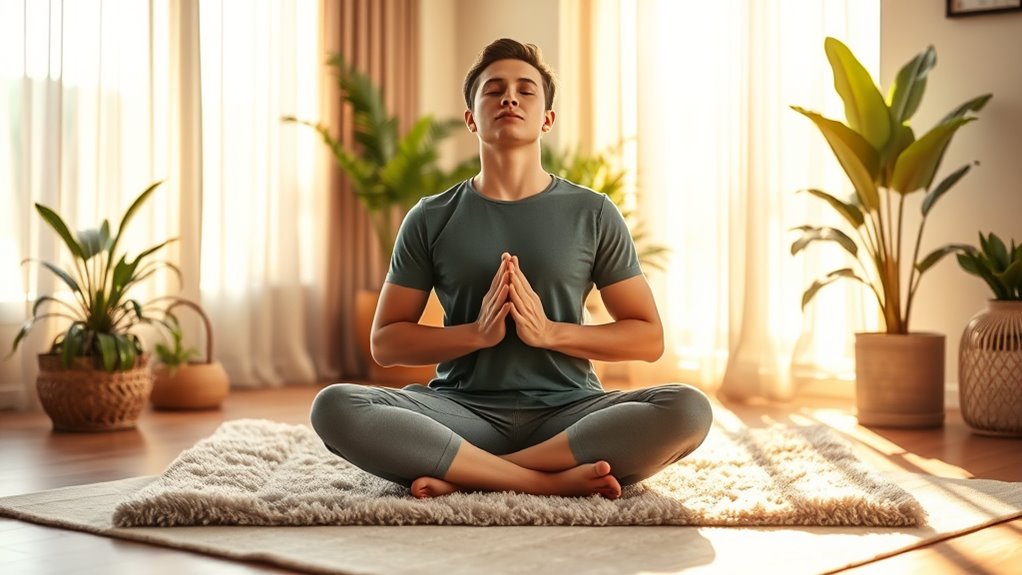

To relieve stress, practice mindful breathing and meditation by finding a peaceful spot, sitting comfortably with a straight back, and gently closing your eyes if you prefer. Focus on slow, deep breaths, filling your lungs fully on inhale and exhaling completely. Maintain awareness of your body and breath, gradually calming your mind and easing tension. Keep practicing regularly to experience lasting benefits, and you’ll discover simple ways to incorporate these techniques into your daily routine with ease.
Key Takeaways
- Practice deep, diaphragmatic breathing in a quiet space to activate relaxation and reduce stress.
- Maintain a comfortable posture with a straight back and relaxed shoulders to support alertness and ease tension.
- Focus on slow, intentional inhalations and exhalations, feeling the rise and fall of your chest or abdomen.
- Incorporate regular meditation routines to cultivate awareness, mental clarity, and long-term stress management.
- Use gentle body awareness during practice to promote physical relaxation and deepen mindfulness experience.
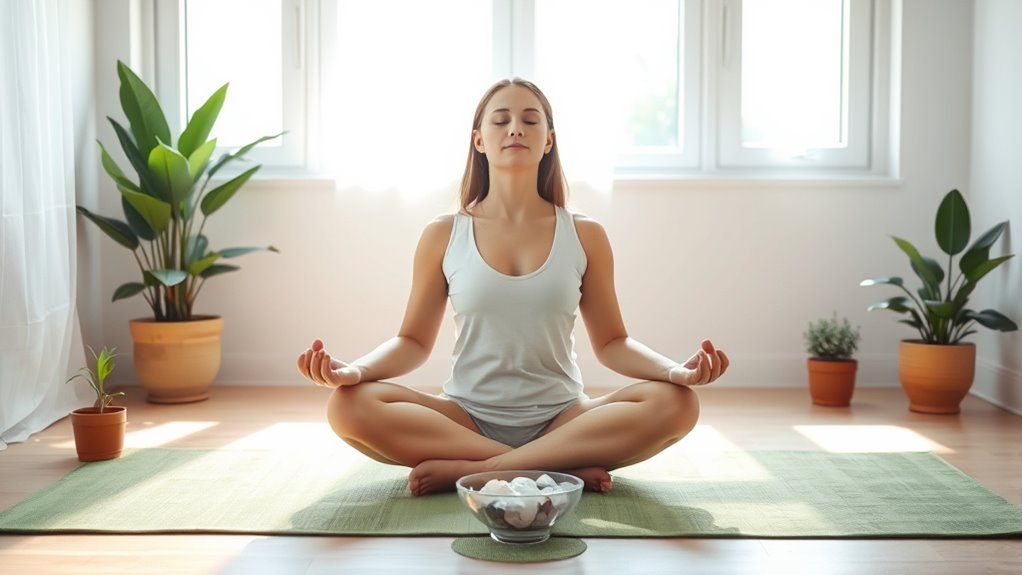
Mindful breathing and meditation techniques offer simple yet powerful ways to reduce stress and increase mental clarity. When you focus on your breath, you can create a calming effect that helps quiet your mind and ease tension in your body. Breathing exercises are central to these practices, providing a direct pathway to relaxation. By paying close attention to each inhale and exhale, you shift your focus away from worries and daily distractions. This mindfulness of your breath can be practiced anywhere, anytime, making it an accessible tool for managing stress throughout your day.
To get started with breathing exercises, find a comfortable position—whether sitting upright with your back straight or lying down. You don’t need any special equipment, just a quiet space where you won’t be disturbed. Close your eyes if you feel comfortable doing so, and begin to notice your natural breath. Then, slowly deepen your inhale through your nose, filling your lungs completely. Hold the breath for a moment, then exhale smoothly and fully. Repeat this cycle, gradually lengthening your breaths if it feels natural. As you focus solely on your breathing, you’ll notice your heart rate slowing and your muscles relaxing, creating a sense of calm that can carry into your daily life.
In addition to breathing exercises, meditation postures help enhance your practice by providing physical comfort and stability. You might sit on a cushion or chair, keeping your back straight yet relaxed. Rest your hands on your lap or knees, and gently close your eyes or keep a soft gaze. Proper posture ensures that your body remains alert but relaxed, preventing discomfort that could distract you from your meditation. Maintaining good posture also encourages better breathing, allowing your chest and diaphragm to move freely. As you settle into your meditation posture, focus on your breath, feeling the rise and fall of your chest or abdomen. This alignment fosters a deeper connection with your breathing, making it easier to stay present and grounded. Regular practice can also improve your overall comfort and support, making meditation more enjoyable and sustainable.
Consistent practice of mindful breathing and meditation postures can notably reduce stress. It’s not about achieving perfection but cultivating a gentle awareness of your body and mind. Over time, these techniques become a natural part of your routine, empowering you to navigate challenges with greater calm and clarity. Whether you’re starting your day or taking a break in the afternoon, integrating breathing exercises and proper meditation postures into your schedule offers a simple yet effective way to enhance your mental well-being. The key is to be patient and gentle with yourself as you develop this valuable skill—your mind and body will thank you.
Frequently Asked Questions
Can Beginners Easily Learn Mindful Breathing and Meditation?
Yes, beginners can easily learn mindful breathing and meditation with beginner-friendly techniques. Your confidence grows as you practice simple exercises like focusing on your breath or counting breaths. These techniques are designed to be accessible, so you don’t need any prior experience. Start with just a few minutes daily, and over time, you’ll find it easier to stay present and reduce stress. Consistency boosts your skills and confidence quickly.
How Long Should I Practice Daily for Stress Relief?
Think of your mind as a garden needing daily watering. You should aim for at least 10-20 minutes of mindful breathing and meditation each day, as daily consistency nurtures deep-rooted calm. This ideal duration allows you to cultivate tranquility without feeling overwhelmed. Stick to this routine regularly, and over time, you’ll notice your stress melting away, revealing a peaceful landscape rooted in your commitment and gentle practice.
Are There Any Risks or Contraindications?
Risks and contraindications are rare, but you should be cautious if you have severe mental health issues or respiratory conditions. Safety considerations include avoiding intense breathing exercises if you feel dizzy or uncomfortable. Always listen to your body, start slowly, and consult a healthcare professional if you experience any adverse effects. Mindful practices are generally safe, but being mindful of your limits guarantees a positive experience.
What Are Common Challenges Faced When Starting Meditation?
When you start meditation, you might face challenges like mindfulness misconceptions or falling for meditation myths. You could find it hard to quiet your mind or sit still for long periods, leading to frustration. Remember, it’s normal to struggle initially. Keep practicing patiently, and don’t believe all the meditation myths that suggest instant results. Staying consistent helps you overcome these common challenges and builds a sustainable meditation habit.
Can These Techniques Replace Professional Therapy?
Don’t put all your eggs in one basket—mindful breathing and meditation aren’t replacements for professional therapy. They work as helpful self-help approaches and complementary therapies, but complex mental health issues often need expert guidance. Using these techniques can boost your well-being, yet they shouldn’t be your sole solution. Always seek professional support when facing serious challenges, and treat these methods as supportive tools, not cures.
Conclusion
By embracing mindful breathing and meditation, you plant seeds of calm within your mind. Each breath becomes a gentle wave, washing away stress like leaves drifting downstream. As you nurture this practice, you’ll find your inner garden flourishing, blooming with peace and clarity. Remember, your breath is the steady lighthouse guiding you through storms. With patience and consistency, you’ll discover the radiant sunrise of serenity, illuminating your path to lasting stress relief.